After its bounce back in August, the US dollar continued to make more notable gains in September. Full attention was on the US labor market early in the month after non-farm payrolls (NFP) reported 187,000 new jobs in August vs. a forecast of 170,000.
The Job Openings and Labor Turnover Survey (JOLTS) reported 9.61 million job openings in August versus 8.92 million in July as the demand to fill open positions remained strong. Initial claims for unemployment insurance also decreased from 216,000 claims early in September to 204,000 claims by the end of the month, further cementing confidence in the labor market.
Inflation data would also point towards extended elevated interest rates after the August consumer price index (CPI) grew by 3.7% year-on-year vs. a forecast of 3.6%. Although the Federal Reserve kept its policy rate on hold at a range of 5.25% to 5.50% in its September meeting, Fed Chair Jerome Powell reaffirmed the committee’s willingness to further raise rates as needed to achieve the 2% inflation target. The Fed also raised its yearend interest rate projections for 2024 and 2025, expecting only 50 basis points (bps) of cuts each rather than 100 bps as previously forecasted.
Still a consistently weak yen

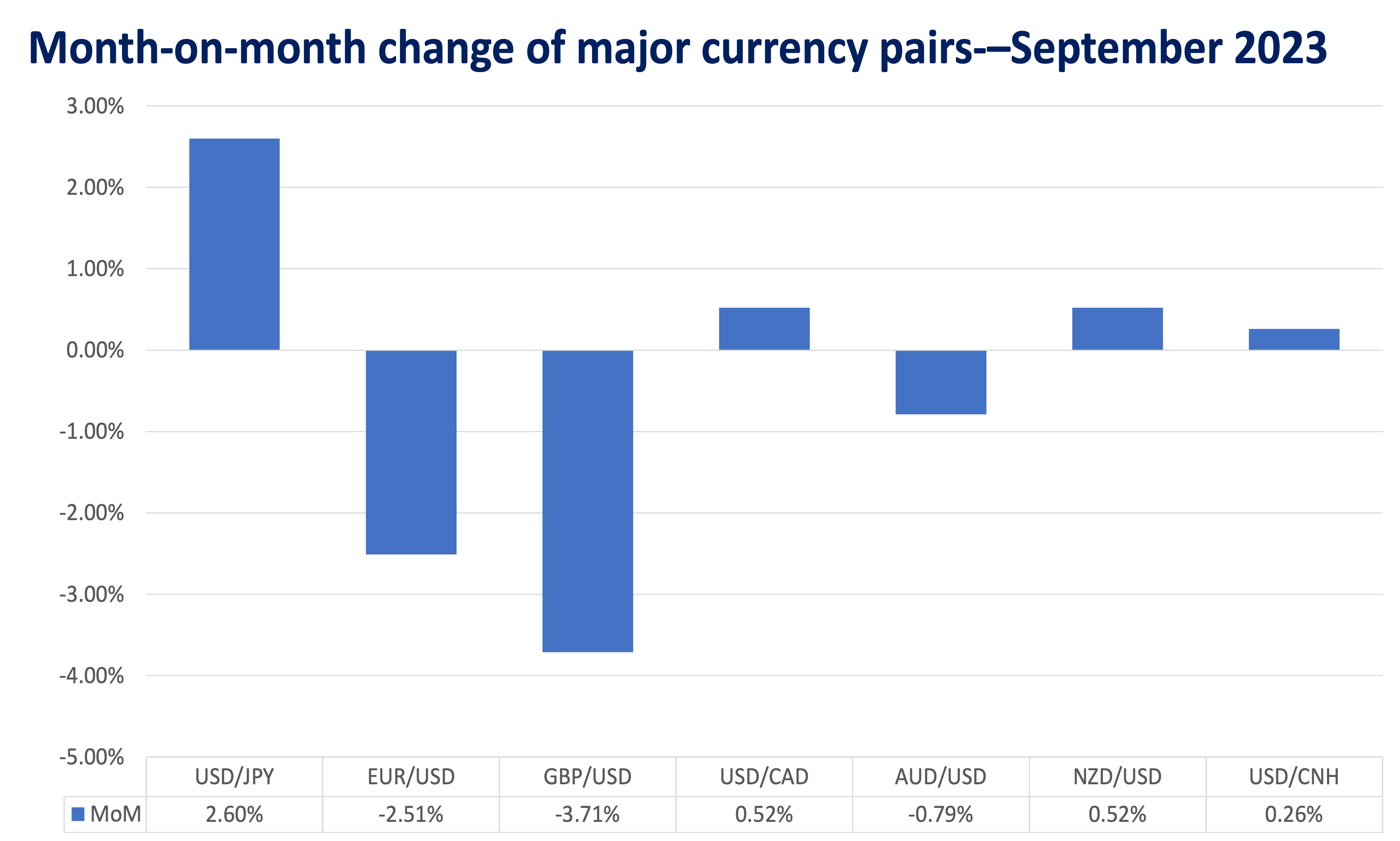
The Japanese yen (JPY) saw consistent weakness all throughout September, depreciating by 2.60% from a start of 146.22 to an end of 149.37. The currency pair even saw highs of 149.60s but that failed to hit 150 levels and dropped near the end of the month after Bank of Japan (BOJ) Governor Kazuo Ueda stated in an interview that the country’s negative interest rate policy could be terminated if the economy outperformed expectations.
Earlier in the month, Japan’s 2nd quarter gross domestic product (GDP) grew by a moderate 1.2% vs. 1.3% forecast while August inflation exceeded expectations at 3.2% vs. 3.0% forecast.
Meanwhile, Japan’s chief currency official Masado Kanda reiterated that there could also be possible intervention in global FX should the rising trend in USD/JPY persist, but this was largely ignored by the markets.
Bearish European currencies
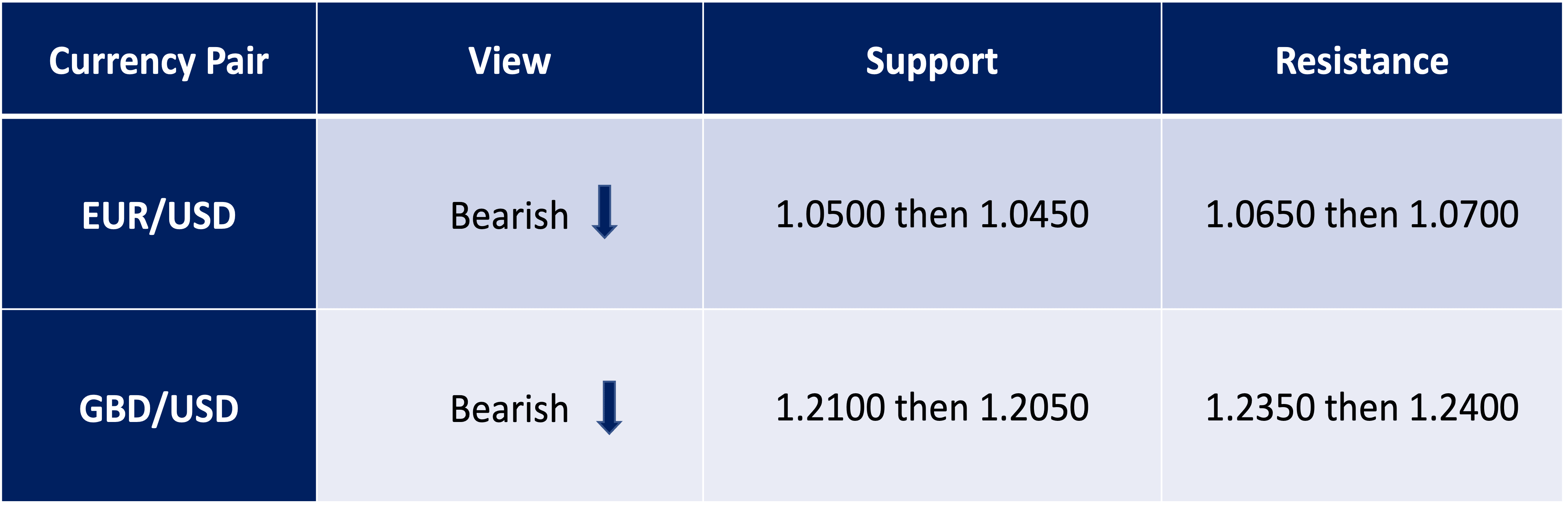
The euro (EUR) fell by 2.51% from 1.0780 to 1.0573, despite the European Central Bank (ECB) hiking its main refinancing rate by 25 basis points (bps) rate to 4.5%. The markets interpreted this as the central bank’s final hike after a series of weak economic data releases pointing to a looming recession in the region.
S&P Global’s composite purchasing managers’ index (PMI), which measures manufacturing and services activity, decreased further to a score of 46.7 vs. 48.6 forecast as overall economic activity contracted. Eurozone GDP also had a steep fall from a growth rate of 1.1% in the 1st quarter to 0.5% in the 2nd quarter.
Some relief in the currency was seen after August CPI printed at 5.2%, just slightly lower than the previous month’s 5.3%. However, the sell-off in EUR accelerated on the last day of the month after a flash estimate of September CPI revealed a decrease to 4.3%.
Despite the ECB willing to keep rates higher for longer until it achieves its own 2% inflation target, markets are more concerned about the economic health of the region, especially in comparison to the much more robust US economy.
On the other hand, the British pound sterling (GBP) had the worst performance against the US dollar, starting at 1.2590 and even briefly touching a high of 1.2625 before falling down to 1.2199 by month-end (-3.71%). It started with August CPI coming out only lower at 6.7% vs. 7% forecast, despite pressure from rising oil prices.
Markets had expected the Bank of England (BOE) to at least hike rates again given the slight difference in inflation from 6.8% in July but central bank surprisingly kept policy rates steady at 5.25% following a close 5-4 vote. GBP/USD even tested lows of 1.2135 near the end of the month but some relief came after the United Kingdom (UK) GDP grew by 0.6% in the 2nd quarter, exceeding the preliminary estimate of 0.4%. While the performance of the UK economy seems more consistent than the volatile swings seen in the Eurozone, the slightly above-zero growth rates still put the UK at closer risk of entering into a recession.
Commodity-linked currencies are a mixed bag
Commodity-linked currencies ended mixed against the US dollar. The Canadian dollar (CAD) started the month at 1.3592 and saw choppy trading between a high of 1.3685 and low of 1.3448 by mid-month. The Bank of Canada (BOC) adhered to market expectations by keeping its policy rate steady at 5.00%, especially after 2nd quarter GDP disappointed at -0.2% vs. 1.2% forecast.
Despite being well below the 1.3500-level by the end of the month, USD/CAD surged on easing oil prices caused by still sluggish oil demand in China despite efforts by the Organization of Petroleum Exporting Countries (OPEC) to cut production. The currency pair closed at 1.3577 or just 0.52% from where it started.
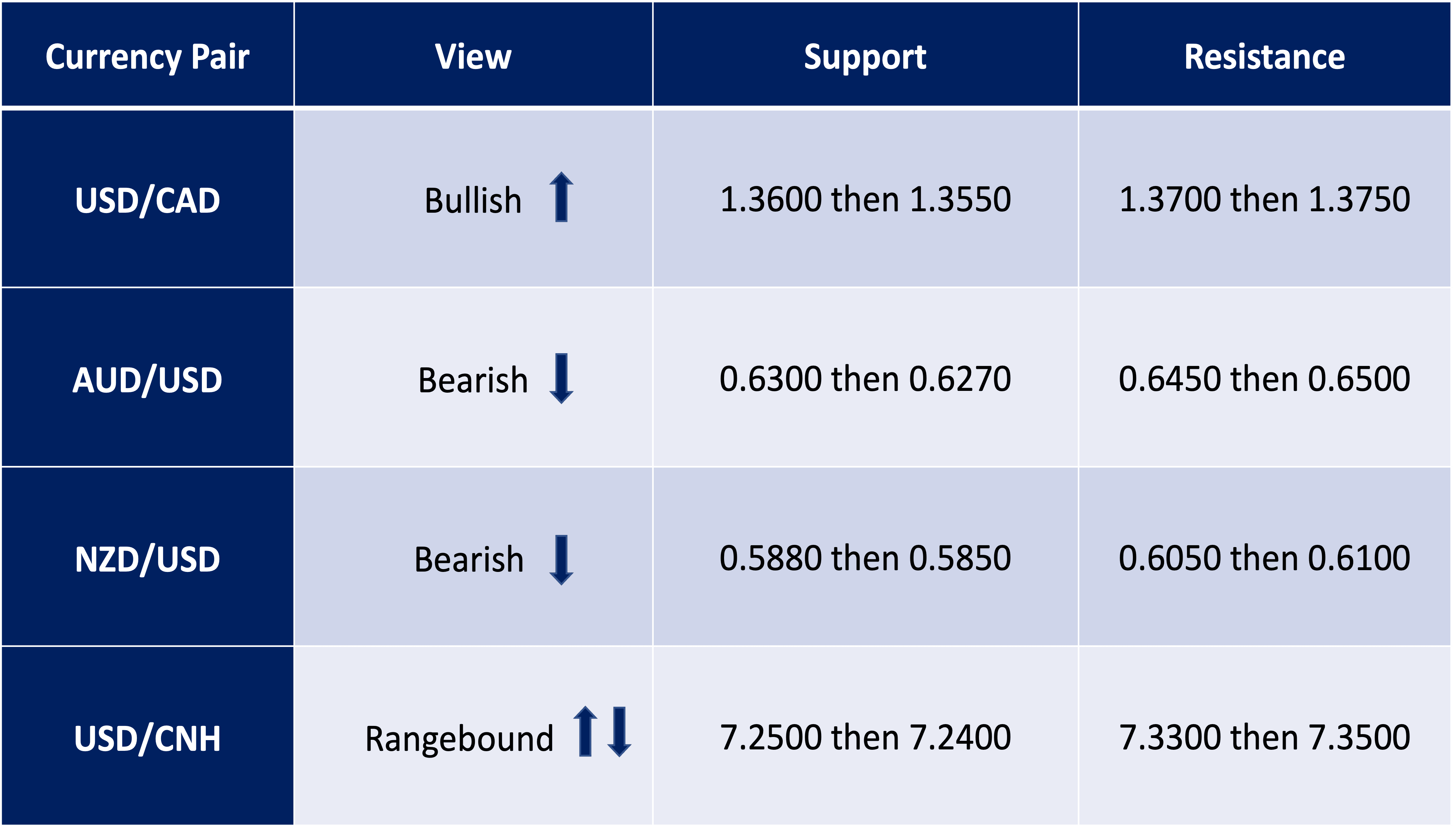
With no more expectations for a BOC rate hike, the CAD is expected to weaken further, but given the developing conflict between Israel and Hamas, it may still be possible for Canada to capitalize on higher oil prices should the conflict escalate to the rest of the Middle East.
The Australian dollar (AUD) continued its descent, weakening by 0.79% from 0.6456 to 0.6435 after the Reserve Bank of Australia (RBA) kept its policy rate paused at 4.10% in August.
Negative sentiment over declining domestic demand in China spilled over to the AUD, which traded below the 0.6400-level early in the month but the currency benefited from 2nd quarter GDP growth meeting expectations at 0.4%. Australian CPI also bounced back in August, rising by 5.2% from 4.9% in July.
But with the RBA seemingly done with its rate hikes, markets will likely keep a bearish view on the AUD/USD, especially if Chinese demand for Australian iron ore does not recover.
Surprisingly, the New Zealand dollar (NZD) was the odd-man out, gaining 0.50% against the US dollar from 0.5945 to 0.5998. Analysts expected the New Zealand economy to expand by 0.4% in the 2nd quarter similar to Australia but the actual New Zealand GDP grew by 0.9%, driven by greater business activity in manufacturing and services.
The rise in the NZD was tempered by expectations that the Reserve Bank of New Zealand (RBNZ) is also done hiking and will likely keep its policy rate at 5.5% for longer.
The Offshore Chinese yuan (CNH) remained relatively stable, depreciating by only 0.26% from 7.2703 to 7.2928.
However, the reality is that the currency pair saw similar wild swings, hitting a high of 7.3647 after just about one week into September. Caixin services PMI for August disappointed with a score of 51.8 vs. 53.5 forecast. Although the score is still above the 50-mark separating economic expansion from contraction, the decline triggered risk-off sentiments among markets that have become overly sensitive to economic data coming out of China.
The situation with USD/CNH improved after the People’s Bank of China took more active measures in FX intervention and sent warnings of future intervention to correct excessive market movements. Inflation returned to positive territory at 0.1% and retail sales beat estimates at 4.6% year-on-year vs. 3% forecast, deterring previous expectations of price deflation. The direction for USD/CNH will likely remain rangebound between 7.2500-7.3500 as markets wait for more notable catalysts that could influence the trajectory of the Chinese economy.
FX Traders’ Forecasts
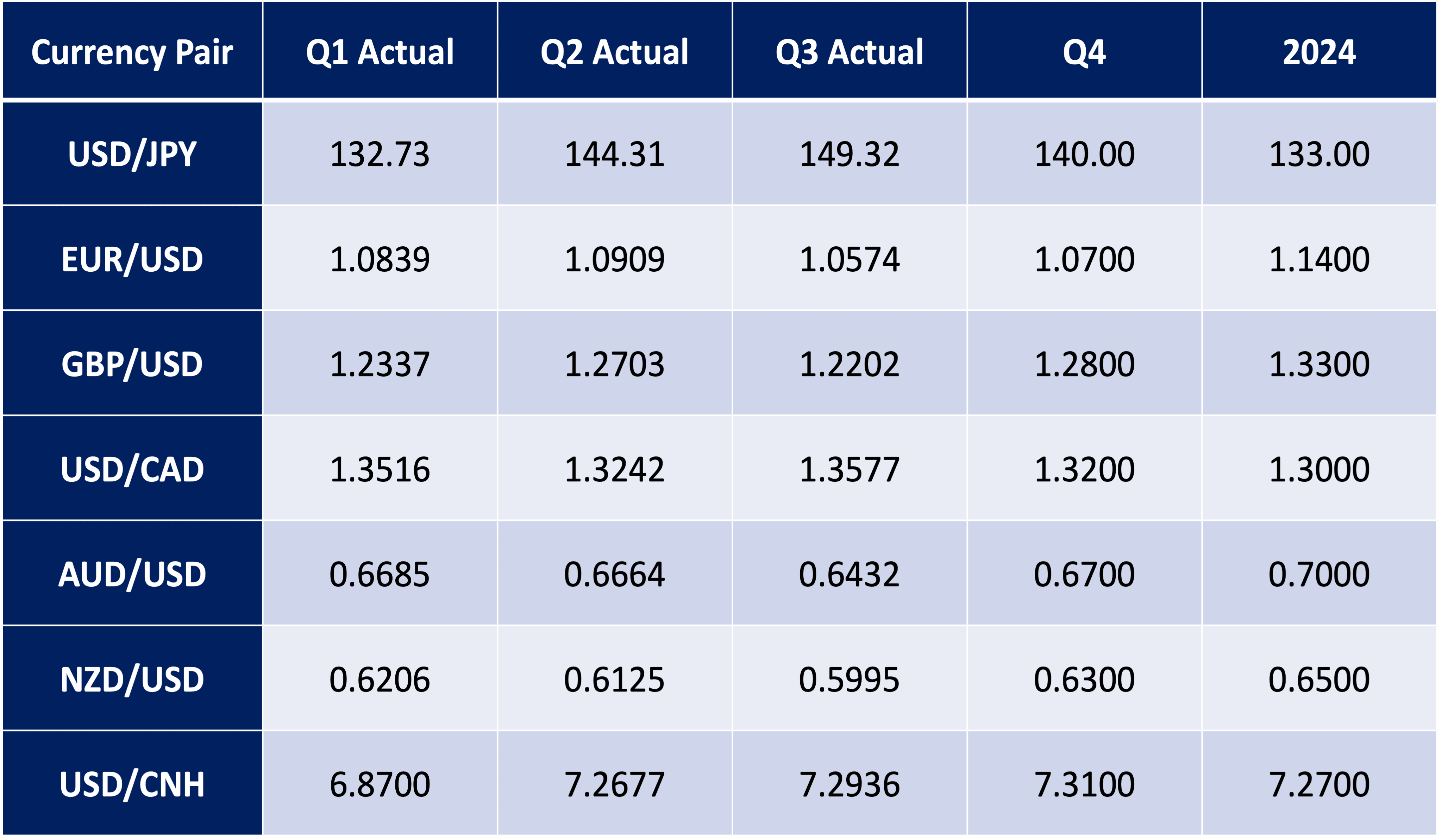 The above forecasts are the foreign exchange traders’ personal opinions and may not reflect the official views of the bank.
Similar to what had already been mentioned the previous month, the US continues to outlast its peers, whose economies are already feeling the brunt of elevated interest rates. Since then, expectations of extended rate pauses by the Fed as well as greater fiscal deficit spending has led US treasury yields higher. This has increased the demand for US dollars among investors but has also tightened financial conditions even further for businesses and consumers.
The conflict between Israel and Hamas also threatens to escalate tensions in the Middle East, potentially resulting in higher oil prices and rebounding inflation in several global economies. With the US economy resilient amid these headwinds, the trend may be for dollar strength to continue until the US itself starts to crack under the pressure of restrictive monetary policy.
EARL ANDREW “EA” AGUIRRE is a Market Strategist at Metrobank’s Financial Markets Sector and has 10 years of experience in foreign exchange, fixed income securities, and derivatives sales. He has a Master’s in Business Administration from the Ateneo Graduate School of Business. His interests include regularly traveling to Japan and learning its language and culture.