Should investors worry about Indonesia’s possible downgrade by MSCI?
Benchmark index provider MSCI has proposed reclassifying Indonesia from Emerging Market status to Standalone. Beyond equities, would other asset classes be affected?
October 22, 2026 by Anna Cudia
Share this article:
Share this article:
Investors are abuzz with news about Indonesia.
MSCI has launched a consultation on a proposed two-step reclassification of Indonesia from an Emerging Market to a Standalone Market within its equity index framework. Feedback will be accepted until April 30, 2027, with a final decision expected by June 30, 2027.
The proposal stems from persistent concerns among global investors about market accessibility, including the transparency of ownership structures, free-float limitations, and trading practices. Although Indonesian authorities have introduced reforms to address these issues, MSCI said market participants have yet to see sufficiently broad and consistent improvements.
Although the review directly affects equities, investors are also assessing its implications for market sentiment, capital flows, Indonesian bonds, and the rupiah. The distinction matters because market-accessibility concerns can affect asset prices even when macroeconomic and credit fundamentals remain intact.
Why equities are at the center of the discussion
MSCI classifications matter because many global funds track MSCI benchmarks. A move from Emerging Market to Standalone status could force benchmark-driven investors to reduce or eliminate exposure.
Estimates suggest that passive outflows alone could reach USD4–6 billion, while active funds benchmarked to MSCI indexes hold an additional USD8 billion or more. In a more severe scenario, total outflows could range from USD12 billion to USD16 billion.
Indonesia’s weight in the MSCI Emerging Markets Index has already fallen to 0.43% from 1.16%, and the number of Indonesian constituents has declined from 18 to 9.
*Note: In USD millions, post application of free float-adjustment factors Source: MSCI
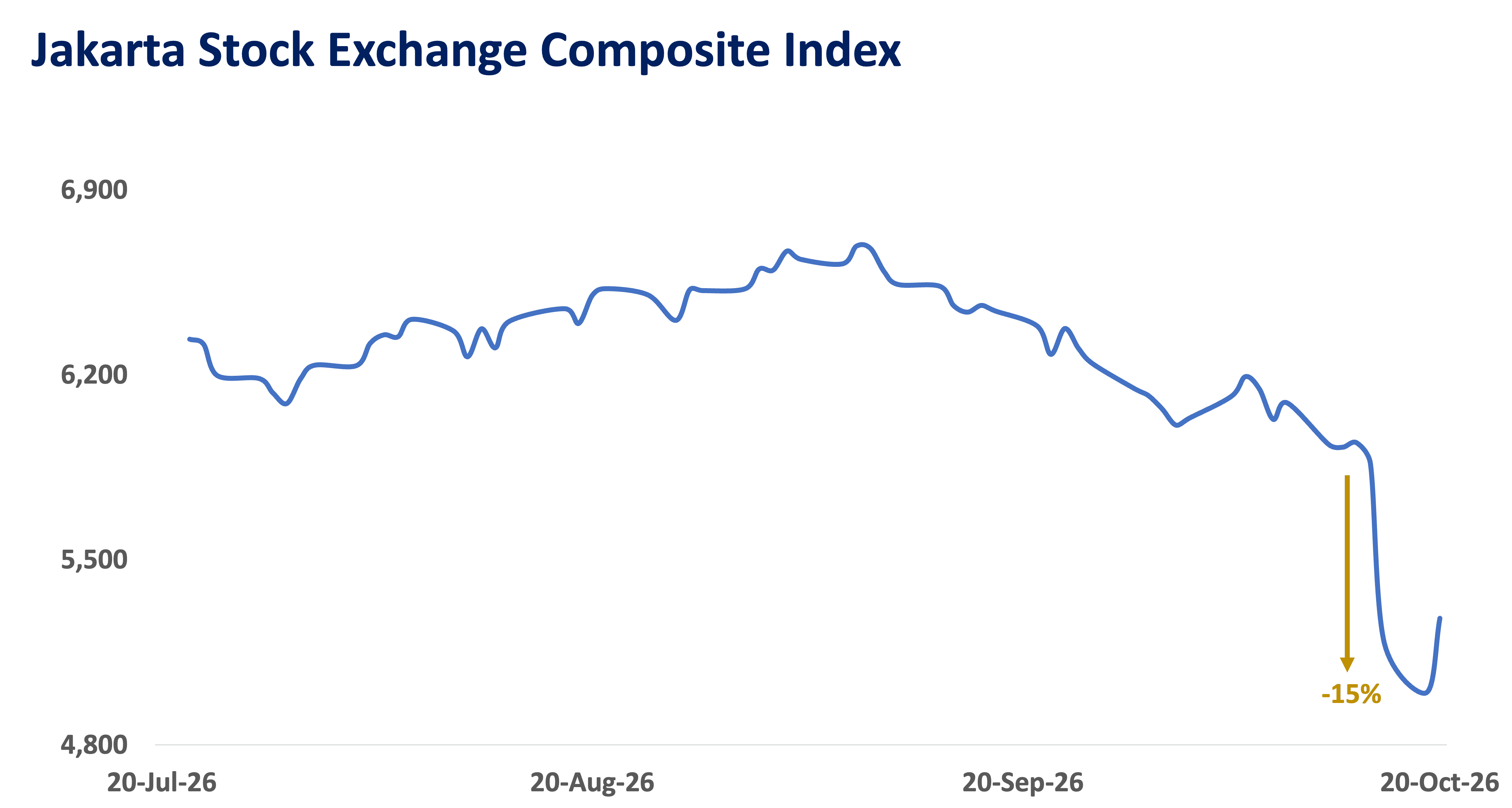
Markets have responded accordingly, with Indonesian equities falling sharply after the announcement as investors reassessed the potential for future foreign participation. The extent to which potential outflows are already reflected in prices remains an open question, particularly given the sharp decline in Indonesian equities since the announcement.
Source: Bloomberg
The primary transmission channel operates through equity flows rather than sovereign fundamentals.
What it could mean for Indonesian bonds
The proposal is not directly related to debt markets. Unlike equities, bond investors remain primarily focused on inflation, monetary policy, fiscal sustainability, economic growth, and sovereign credit quality.
Importantly, Indonesia remains investment-grade across all major credit rating agencies. As a result, concerns about default risk or debt-servicing capacity do not appear warranted at this stage.
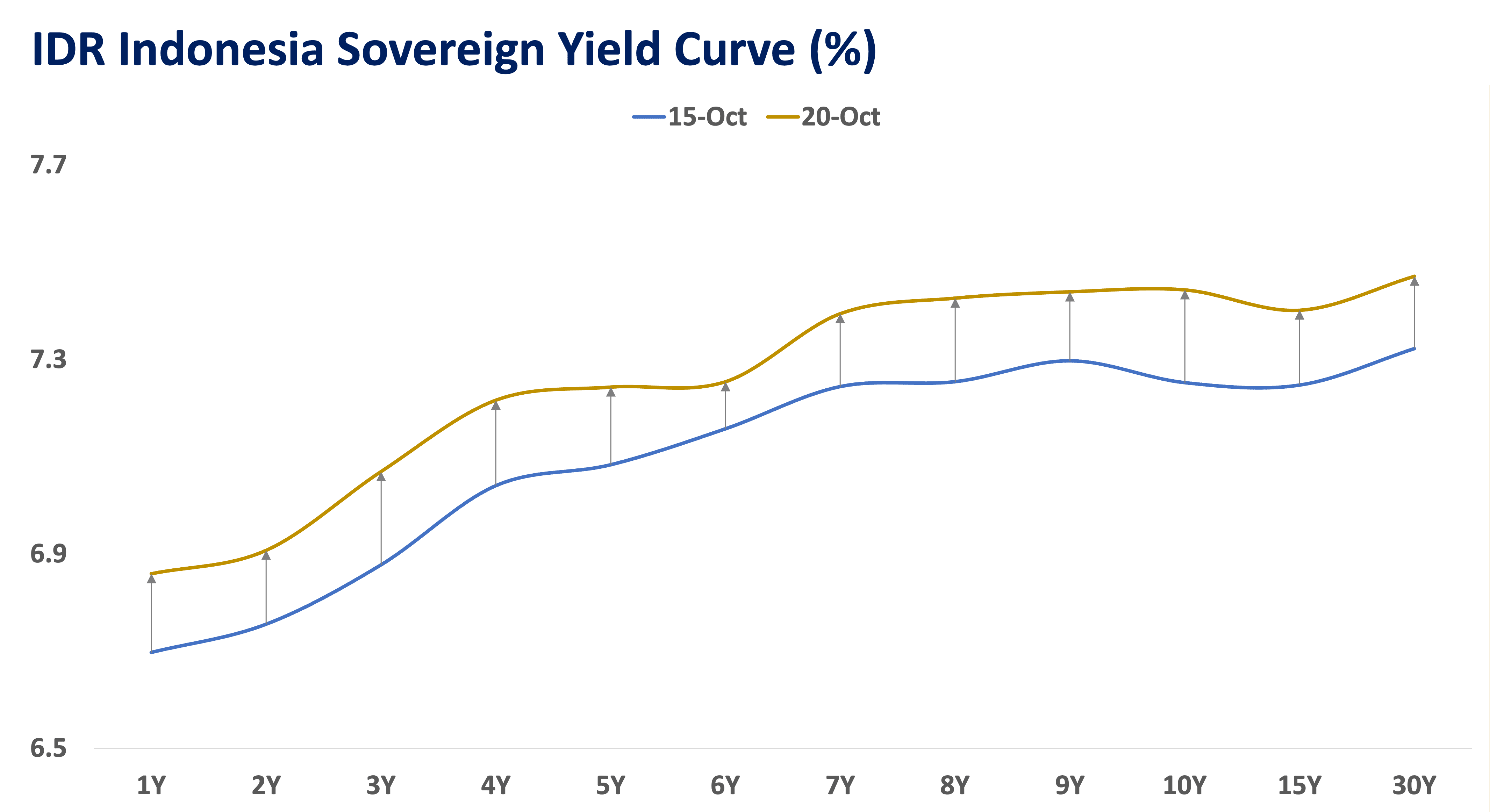
While the direct impact should be limited, weaker sentiment toward Indonesian assets could result in a modestly higher risk premium, particularly during periods of global market volatility. The bigger risk is pricing and liquidity rather than creditworthiness.
Source: Bloomberg
Could the rupiah be affected?
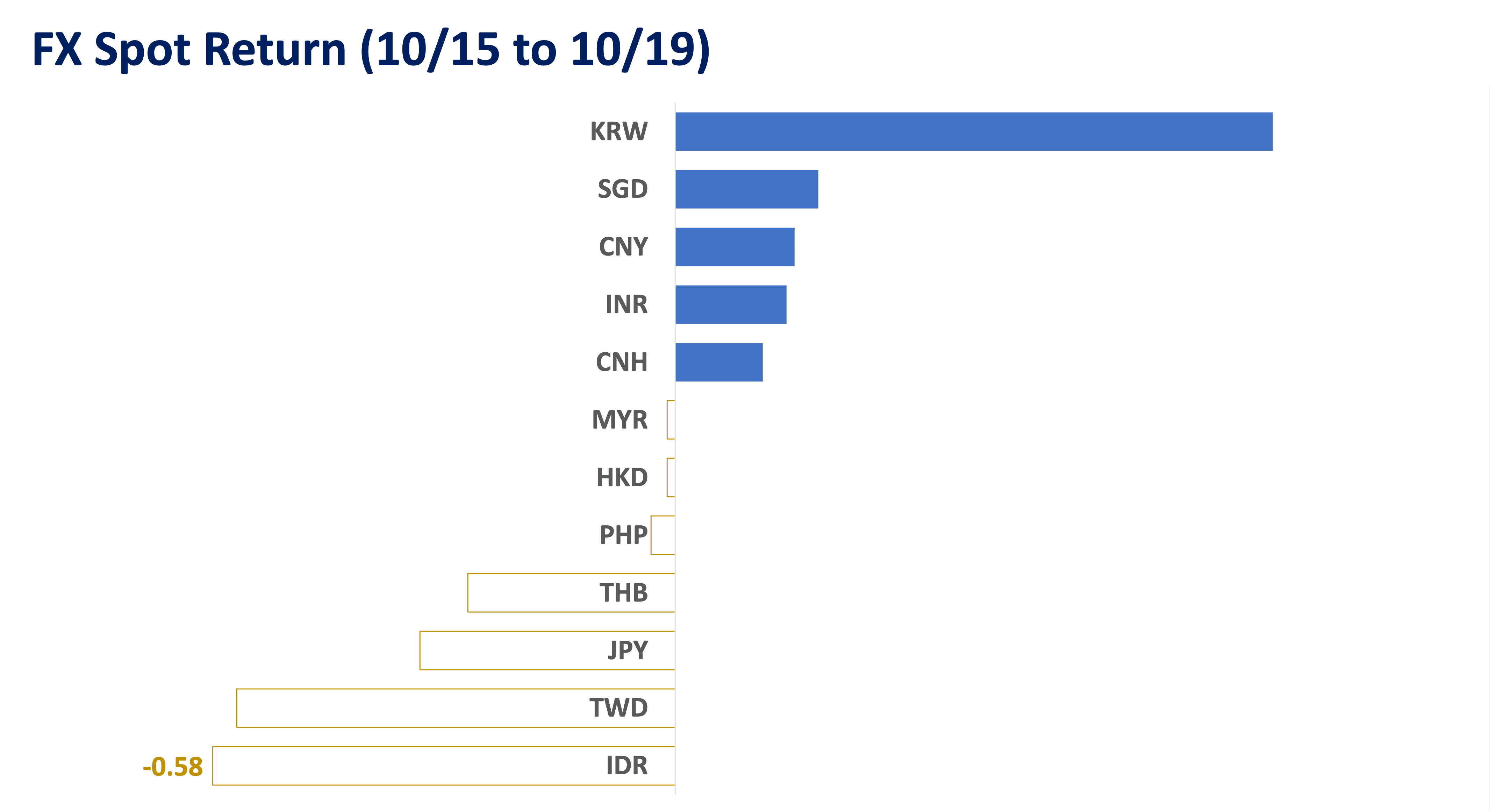
Currency markets tend to respond to both capital flows and investor confidence. Significant equity outflows could further pressure the rupiah, particularly against a backdrop of elevated oil prices and weaker external balances.
MSCI’s consultation introduces another factor that could keep foreign participation subdued. With the final decision due only in mid‑2027, uncertainty over Indonesia’s market classification may continue to weigh on investor sentiment and capital flows.
Reduced equity inflows remove a potential source of support for the rupiah at a time when Indonesia is already navigating higher global yields, elevated oil prices, and a stronger US dollar.
That said, the rupiah’s longer-term trajectory is still likely to be driven primarily by inflation, interest-rate differentials, external balances, commodity prices, and Bank Indonesia policy. The MSCI review may be an additional headwind, but macroeconomic fundamentals remain the dominant driver over time.
Source: Bloomberg
Looking beyond the headline
Markets often react quickly to classification changes, especially when passive capital flows are involved. Longer-term performance, however, tends to depend on economic fundamentals rather than on index membership alone.
Investors should distinguish between market structure concerns and sovereign risk. MSCI’s consultation reflects questions about market accessibility and governance, not concerns about Indonesia’s ability to meet its financial obligations.
For long-term investors, market structure concerns and valuation opportunities do not always align.
The bigger picture
MSCI’s proposal is primarily an equity-market story, but investor sentiment can spill over into other asset classes. For long-term investors, the more important question is not where Indonesia sits in an index but whether the country’s macroeconomic fundamentals remain intact.
At this stage, the discussion appears to focus more on market accessibility, governance, and capital flows than on credit quality or repayment capacity. For long-term investors, distinguishing between sentiment-driven volatility and shifts in underlying fundamentals may be particularly important.
(Looking to generate regular income and diversify your portfolio? Metrobank Wealth Manager gives you access to fixed income investment opportunities, supported by expert insights and personalized guidance. Speak with your Relationship Manager, Wealth Specialist, or Markets Sales Personnel to discover fixed income solutions that match your investment objectives and risk profile.)
(Disclaimer: This is general investment information only and does not constitute an offer or guarantee, with all investment decisions made at your own risk. The bank takes no responsibility for any potential losses.)
ANNA DOMINIQUE CUDIA, MBA, CSS, oversees Metrobank’s Macro Research Department, steering macroeconomic and financial market analyses for clients. She previously led the Markets Research Department of Metrobank’s Trust Banking Group and was part of Investor Relations, supporting multi-billion peso and US dollar capital-raising initiatives. She holds an MBA in Finance, with distinction, from the University of London, and industry certifications in finance. Outside of work, she enjoys travel and exploring new perspectives.