


Foreign inflows into Asian bonds hit six-month high in November
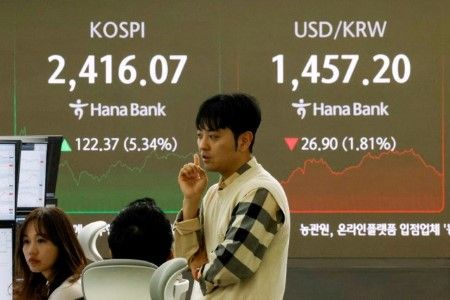
Foreign investors snapped up Asian bonds in November as they sought shelter from an equity market selloff driven by concerns over stretched tech valuations and uncertainty around the US Federal Reserve’s rate outlook.
They bought a net USD 10.86 billion of bonds in South Korea, Thailand, Malaysia, India, and Indonesia in November, marking their largest monthly net purchase since USD 15.29 billion of inflows in May, data from local regulatory authorities and bond market associations showed.
“Divergence between equity and debt assets emerged again in November, likely due to investors rotating to low-risk assets,” said Khoon Goh, the head of Asia research at ANZ.
South Korean bonds drew USD 11.08 billion, the largest monthly net inflow since at least 2016, on optimism over their inclusion in the FTSE World Government Bond Index starting in April 2026.
“We suspect that part of the strong inflows into South Korean bonds was diverted from the equity market,” ANZ’s Goh said.
Thai bonds recorded a third consecutive month of foreign inflows, totalling USD 319 million, while Malaysian bonds saw net foreign purchases of USD 316 million.
In contrast, foreign investors sold Indian and Indonesian bonds worth USD 447 million and USD 400 million, respectively.
The US Federal Reserve last week cut interest rates by 25 basis points to a 3.50%–3.75% range, reinforcing expectations that lower US borrowing costs would support regional assets.
Jonathan Davis, portfolio manager at PineBridge Investments, said that as equity valuations climb alongside lingering macro uncertainty, investors should remain focused on core fixed income and mindful of risk concentration in more indebted issuers.
“That is why we see a growing number of institutions looking toward the Asia-Pacific dollar bond market to maintain stability and diversify risks within their core fixed income portfolios.”
(Reporting by Gaurav Dogra and Patturaja Murugaboopathy in Bengaluru; Editing by Subhranshu Sahu)
This article originally appeared on reuters.com