WHAT HAPPENED LAST WEEK
Yields of peso government securities (GS) traded within a relatively tight range throughout the previous week with most investors awaiting major catalysts that would convincingly move yields higher or lower.
The 9- to 10-year tenor bucket saw buying momentum last week, with 9-year FXTN 10-69 and 10-year FXTN 10-71 seeing lows of 6.195% and 6.175% respectively. Both bonds ended the week unchanged to 3 basis points (bps) higher for the week, as US Treasuries continued to trade sideways.
The newly issued RTB 5-18 traded heavily on good two-way interest near its coupon rate of 6.250%, as selling interest from dealers looking to trim positions was quickly met with opportunistic buying.
Elsewhere, the Dutch auction for the new 20-year bond FXTN 20-26 saw good demand as it was priced at a coupon of 6.250%, below initial market indications, but ended the week flat from the issuance.
The Bureau of the Treasury (BTr) also announced its revised borrowing schedule for the remainder of the quarter, issuing bonds in the 7-, 10-, 20-, and 6-year tenor buckets instead of the original 3-, 5-, 7-, and 10-year tenor buckets.
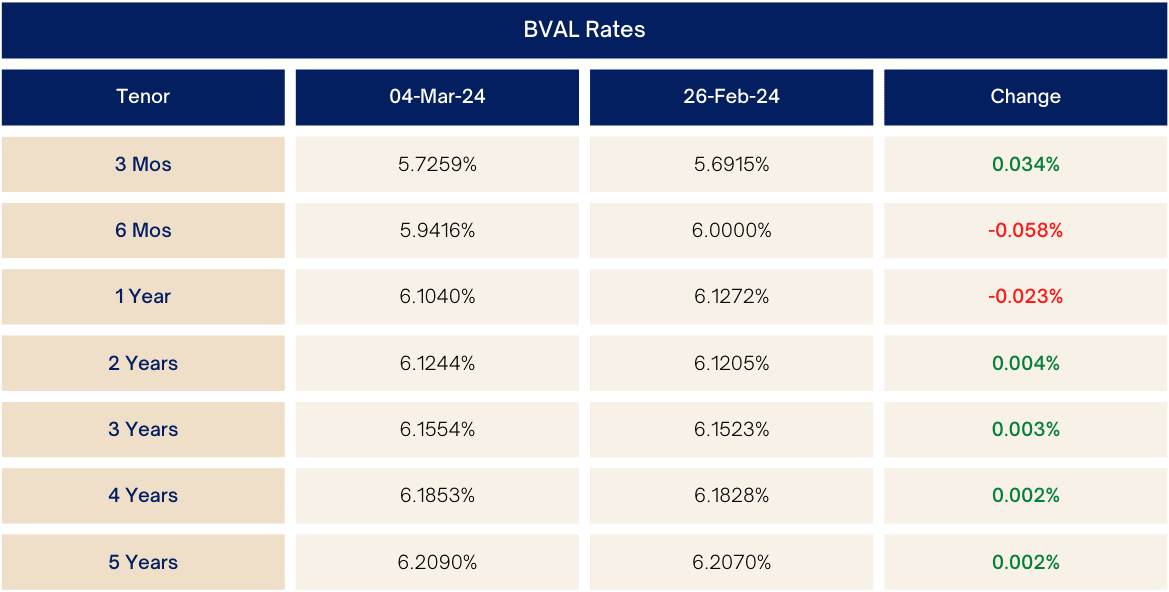
Market Levels (week-on-week)
WHAT WE CAN EXPECT
With Philippines inflation data and the 7-year Treasury-bond auction out of the way, expectations are for market participants to look towards the global bond space to find any meaningful catalysts for direction. The peso GS market would likely trade sideways until the end of the week, with US nonfarm payrolls (NFP) due on Friday (March 8, 2024).
Any perceived tightness in the US labor market (i.e., a higher-than-expected NFP print) will likely send global yields a leg higher as markets dial back Fed rate cut expectations. Markets will also take cues from US Fed Chair Jerome Powell’s testimony to Congress tonight (March 06) on the timing of the prospective Fed rate cuts.
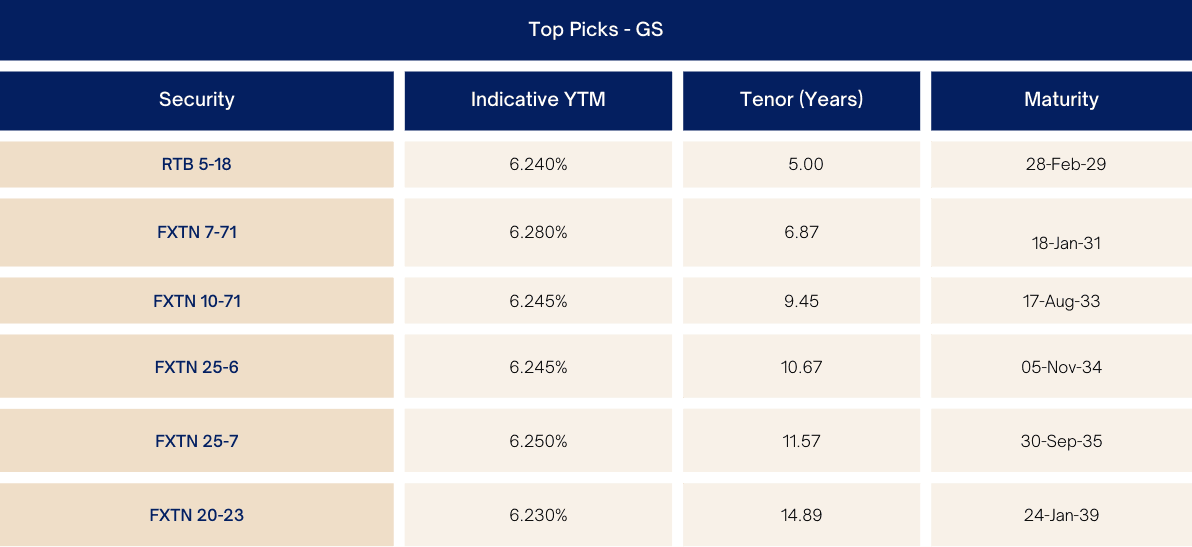
Nevertheless, we recommend opportunistic buyers to establish positions at any pops higher in peso yields, as our overall long-term view is still for rates to head lower when the BSP starts their monetary policy easing later this year.
See our top picks below: