


Strong El Niño to bring drought across Philippines by March
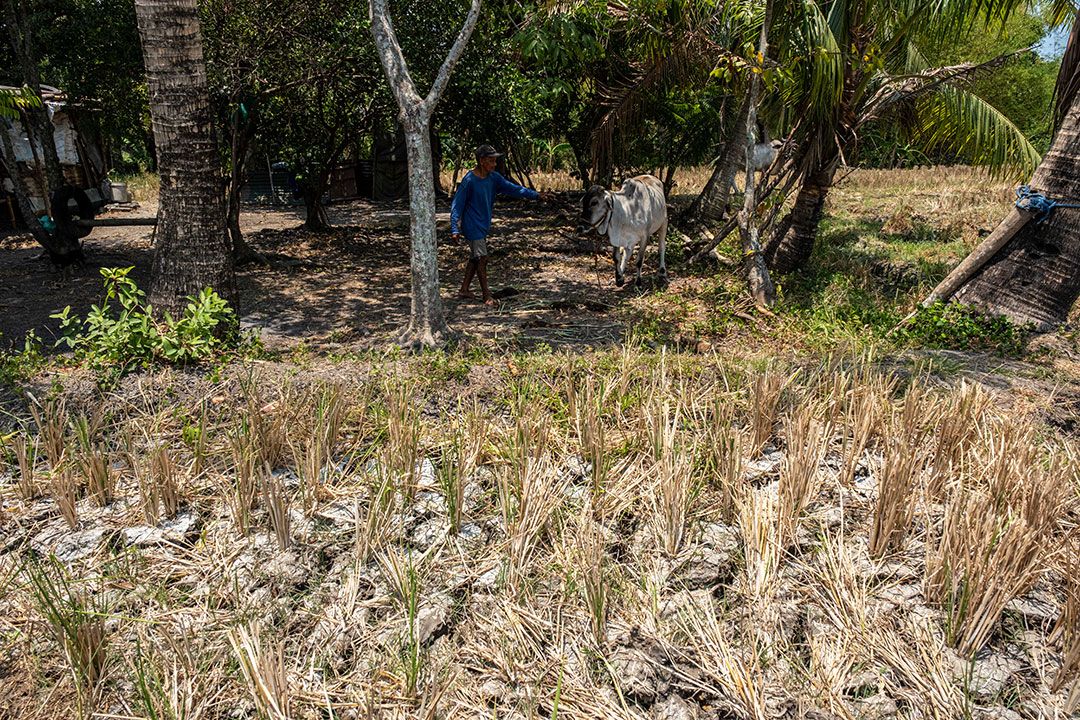
All Philippine provinces are expected to experience drought conditions by the end of March 2027 amid a strong El Niño, officials said on Monday, urging people to start conserving water.
At a Palace press briefing, officials outlined a multi-agency response to mitigate the impact of a strong El Niño, relying heavily on voluntary water conservation, adequate national food stockpiles and funding that has so far been only partly released.
“How we will be affected by it is dependent on how much preparation we have and the conservation of water that we will do,” said Department of Science and Technology Secretary Renato U. Solidum, Jr.
The Philippine Atmospheric, Geophysical and Astronomical Services Administration said the El Niño could become “very strong” between now until December 2026 and persist through the first half of 2027.
Maximum daily temperatures are forecast to reach 38.7°C by March, with heat indices projected to range between 45°C and 52°C.
The World Meteorological Organization expects this current El Niño, which began in June, to become of the strongest on record and peak next year, bringing droughts, extreme heat and crop losses.
According to the National Disaster Risk Reduction and Management Council, 106 cities and municipalities across five provinces, namely, Isabela, Cagayan, Camarines Norte, Dinagat Islands, and Agusan del Sur, have already been placed under a state of calamity due to severe drought and dry conditions due to the El Niño.
Over 388,000 people have been affected by the drought, with agricultural damage reaching PHP 6.87 billion across more than 249,000 hectares of farmland.
A drought means three consecutive months of rainfall that is more than 60% below average, or five consecutive months of below-normal rainfall.
To protect major reservoirs such as Angat Dam, which supplies 90% of Metro Manila’s potable water, the Department of Environment and Natural Resources (DENR) is reissuing directives requiring commercial entities, including golf courses, to utilize recycled greywater.
The DENR is coordinating with local government units to monitor nonessential uses of water, such as washing cars, hosing down driveways and filling swimming pools. It also directed water concessionaires to expedite repairs on nonrevenue water pipe leakages.
“It cannot be business as usual,” Environment Secretary Juan Miguel T. Cuna said during the briefing. “Every individual, every citizen must do their part by conserving water… unnecessary uses at this time must be minimized.”
As a contingency for severe localized shortages, he said authorities have pre-positioned stationary and mobile water tankers, alongside heavy-duty water bladders donated by the Netherlands.
The Local Water Utilities Administration and National Water Resources Board are also developing new deep-well sources and managing priority sector allocations.
Addressing agricultural output concerns, Agriculture Secretary Francisco P. Tiu Laurel, Jr. said that the Department of Agriculture (DA) requested a PHP 45-billion supplemental budget, of which PHP 6.2 billion has been released to date.
He said the DA is seeking an additional PHP 10 billion for solar irrigation pumps, solar aerators, and bio-fertilizers, and another PHP 10 billion for 2027 under presidential assistance funds for farmers and fisherfolk.
Mr. Laurel said the DA is planning targeted cloud-seeding operations and increasing seed and fertilizer allocations per hectare in irrigated areas to offset potential declines in crop yields.
In areas where planting is not viable, displaced farm workers will be offered temporary jobs under the Labor department’s community-based cash-for-work program, including desilting irrigation canals and preparing land for the next cropping cycle.
Mr. Laurel said that national food buffer stocks currently stand at 75 days for rice, 125 days for chicken, 170 days for pork, and 90 days for corn.
The National Food Authority has also been instructed to increase local palay procurement and fill warehouse capacity, he added.
“We are maintaining a healthy number of days of food sufficiency. If we are able to maintain this, there’s no reason to panic actually,” Mr. Laurel said.
October is part of the peak main harvest season for major crops like rice (palay) in the Philippines. The government retains commodity imports as a last resort should local yield deficits emerge during the severe El Niño event.
Mr. Laurel also noted that commercial port operations remain unhindered to guarantee available supply volumes and maintain overall retail price stability.
He said there is currently no justification to restrict rice importation, as farmgate palay prices remain steady between PHP 16.50 and PHP 20 per kilogram.
However, the Agriculture chief added that the department has requested private importers to voluntarily stagger incoming shipments during the local harvest window to protect domestic farmers’ incomes. — Erika Mae P. Sinaking, Reporter
This article originally appeared on bworldonline.com