


Philippines building up fuel stockpiles until May — DoE chief
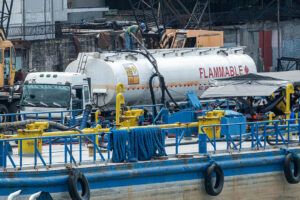
Delivered in April and they’re (oil companies) trying to lock that in. It’s early but we have to do it early in these times. So, oil firms, including the government, are working on the supply for May,” Ms. Garin said.
As a precautionary measure, the government has also moved to assist fuel companies by directing the oil and gas exploration arm of state-run Philippine National Oil Co. to procure at least two million barrels of oil from global markets.
“Because there might be risks that their source might not deliver, so the government is also procuring. So, one million or two million stocks, so we have a buffer,” Ms. Garin said.
“Just in case any of our oil companies fail to procure, we have a reserve for May. So that’s what we’re doing now. We’re slowly locking in some offers. Little by little, we’re trying to make sure that May is covered,” she added.
Aside from existing suppliers, the Energy chief said the Philippines is also tapping other countries in Asia like Malaysia, Brunei, and India. It is also considering sourcing from other markets such as the US, Canada, Russia, or South American countries.
While fuel prices might be cheaper in the latter countries, Ms. Garin said that the end cost of transportation will be “longer and a little more expensive” as deliveries could take up to a month.
Tight supply
Leo P. Bellas, president of Jetti Petroleum, Inc., told BusinessWorld that “almost all oil companies are doing their best to secure cargoes for May.”
“Volume being secured is, at the minimum, based on each oil company’s monthly sales,” he said.
However, increasing the stockpiles remains challenging, as it is constrained by the availability of products in the market.
“Supply is becoming very tight because of run cuts imposed by refineries due to lack of feedstock, and export ban,” Mr. Bellas said.
“Assuming there is no supply problem, the concern will be the capital requirement due to higher cost of importation. The price of diesel has more than doubled already versus prior to the Middle East crisis, and gasoline is now higher by more than 70%,” he added.
Robert Dan J. Roces, an economist at SM Investments Corp., said building up inventories is “a prudent and proactive step” to cushion the country from potential supply disruptions amid the ongoing geopolitical conflict.
“By increasing buffers and exploring alternative suppliers, oil companies can better ensure continuity of supply and reduce the risk of sudden shortages,” he told BusinessWorld in a Viber message.
In the short term, fuel inventory buildup should help mitigate global shocks and prevent abrupt spikes in local pump prices.
“Over the longer term, the focus should shift toward strengthening energy security — such as diversifying import sources, expanding strategic petroleum reserves, and accelerating investments in domestic and renewable energy — to reduce the economy’s vulnerability to external oil shocks,” Mr. Roces said.
Several oil companies are hiking pump prices this week, pushing diesel costs beyond PHP 100 per liter. To alleviate pressure on consumers, some oil companies staggered the implementation of the increases in two to three tranches.
Asked how long the Philippines may experience elevated fuel prices, Ms. Garin said: “It all depends on the war.”
“The worst part is that the effects will be longer. The prices will take longer to go down. The logistics — all the oil fields that they bombed — it will take time to prepare those,” Ms. Garin said. “Maybe another six months after the war, slowly, it will go back to normal — the prices and logistics.” — Sheldeen Joy Talavera, Reporter
This article originally appeared on bworldonline.com