


Philippine manufacturing PMI hits 5-month high in July
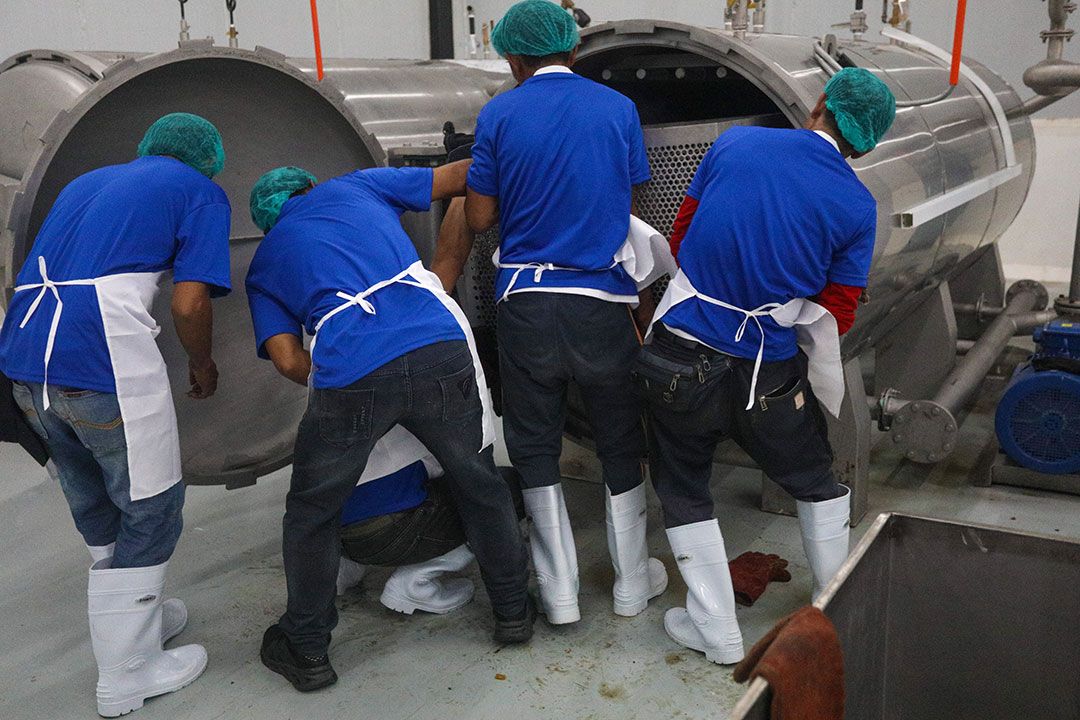
Philippine manufacturing activity rose to a five-month high in July, as production and new orders grew at the fastest pace since February, S&P Global said.
The S&P Global Philippines Manufacturing Purchasing Managers’ Index (PMI) improved to 51.8 in July from 50.9 in June.
July also marked the third straight month of expansion, in line with the long-run average.
A PMI reading above 50 signals an improvement in operating conditions from the previous month, while a reading below 50 shows deterioration.
“Manufacturers in the Philippines reported stronger demand conditions in July following the more subdued conditions seen in the second quarter,” Maryam Baluch, an economist at S&P Global Market Intelligence, said in a report.
However, the Philippines’ PMI was below the Association of Southeast Asian Nations (ASEAN) average of 52.8 in July, which climbed from an 11-month low of 50.5 in June.
The Philippines posted the third-highest PMI among ASEAN economies in July, behind Thailand (54.2) and Vietnam (52.9). It was ahead of Malaysia (50.7), Indonesia (50.2), and Myanmar (49.3).
S&P Global said the Philippines’ PMI received a boost from the sharp rise in new orders.
“Filipino manufacturers reported that stronger underlying demand and new project wins supported the latest increase in new sales. The rate of growth was the fastest since February and above the historical trend,” it said.
A strong uptick in sales prompted Philippine manufacturers to raise production at the quickest pace since February.
“Production and new order growth strengthened as a result, rising at a solid pace that was the fastest since the outbreak of the war in the Middle East,” Ms. Baluch said.
S&P Global noted purchasing activity also increased at a faster rate than June as production requirements grew.
Meanwhile, supplier delivery performance deteriorated sharply in July, with input lead times lengthening at the quickest pace since December 2024.
“Firms commonly linked the latest lengthening in average lead times for inputs to the war in the Middle East and the impact on supply chain health,” S&P Global said.
As a result, firms drew down their inventories to meet the increase in orders. Stocks of purchases fell solidly, while finished goods inventories declined.
S&P noted that inflationary pressures intensified in July, with input costs and selling prices rising above their respective long-run averages.
“Qualitative evidence continued to show that the war in the Middle East was driving up costs, which firms then passed on to customers through higher charges for goods,” it said.
A BusinessWorld poll of 21 analysts and economists yielded a median inflation forecast of 6.4% for July, unchanged from June but sharply higher than the 0.9% recorded a year earlier. If realized, this would mark the fifth consecutive month that headline inflation exceeded the Bangko Sentral ng Pilipinas’ 2-4% target range.
Meanwhile, S&P Global said manufacturing jobs slipped moderately in July after remaining steady in June, with firms attributing the decline “to voluntary resignations and the non-replacement of leavers.”
“Despite the improvement in sector conditions, confidence remained historically muted. More notably payroll numbers fell in July, suggesting that firms may need clearer signs of a sustained improvement in economic conditions before resuming hiring,” Ms. Baluch said.
S&P Global said business confidence recovered from a five-month low in June as manufacturers expected improving demand to support production growth over the next 12 months.
“The level of positive sentiment remained among the weakest recorded over the past year and historically subdued, with ongoing geopolitical uncertainty and its impact on prices weighing on forecasts,” it said.
Bank of the Philippine Islands Lead Economist Emilio S. Neri, Jr. said the expansion in the manufacturing sector in July may have been partly driven by the recovery in electronics exports.
“It could be partly cyclical. We saw from the latest trade numbers, the electronics numbers recovered, so we think it is part of that and that we are in a cycle that allows for faster recovery in those leading segments,” he told reporters on the sidelines of an event on Monday.
Philippine merchandise exports grew by 13.1% in the first half to USD 46.72 billion from USD 41.31 billion in the same period a year ago, as exports of electronics jumped by 20.7% to USD 26.1 billion in the January-to-June period from USD 21.62 billion a year earlier.
Mr. Neri also cited possible front-loading in the food sector ahead of anticipated increases in fertilizer costs.
“I’m hoping that the first half of this year is already the bottom for growth. That, together with the recovery in manufacturing and hopefully some stability in the geoeconomics side, we can see a more meaningful recovery in the second semester and allow us to grow hopefully more than 3%,” he added.
A BusinessWorld poll of 21 economists and analysts conducted last week yielded a median gross domestic product (GDP) growth estimate of 2.8% for the April-to-June period.
If realized, this would be much slower than the 5.4% growth recorded in the second quarter of 2025 but match the 2.8% expansion in the first quarter.
This would bring average GDP growth to 2.8% in the first half, below the government’s 3.5%-4.5% full-year target. — Justine Irish D. Tabile, Senior Reporter
This article originally appeared on bworldonline.com