


Peso sinks on latest US-Iran attacks
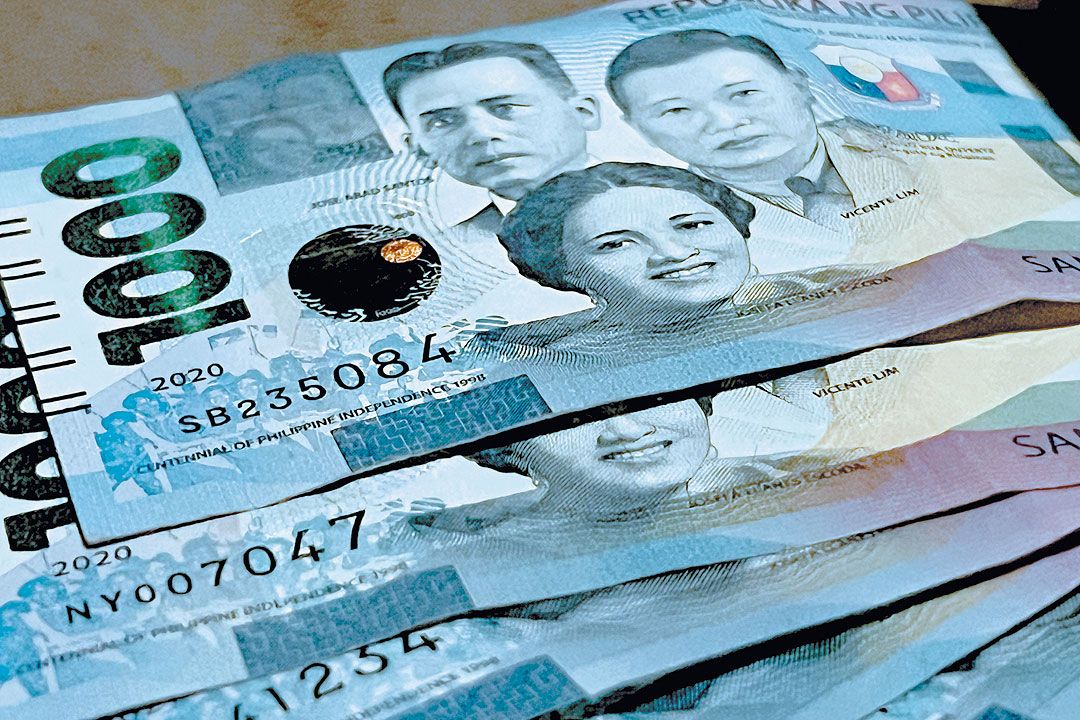
The peso sank against the dollar on Thursday after global oil prices spiked as the United States and Iran exchanged fresh attacks.
The currency fell by 15 centavos to close at PHP 61.56 versus the greenback from its PHP 61.41 finish on Wednesday, based on data from the Bankers Association of the Philippines’ website.
The local unit opened Thursday’s session flat at PHP 61.41. It rose to a high of PHP 61.345, while its worst showing was at PHP 61.58 versus the greenback.
Dollars exchanged went down to USD 1.374 billion from USD 1.618 billion.
“The dollar-peso closed higher, tracking the rally in crude oil prices following fresh tensions in the Middle East after fresh US attacks on Iran,” a trader said by phone.
“The Federal Reserve’s pause initially lowered the pair, but net buying later in the session supported the dollar on month-end demand.”
The US military said it struck dozens of Islamic Revolutionary Guard targets in Iran, including military command centers and drone facilities, in a two-hour operation launched after Tehran fired ballistic missiles at US forces in the Middle East, Reuters reported.
Earlier on Wednesday, US and Saudi forces launched strikes against Iran-aligned groups in eastern Iraq, in retaliation for drone attacks on Saudi oil targets launched from Iraq. The joint attack marked the first time Riyadh has publicly joined strikes alongside Washington.
In Egypt, a drone hit a US-owned gas storage tanker at Egypt’s Mediterranean port of Damietta, British maritime security firm Ambrey said in an initial assessment on Wednesday.
The latest strikes in Iraq and Egypt threatened to draw more Middle Eastern countries into the conflict, after the Iran-aligned Houthis in Yemen declared a naval blockade last week on Saudi Arabia.
The war began in February, when the US and Israel launched a bombing campaign in Iran that US President Donald J. Trump said would last only a few weeks. A temporary ceasefire agreement in June collapsed amid renewed fighting over the Strait of Hormuz, a crucial waterway that Iran says it now controls.
The waterway — which carried a fifth of global oil and liquefied natural gas before the war on Iran — lies between Oman and Iran, linking the Gulf north of it with the Gulf of Oman to the south and the Arabian Sea beyond.
Oil prices shot up on Wednesday in one of the sharpest spikes of the five-month war. Brent crude futures rose more than 8% to push the benchmark well above USD 90 a barrel, reversing much of a plunge earlier this week when Mr. Trump had unexpectedly halted US strikes.
Meanwhile, the Federal Reserve kept its policy interest rate on hold, and Chair Kevin Warsh left markets guessing about how divisions on its rate-setting committee would resolve.
Fed funds futures are pricing in a 34.9% probability that the central bank will hold its rate at its next two-day meeting ending Sept. 16, compared with a 24% chance before the latest meeting, the CME Group’s FedWatch tool showed.
The peso was also dragged by June trade data that showed the Philippines recorded a wider deficit, Rizal Commercial Banking Corp. Chief Economist Michael L. Ricafort said in a Viber message.
Preliminary data from the Philippine Statistics Authority showed the trade-in-goods balance — the difference between exports and imports — stood at a USD 4.94-billion deficit in June, widening by 12.3% from USD 4.4 billion recorded in the same month last year.
Still, month on month, the gap narrowed from the USD 6.1-billion deficit posted in May. June also saw the smallest trade deficit in four months or since the USD 4.01 billion in February.
The country’s trade balance has been in deficit for more than a decade or since the USD 64.95-million surplus recorded in May 2015.
For Friday, the trader expects the peso to move between PHP 61.40 and PHP 61.75 per dollar, while Mr. Ricafort sees it ranging from PHP 61.45 to PHP 61.65. — Aaron Michael C. Sy with Reuters
This article originally appeared on bworldonline.com