


Peso returns to PHP 62 level on broad dollar weakness following US election results
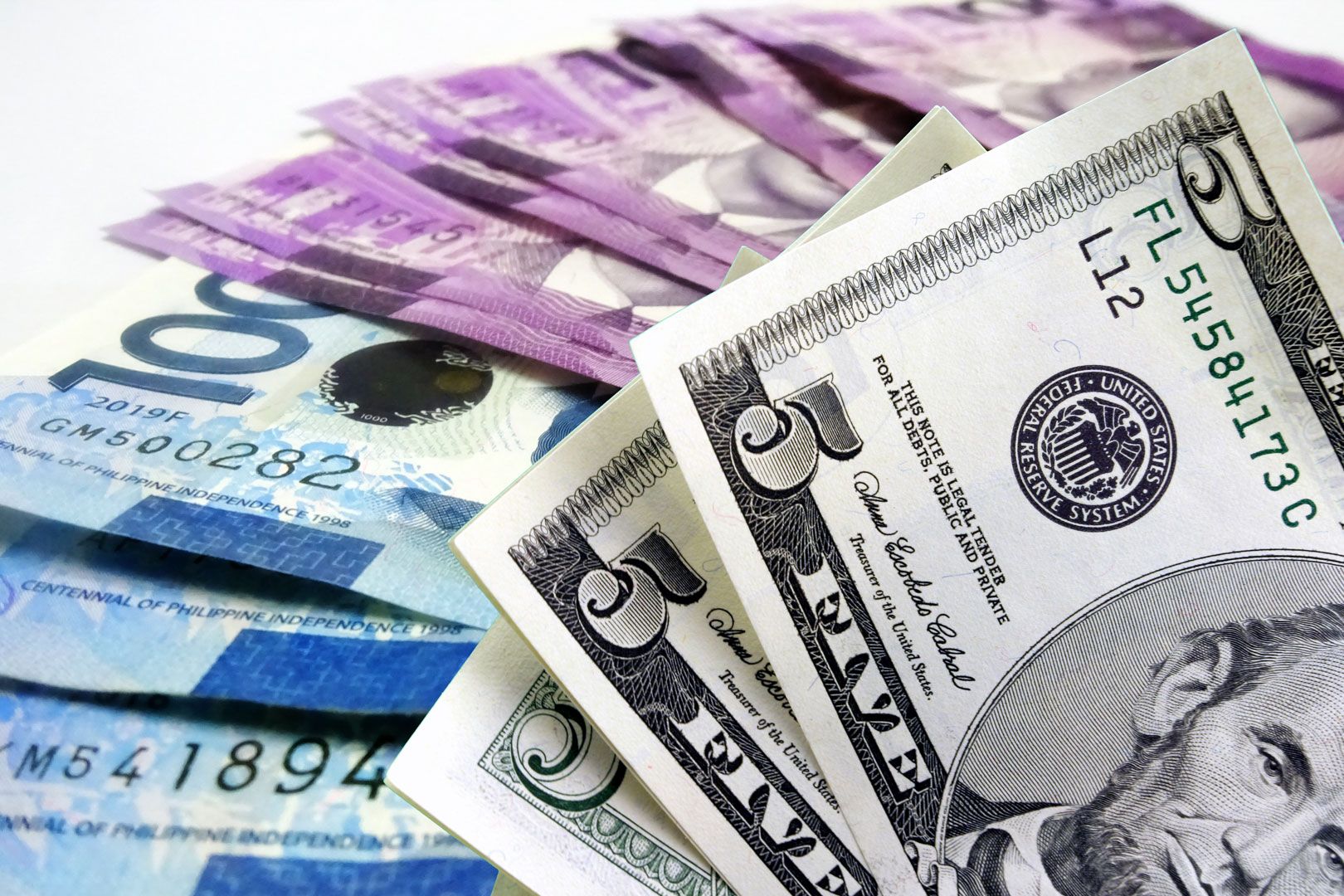
The peso soared to the PHP 62 level on Thursday as the greenback slid amid the results of the United States’ midterm elections and lower global oil prices.
The local unit surged by 56.5 centavos to close at PHP 62.97 versus the greenback from its PHP 63.535 finish on Wednesday, Bankers Association of the Philippines data showed.
This was its best close in three weeks or since Oct. 14’s PHP 62.87.
The currency opened Thursday’s session stronger at PHP 63.333 per dollar. Its intraday best was at PHP 62.90, while its weakest showing was at PHP 63.35.
Dollars traded jumped to USD 2.005 billion from USD 1.32 billion.
“The dollar-peso closed lower as the market reacted to hotter-than-expected CPI (consumer price index) release this morning coupled with broad dollar weakness following the result of the US election,” a trader said in a phone interview.
Philippine headline inflation accelerated to 7.8% from 7.2% in September and 1.7% a year ago. This was the fastest reading in nearly four years or since February 2023’s 8.6%.
It also outpaced the 7.6% median estimate of 22 analysts in a BusinessWorld poll, but was within the Bangko Sentral ng Pilipinas’ (BSP) 7.1%-8.1% forecast.
This was the eighth straight month that the headline clip was above the BSP’s 3% target. This also brought the year-to-date average to 5.6%.
The peso was also supported by the decline in global crude oil prices, Rizal Commercial Banking Corp. Chief Economist Michael L. Ricafort said in a Viber message.
The dollar slid to the lowest in more than a month on Thursday in the aftermath of an overwhelming victory by Democrats in the US midterm elections, which sent oil prices and Treasury yields lower, Reuters reported.
The dollar index, which measures the greenback against a basket of currencies, fell 0.1% to 101.38, after hitting 101.21 in the Asian session, the lowest since Sept. 30.
For Friday, the trader sees cautious trading capping the peso at PHP 62.70 to PHP 63 a dollar as market players await the release of US nonfarm payrolls data, while Mr. Ricafort expects the currency to move between PHP 62.85 and PHP 63.05.
Weakness ahead
Meanwhile, the Philippine peso could weaken further to PHP 66 against the dollar by end-2027 amid declining foreign exchange reserves and a widening trade deficit, while further interest rate hikes by the BSP could be limited as inflation begins to ease, an economist said.
“I expect the peso-dollar rate to continue depreciating, because our central bank does not have enough reserves to defend,” Victor A. Abola, a senior economist at the University of Asia and the Pacific (UA&P), said at an economic briefing on Wednesday.
The country’s gross international reserves stood at USD 99.494 billion as of end-September, the lowest in three years or since the USD 98.116 billion logged in September 2023. This was down by 8.78% from the USD 109.06 billion in reserves held a year earlier and by 5.1% from USD 104.846 billion in the previous month.
During his presentation at the UA&P’s Economic Briefing for Diplomats, Mr. Abola said he expects the peso to trade at PHP 63.50 per dollar by yearend before weakening further to PHP 66 by end-2027.
The peso breached the PHP 64-per-dollar level for the first time on Oct. 27, closing at a record low of PHP 64.17 against the greenback.
Mr. Abola said foreign investors are using nondeliverable forward contracts to speculate on future movements of the peso.
“The foreigners are the ones driving it,” Mr. Abola said on the sidelines of the event.
He also pointed to the country’s large trade deficit, reflecting its continued reliance on imported goods, as a structural factor behind the peso’s weakness.
The latest data from the Philippine Statistics Authority showed that the country’s trade deficit widened to USD 47.16 billion in the first nine months from USD 37.57 billion in the same period last year.
“We cannot always import. What will happen? We will just continue importing? We will run out of dollars,” he added.
Despite the continued depreciation, Mr. Abola said a weaker peso could benefit exporters, domestic producers and households receiving remittances from overseas Filipino workers (OFWs).
“And not only them, but also domestic producers… because the prices of imported products are high,” he said.
He also noted that a weaker currency should not automatically be viewed negatively.
“The usual view is that it’s bad. That is from the view of many countries. Not for the Philippines, because we have a big OFW (base). And also, our export sector is small. So, there’s a lot of potential,” he added.
Meanwhile, Mr. Abola said a final BSP rate hike in the first quarter of 2027 is a likely scenario as inflation is expected to ease, supported by a projected decline in global crude oil prices.
He expects inflation to average around 6% this year before slowing slightly in 2027.
The BSP delivered a larger-than-expected 50-basis-point (bp) rate hike on Oct. 22, bringing the target reverse repurchase rate to 5.5%, as it seeks to contain broadening inflationary pressures.
“By the end of next year, a lot of analysts see the last hike in the first quarter. Maybe just 25 bps. And then after that, they will start reducing rates,” he said. “That’s a very likely scenario especially as we see inflation slowing down.” — Aaron Michael C. Sy and Justine Irish D. Tabile
This article originally appeared on bworldonline.com