


Peso hits new low, nears PHP 63 per USD
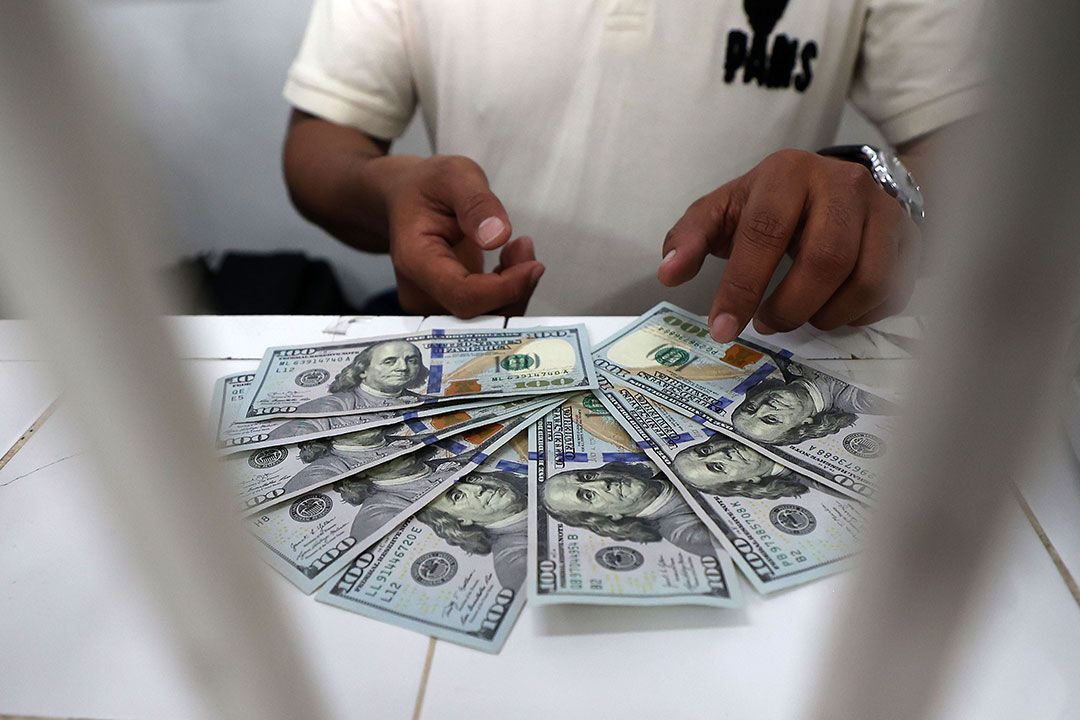
The peso closed at a fresh record low against the US dollar on Monday, nearing the PHP 63 level as growing expectations of a US Federal Reserve rate hike and elevated global crude oil prices weighed on the local currency.
The currency declined by 18 centavos to close at PHP 62.86 versus the greenback from the previous record low of PHP 62.68 last Friday, data from the Bankers Association of the Philippines’ website showed.
Year to date, the peso has depreciated by PHP 4.07 or 6.47% from its PHP 58.79 finish on Dec. 29, 2025.
Monday marked the sixth time the peso has hit a fresh record low so far in September.
The local unit opened Monday’s session weaker at PHP 62.75 per dollar, which was also its intraday best.
Meanwhile, the peso’s intraday low of PHP 62.875 also breached its previous record of PHP 62.775 on Friday.
Dollars traded went down to USD 969.22 million from USD 1.139 billion.
“The dollar-peso closed higher near the new all-time (intraday) low of PHP 62.875 but ended at PHP 62.86 still on tensions in the Middle East with focus on higher oil prices,” a trader said by telephone.
Philippine Institute for Development Studies Senior Research Fellow John Paolo R. Rivera said in a Viber message that the peso was still mainly driven by external factors, noting that global oil prices surged past USD 100 a barrel due to renewed turmoil in the Middle East.
The peso was also weighed down by US consumer inflation data that strengthened expectations of a rate hike by the Fed this week, a second trader said in a Viber message.
“These are particularly significant for the Philippines as an oil importer, since higher oil prices increase our dollar requirements and import bill,” Mr. Rivera added.
Market players see the peso testing the PHP 63-per-dollar level this week.
A third trader said in a Viber message that the peso will remain under pressure amid elevated oil prices and continued local demand for dollars, but noted the currency may not stay at the PHP 63-per-dollar level too long.
“At these levels, the BSP (Bangko Sentral ng Pilipinas) is likely to be increasingly watchful of any disorderly move, so the bigger question is whether PHP 63 becomes a new trading range or simply another level the market tests,” the third trader said.
“The local currency might test the key PHP 63 level from hawkish market expectation ahead of this week’s Fed meeting,” the second trader said.
Meanwhile, the first trader said the peso is unlikely to breach the PHP 63 level this week as players remain cautious ahead of the US central bank’s policy meeting.
“The key is not the record-low level itself but whether depreciation becomes persistent and disorderly enough to generate additional inflationary pressures,” Mr. Rivera noted.
For Tuesday, the first trader sees the peso moving between PHP 62.60 and PHP 63 against the greenback, while the second trader expects it to range from PHP 62.70 to PHP 62.95.
Marcos on peso
Meanwhile, President Ferdinand R. Marcos, Jr. blamed a war-driven oil shock for the peso’s slide to a record low and defended the Philippines’ rising debt, saying the economy remains fundamentally sound.
Speaking with reporters at a media roundtable in New Delhi following the 18th BRICS Summit on Sunday, Mr. Marcos said the peso’s weakness was largely driven by forces beyond Manila’s control.
“You have oil at USD 100 [a barrel]. Because of the closure of the Strait of Hormuz, there is no prospect of any new oil. There is constant threat to oil supplies,” Mr. Marcos said, noting that attacks on the Saudi pipeline and the widening conflict in the Red Sea have left markets on edge.
“The Red Sea is also becoming a war zone. So, nobody wants to do anything. Everybody is afraid of what’s going to happen next. They’re not sure of what’s going to happen next,” he said.
Mr. Marcos said the administration had limited control over global oil prices but could act on domestic factors that affect inflation, particularly food supply.
“You can, however, do something about food. So, that’s what we’re trying to do,” he said, adding that core inflation is “okay.”
In August, inflation eased to a five-month low of 6.1% from 6.2% in July, as lower food and utility prices offset elevated transport costs. August marked the sixth month in a row that the headline print was above the central bank’s 3% target, bringing the year-to-date average inflation to 5.2%
Core inflation, which excludes volatile food and oil prices, also cooled for a second straight month to 4.1% in August from 4.2% in July. However, this was still faster than the 2.7% in August 2025.
“The peso to the dollar, it’s because of inflation, because of all the weaknesses that we are seeing. Unemployment went up. And that’s, again, because of lack of public spending. That’s the effect there,” Mr. Marcos said.
“What happened is also we are starting to increase again public spending so the growth rates kick up.”
At the same time, the President said the country’s debt-to-gross domestic product (GDP) ratio is “fine,” even as the National Government’s outstanding debt reached a record PHP 19.07 trillion at the end of June.
“We are healthier than many, many, many, many other economies,” he added, arguing that debt sustainability should be assessed against assets and economic output.
The country’s debt-to-GDP ratio rose to 66% at the end of the second quarter, the highest in 22 years or since the 71.6% recorded at end-2004. — Aaron Michael C. Sy and Erika Mae P. Sinaking
This article originally appeared on bworldonline.com