


Marcos assures potential investors of Philippines' resilience
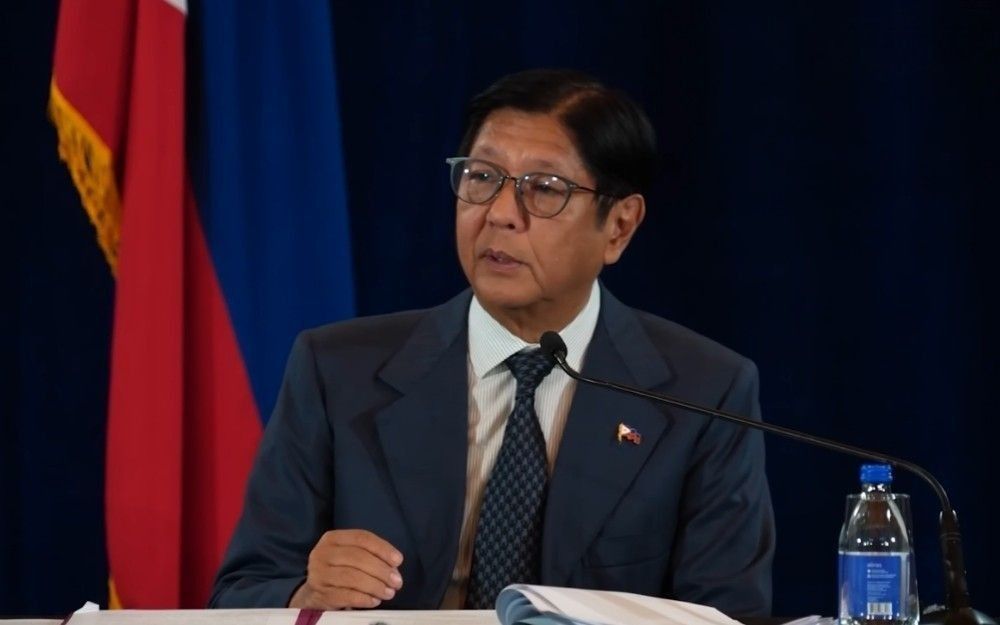
President Ferdinand R. Marcos, Jr. told regional business leaders in Singapore that the Philippine economy remains resilient despite global trade and geopolitical challenges, the Palace said on Thursday.
Speaking at a roundtable discussion during his working visit hosted by the Milken Institute at the Philippine Embassy in Singapore, Mr. Marcos presented the Philippines as an investment destination backed by sustained economic growth, a labor force of more than 52 million, and one of the largest consumer markets in the Association of Southeast Asian Nations (ASEAN), according to the Presidential Communications Office (PCO).
The meeting, formed part of the President’s working visit aimed at strengthening bilateral ties with Singapore and attracting fresh investment.
Mr. Marcos highlighted the administration’s Build Better More infrastructure program, which covers more than 200 projects worth about USD 170 billion, including the Luzon Economic Corridor.
“According to the President, this will serve as the foundation for the expansion of advanced manufacturing, electronics, and critical mineral processing in the country,” the PCO said.
“The President also showcased the reforms initiated by the government to encourage more investors,” it added.
According to the PCO, these include easing foreign ownership restrictions in public services and retail trade, extending land lease agreements to as long as 99 years and allowing up to 100% foreign ownership in renewable energy projects.
The government is aiming to increase the share of renewable energy in the power generation mix to 35% by 2030 and 50% by 2040.
Mr. Marcos said qualified investors may receive up to 40 years of tax and non-tax incentives under the country’s revised investment incentive system.
He reiterated the government’s goal of concluding and signing at least five new free trade agreements to broaden market access and expand investment opportunities.
He said the strategy builds on the Philippines’ existing trade agreements, including the Regional Comprehensive Economic Partnership, the Philippines-European Free Trade Association Free Trade Agreement, the Philip-pines-Japan Economic Partnership Agreement and the Philippines-Korea Free Trade Agreement, alongside ongoing negotiations with the European Union and Canada.
The day before, Mr. Marcos met with Singapore Prime Minister Lawrence Wong to discuss expanding bilateral trade and investment, and cooperation in artificial intelligence, healthcare, digitalization and regional security.
Palace Press Officer Clarissa A. Castro said the President’s working visit yielded investment commitments in healthcare and digital infrastructure.
She said Mr. Marcos separately met officials of ABC Impact, Ayala Group and Temasek Trust.
“The objective is to expand hospitals, clinics, pharmacies, and other medical services in the Philippines so that more Filipinos will have access to an affordable and quality healthcare system while creating thousands of jobs in the country,” Ms. Castro said at a Palace briefing.
“Together with the Ayala Group, this partnership will support AC Health’s expansion to at least 10 hospitals, 300 clinics and 1,150 pharmacies nationwide by 2027, while creating around 10,000 direct healthcare and retail jobs,” Mr. Marcos said in a social media post on Wednesday.
The President also met executives of Singapore Telecommunications Ltd. (Singtel), which has been investing in the Philippines since 1993.
“Singtel Group… (promised to) further expand its investment in the country’s digital infrastructure. Included in the plans is the expansion of data centers and other digital facilities expected to improve internet connectivity, cre-ate more jobs, and stimulate the Philippine economy,” Ms. Castro said.
“Also among the agreements reached by the two leaders is the maintenance of peace, stability, and prosperity in ASEAN,” she said. “Singapore will succeed the Philippines as the host country of the ASEAN Summit next year.”
Mr. Marcos has said that recent economic reforms, including amendments to investment laws and the liberalization of key sectors, have improved the country’s competitiveness and strengthened its appeal to international in-vestors. — Erika Mae P. Sinaking
This article originally appeared on bworldonline.com