


Filipino families’ spending outpaces income growth in 2025
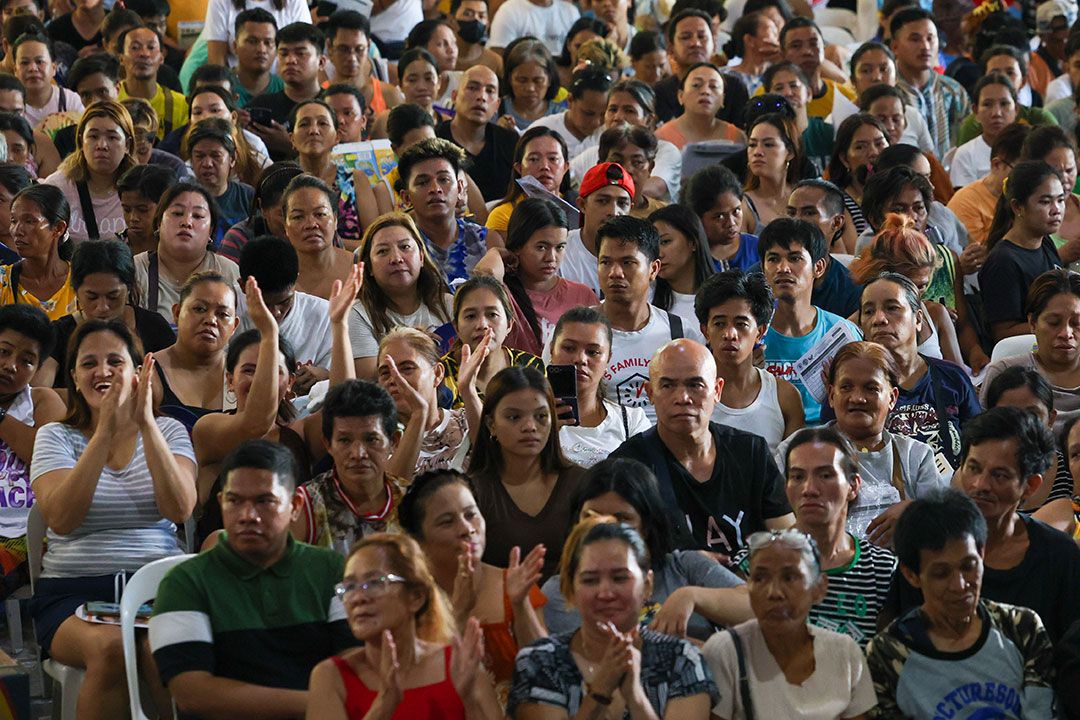
Filipino families saw their average annual income rise by 16.5% in 2025, but their spending grew much faster at 24.7%, data from the Philippine Statistics Authority (PSA) showed.
Preliminary data from the PSA showed that the average annual income of Filipino households went up by 16.5% to PHP 411,350 in 2025 from 353,230 in 2023.
The growth in income was also faster than the 15% increase in 2023 from 2021.
“The increase in average family income likely reflects a combination of factors, including continued labor market improvements, higher wages and salaries, stronger business and entrepreneurial activity, and sustained inflows from remittances,” Union Bank of the Philippines Chief Economist Ruben Carlo O. Asuncion said in a Viber message.
Wages and salaries were the main source of total family income with 54.6% of the total, followed by entrepreneurial activities (15.5%), imputed rent (8.7%), cash receipts from abroad (8.5%), and cash receipts from domestic sources (5.3%).
PSA data showed the lowest average annual family income stood at PHP 170,580 in 2025, up by 19% from PHP 143,280 in 2023. The highest family income stood at PHP 1.03 million, rising by 15.6% from PHP 895,470 in 2023.
Mr. Asuncion said inflation also played a role as it lifted nominal incomes over the period.
“The data suggests that household earning capacity continued to improve despite a challenging global environment. It indicates that economic activity remained supportive of job creation and income generation, allowing many Filipino families to recover further from the disruptions experienced in previous years,” he said.
By region, the National Capital Region (NCR) had the highest average annual family income in 2025 at PHP 574,370, up by 11.8%.
Calabarzon (Cavite, Laguna, Batangas, Rizal, and Quezon) followed, with average family income growing by 23.3% to PHP 526,070, while Region III (Central Luzon) saw income jump by 19.2% to PHP 447,310.
On the other hand, the Bangsamoro Autonomous Region in Muslim Mindanao (BARMM) had the lowest average family income at PHP 246,050.
“From 2023 to 2025, the average annual family income increased in all regions, with Region II (Cagayan Valley) registering the fastest growth of 25%, while Region XII (Soccsksargen) posted the slowest growth of 3.7%,” PSA said.
Among provinces, Ilocos Norte posted the highest average family income at P619,240 in 2025, while Maguindanao del Sur had the lowest at P177,750.
Among highly urbanized cities (HUCs), Makati City had the highest average annual family income at PHP 796,990, while Zamboanga City recorded the lowest at PHP 309,610.
Spending
However, the average annual spending of Filipino families also increased by 24.7% to PHP 321,850 last year from PHP 258,050 in 2023. This was a much faster pace than the 12.8% increase in annual expenses in 2023 from 2021.
The lowest average annual expenditure stood at P155,600 in 2025, up 21.7% from PHP 127,860 in 2023. The highest average family spending stood at PHP 693,810 in 2025, surging 27.2% from PHP 545,660 in 2023.
Food and nonalcoholic beverages made up the biggest share of Filipino families’ expenditures at 33.3%, followed by housing, water, electricity, gas and other fuels at 21.6%; restaurants and accommodation services at 7%; transport at 6.9%; personal care, miscellaneous goods and services at 4.2%, and health at 3.5%.
NCR posted the biggest annual average family spending at PHP 460,500 (up 19.6%), followed by Calabarzon Region at PHP 417,680 (up by 34.6%), and Region III at PHP 378,940 (up by 26.9%).
BARMM also had the lowest average annual family expenditure at PHP 202,170.
“From 2023 to 2025, average annual family expenditure increased across all regions with Region IV-A (Calabarzon) recording the highest growth of 34.6%. On the other hand, the Cordillera Administrative Region (CAR) posted the lowest increase at 7.6%,” PSA said.
At the provincial level, Pampanga (excluding the City of Angeles) had the highest family spending at PHP 473,370, while Sulu had the lowest at PHP 159,480.
For HUCs, Makati had the highest family expenditure at PHP 606,700, while Zamboanga had the smallest at PHP 261,870.
Poverty incidence
PSA data also showed the Gini coefficient, which measures income inequality, rose to 0.3910 in 2025 from 0.3909 in 2023. A Gini coefficient of “0” indicates perfect equality while “1” indicates perfect inequality.
Data from the PSA showed poverty incidence declined in all regions in 2025, with BARMM showing the biggest improvement. Poverty incidence in BARMM fell to 12.8% in 2025 from 26% in 2023.
PSA said NCR remained “the least poor” among the regions with poverty incidence among families of 0.6% in 2025.
On the other hand, the Bicol Region posted the highest poverty incidence among families at 16.8%.
Mr. Asuncion said the rise in incomes and the decline in poverty suggest the benefits of economic growth are more broadly felt across households.
“While regional disparities remain, the data points to a generally improving socioeconomic environment and a more resilient household sector. Going forward, sustaining these gains will depend on keeping inflation manageable, supporting job creation, and ensuring that growth remains inclusive,” he said.
Last week, the PSA reported that poverty incidence at the national level fell to 9.7% in 2025 from 15.5% in 2023. This translated to about 11.08 million poor Filipinos, significantly lower than the 17.54 million recorded in 2023.
Poverty incidence among families stood at 6.4%, equivalent to 1.9 million families, down from 10.9%, or about 3 million families, in 2023.
The PSA defines poverty incidence among families as the proportion of families whose incomes fall below the poverty threshold, or the minimum income needed to meet their basic food and nonfood needs. — Sheena Mae E. Sancap
This article originally appeared on bworldonline.com