


Cash remittances up 1.7% in June, slowest in over 4 years
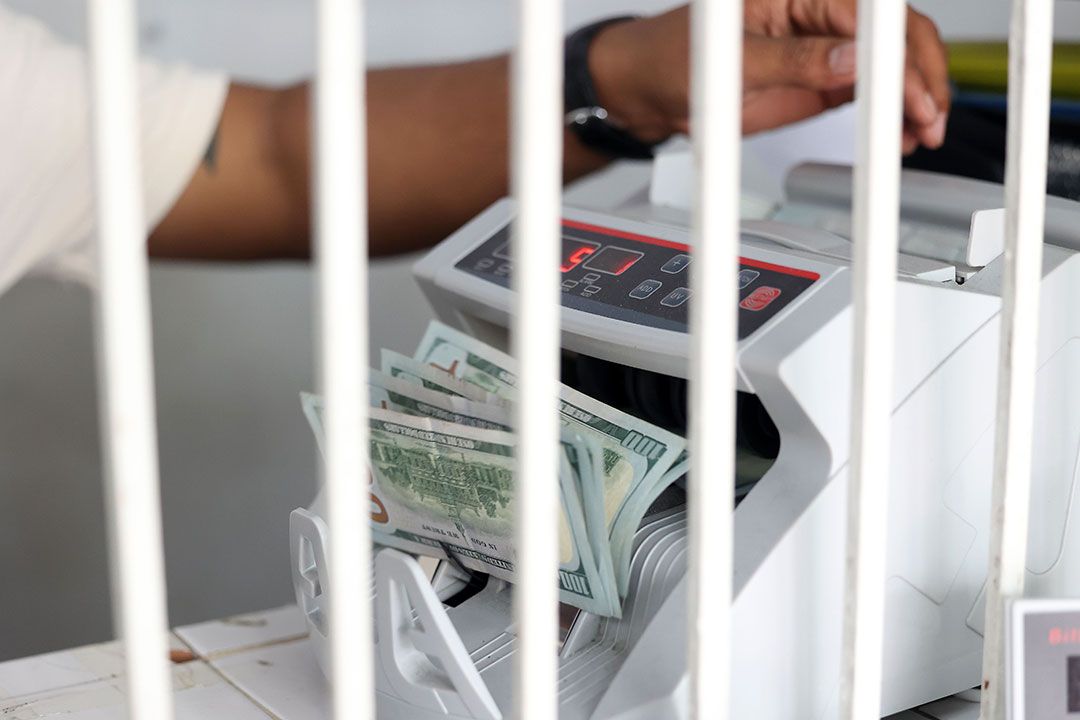
Cash remittances from Filipinos abroad expanded at its slowest pace in over four years in June even as the monthly level reached a six-month high, Bangko Sentral ng Pilipinas (BSP) data showed.
Overseas Filipino workers (OFWs) sent home USD 3.039 billion in cash remittances in June, rising by 1.7% from USD 2.987 billion a year ago.
This was the highest monthly remittance inflows since December last year, when it reached USD 3.522 billion.
However, June saw the weakest annual remittance growth in four years and four months or since the 1.3% in February 2022.
“Cash remittances reached USD 3.04 billion in June 2026, the highest monthly cash remittance level recorded in the first half of 2026,” the central bank said in a statement on Monday.
Month on month, cash remittances increased by 12.02% from USD 2.713 billion.
Meanwhile, personal remittances amounted to USD 3.388 billion in June, up 1.8% from USD 3.329 billion the prior year.
“Seasonally adjusted personal remittances, which include cash sent through banks and informal channels as well as remittances in kind, likewise increased in June 2026,” the BSP said.
Land-based OFWs sent home bulk of the cash remittances in June with USD 2.48 billion, climbing by 1.8% from USD 2.43 billion a year earlier.
On the other hand, remittances from sea-based workers inched up by 1.4% to USD 560 million in June from USD 550 million a year ago.
Analysts said the significantly slower annual growth in June does not raise any major red flag as it merely mirrors the highly volatile global economic conditions, with remittances still resilient.
“The slowdown in remittance growth to 1.7% in June is more a story of moderation than a cause for concern,” Jonathan L. Ravelas, senior adviser at Reyes Tacandong & Co., said in a Viber message.
“A combination of base effects, softer economic conditions in some host countries, geopolitical uncertainties in parts of the Middle East, and timing-related factors likely weighed on growth during the month,” he added.
Meanwhile, SM Investments Corp. Vice-President and Group Economist Robert Dan J. Roces noted that remittances continued to support household spending, despite slower growth.
“From a business perspective, the steady rise in remittances is supportive because these flows go directly into household spending,” he also said via Viber.
“Even at a modest 1.7% growth, remittances provide a reliable income buffer for OFW families and help sustain consumption across food, retail, housing and other services. This provides some underlying support for consumption and suggests household demand can hold up even in a more challenging inflation environment,” he added.
In June, inflation remained above the BSP’s 3% target for a fourth straight month at 6.4%. This brought the country’s first-half headline inflation to 4.8%.
First half remittances
In the first half of 2026, cash remittances climbed by an annual 2.4% to USD 17.149 billion from USD 16.753 billion.
Of the total, remittances from the United States accounted for 39.4% of the total inflows in the January-to-June period. This was followed by Singapore (7.2%), Saudi Arabia (6.3%), Japan (5.1%), the United Kingdom (4.8%), the United Arab Emirates (4.4%), Canada (3.3%), Qatar (3%), Taiwan (2.8%), and South Korea (2.8%).
Cash remittances from land-based workers reached USD 13.7 billion in the January to June period, 2.4% more than the USD 13.38 billion sent a year ago.
Meanwhile, sea-based workers’ cash remittances increased by 2.2% annually to USD 3.45 billion in the six-month period from USD 3.38 billion.
Personal remittances also rose by 2.4% to USD 19.123 billion in the period ending June from USD 18.672 billion last year.
“These inflows continued to support recipient households’ income, spending, and overall domestic demand,” the central bank said.
For Mr. Ravelas, remittance inflows will likely show resilience and continue to drive economic growth as global labor market conditions remain stable.
“That said, remittances continue to expand and remain one of the most resilient sources of support for the Philippine economy,” he said.
“While growth has slowed, the underlying trend remains positive. As long as global labor markets remain relatively stable, remittances should continue to support household spending, which remains a key driver of economic growth,” he added.
The BSP sees cash remittances rising by an annual 2.7% to USD 36.6 billion this year, slower than the 3.3% to USD 35.6 billion in 2025. — Katherine K. Chan, Reporter
This article originally appeared on bworldonline.com