


Budget realignments may address social needs but growth impact unclear
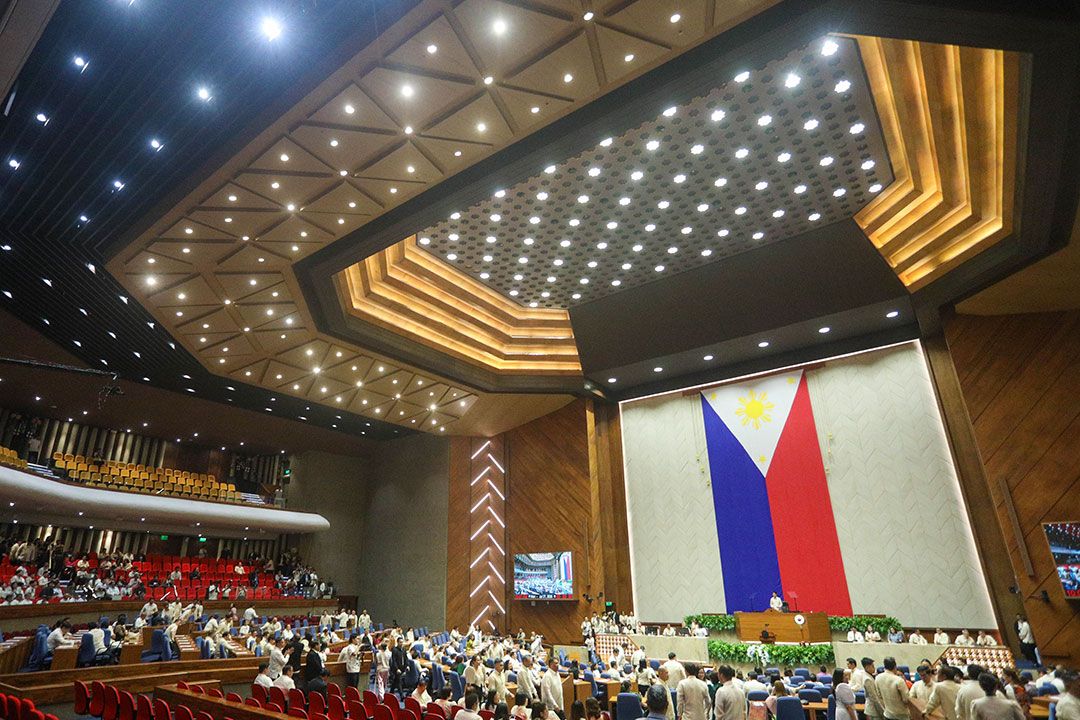
The House of Representatives’ PHP 116.32-billion realignment of the proposed 2027 national budget may help address immediate social needs, but analysts said its long-term impact on the economy will depend on where the additional funds go and which programs face cuts.
The chamber on Wednesday approved on second reading House Bill No. 10858, or the proposed PHP 7.2-trillion national budget for 2027, incorporating amendments recommended by the Budget Amendments Review Subcommittee.
The House is set to approve the budget bill on third and final reading on Oct. 12.
The subcommittee had approved PHP 116.32 billion in realignments, redirecting funds to health, social welfare, agriculture, infrastructure and education.
Philippine Institute for Development Studies Senior Research Fellow John Paolo R. Rivera said the distribution of realigned funds suggests that Congress is responding to rising living costs, healthcare needs, agricultural vulnerability and financial pressures on households.
“Social assistance can support consumption and cushion vulnerable households but its lasting economic impact depends on whether the reallocations also strengthen productive capacity and service delivery,” Mr. Rivera said in a Viber message.
Higher allocations for social programs and productivity investments should not necessarily be viewed as competing priorities, he said.
Agricultural support could improve productivity if directed toward irrigation, technology and logistics, while healthcare assistance could help protect human capital, Mr. Rivera said.
The key consideration is whether spending provides temporary relief or addresses the underlying causes of vulnerability, he said.
Mr. Rivera said the distribution was understandable given current economic conditions, but fiscal policy must balance immediate relief with investments that can generate sustainable growth.
“The quality of the budget should be judged not by the size of allocations but by measurable improvements in household welfare, productivity, economic resilience,” he said.
University of Makati Political Science professor Ederson DT. Tapia said he would hesitate to characterize the realignment as either purely growth-oriented or focused only on short-term relief.
Social and medical assistance can support household consumption and protect vulnerable families from economic shocks, he said.
“The more important question is not simply where the P116 billion went, but where it came from and whether the realignment improves the overall quality of public spending,” Mr. Tapia said in a Facebook Messenger chat.
Since the PHP 116 billion was realigned rather than added to the budget, he said the gains from the programs receiving more funds must be weighed against the benefits that could have been generated by the programs that lost funding.
“A realignment does not automatically mean better spending. It simply changes where government resources are directed,” he said.
The biggest risk is sacrificing long-term economic gains for short-term relief, particularly if cuts affect infrastructure, education, healthcare or other productive investments, he said.
“The real test is whether the benefits of the new allocations outweigh the economic and social costs of what government has given up,” he said.
Mr. Tapia said the distribution of funds reflects lawmakers’ recognition of the immediate pressures confronting Filipino households, particularly healthcare costs, income insecurity and food security.
He said social spending should not become a substitute for structural solutions.
“Government must address immediate hardship while investing in solutions that reduce people’s dependence on assistance over time,” Mr. Tapia said.
He said Congress should explain not only which programs received more funding but also which ones lost funding and why.
Nueva Ecija Rep. Mikaela Angela B. Suansing, who heads the review subcommittee and the House appropriations committee, did not immediately respond to a Viber message seeking more details about the realigned funds.
The sub-committee had increased funding for several social, health, agriculture, and education programs.
The Assistance to Individuals in Crisis Situation of the Department of Social Welfare and Development would receive PHP 25.81 billion more, raising its PHP 33.29-billion National Expenditure Program (NEP) allocation to about PHP 59.1 billion.
The Medical Assistance to Indigent and Financially Incapacitated Patients program of the Department of Health would get another PHP 24.965 billion, increasing its PHP 24.2-billion NEP allocation to about PHP 49.17 billion.
Agriculture agencies will receive a combined PHP 20.86 billion in additional funding, including PHP 16.44 billion for the Department of Agriculture and PHP 4.09 billion for the National Irrigation Administration.
The amendments also earmarked PHP 10 billion for the Presidential Assistance to Farmers and Fisherfolk, PHP 4.96 billion for farm-to-market roads and PHP 500 million for fertilizer assistance.
Ms. Suansing earlier said the agriculture increases were intended to make the budget “Super El Niño-ready,” directing funds toward farmers, irrigation, farm-to-market roads and climate resilience.
Education programs will receive an additional PHP 8.12 billion, including PHP 1.95 billion for the Department of Education, PHP 3.87 billion for higher education subsidies and PHP 1.44 billion for technical education scholarships and training.
The increase includes PHP 952 million for basic education facilities, PHP 500 million for the School Safety and Security Program and PHP 350 million for the Academic Recovery and Accessible Learning (ARAL) Program. The ARAL and School Safety and Security programs had no allocation in the NEP.
The Tertiary Education Subsidy would receive PHP 2.1 billion despite having no NEP allocation, while the Tulong Dunong Program would get PHP 1.77 billion, also with no NEP allocation.
Party-list Rep. Antonio L. Tinio earlier questioned the lack of detailed accounting of the funding sources behind the sub-committee’s changes.
Lawmakers and the public should be able to see not only which programs gained funding, but also which items were reduced to finance them, Mr. Tinio said. — Pexcel John Bacon
This article originally appeared on bworldonline.com