


BSP has room to manage peso swings
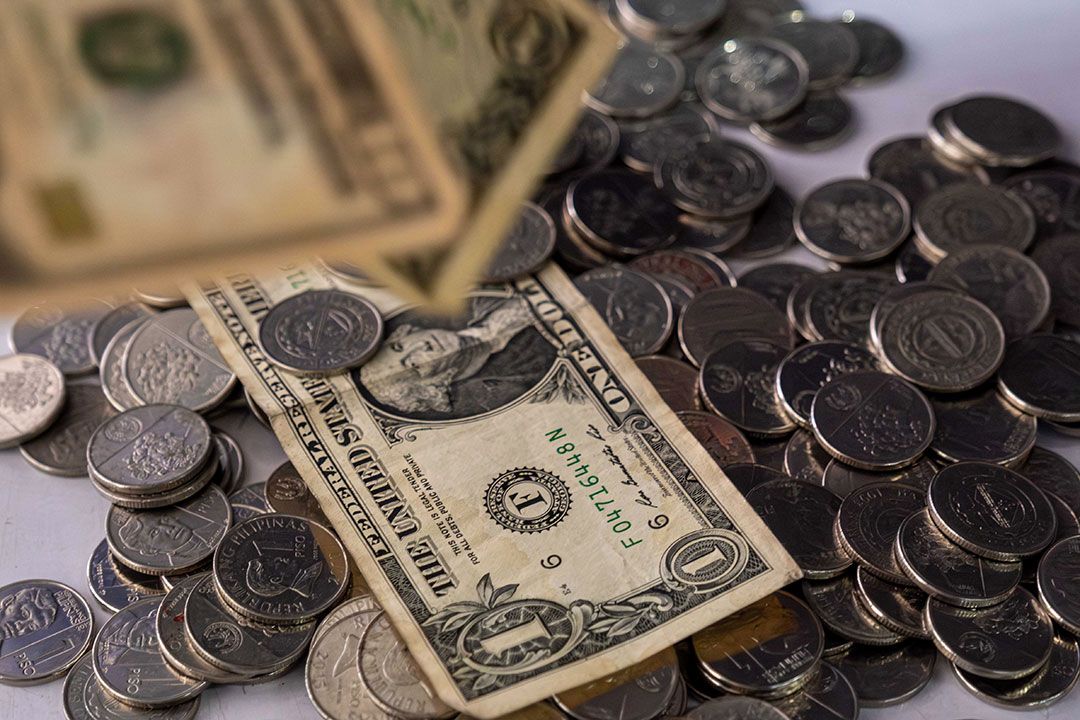
The Bangko Sentral ng Pilipinas (BSP) has room to curb excessive volatility in the peso but does not need to defend a specific exchange rate unless the currency’s depreciation becomes disorderly or generates significant inflationary pressures, analysts said.
“For the near term, all else equal, we expect the peso to remain around current levels, with some correction toward P61/$ by yearend as seasonal remittance inflows pick up,” China Banking Corp. Chief Economist Domini S. Velasquez said in a Viber message.
The peso weakened by 37.7 centavos to close at a record-low PHP 62.265 against the dollar on Friday from PHP 61.888 on Thursday. This was a day after the Monetary Board raised its policy rate by 25 basis points to 5%.
Ms. Velasquez attributed the peso’s weakness to a combination of the country’s structural balance-of-payments (BoP) deficit due to weak exports relative to hefty import demand, risk-off sentiment favoring the dollar, softer domestic sentiment and expectations of further depreciation.
“The last two factors can reverse, while the structural pressure is likely to persist in the near term,” she said.
A correction in global oil prices could also ease pressure on the peso by reducing the country’s import bill, Ms. Velasquez added.
“The BSP has room to smooth excessive volatility, but we don’t think it needs to defend a particular level unless depreciation becomes disorderly or starts generating significant inflationary pressures,” she said.
Ms. Velasquez estimated that every PHP 1 depreciation of the peso against the dollar adds 0.03 percentage point to inflation. Around 20% of the inflation basket consists of imported goods, she added.
Reyes Tacandong & Co. Senior Adviser Jonathan L. Ravelas said the central bank has “ample firepower” given the country’s healthy dollar reserves.
The country’s gross international reserves stood at USD 103.32 billion as of end-July, 1.36% lower than the USD 104.74 billion a month earlier.
However, Mr. Ravelas said intervention alone could not reverse the depreciation driven by global dollar strength and capital flows.
“The peso’s weakness is more a reflection of global dollar strength than domestic fragility,” he said.
“If peso weakness begins to materially threaten inflation or inflation expectations, the BSP may need to consider additional policy tightening,” he added.
For now, the BSP would likely favor a combination of calibrated intervention in the foreign exchange market and a data-dependent monetary policy approach, Mr. Ravelas said.
“The key question for the BSP is not the exchange rate level itself, but whether the depreciation becomes persistent enough to threaten price stability,” he added.
MUFG Global Markets Research Senior Currency Analyst Lloyd Chan said the Philippine peso remained Asia’s “weakest link.”
“USD/PHP has moved to fresh record highs despite hawkish rhetoric from the BSP. (BSP) Governor (Eli M.) Remolona, (Jr.) has signaled willingness to tighten policy further as inflation risks remain elevated, but markets continue to focus on the difficult balance between containing inflation and preserving growth,” he said in a commentary on Monday.
In Asia, the market narrative has likely shifted toward whether inflation remains sticky enough to warrant further policy tightening, Mr. Chan said.
“While recent dollar weakness had provided support for the Asia foreign exchange broadly, Friday’s market reaction suggests that several regional currencies could face a tougher backdrop this week if front-end US yield increases prove persistent,” he added.
Mr. Remolona last week said the Philippines needs to strengthen its exports to support the peso.
“The exchange rate itself is something very hard to fix for a country like the Philippines. As you know, we’ve had a trade deficit that’s about 13% of our gross domestic product,” he told a Senate hearing on Thursday. “Our exports are really lacking, so it’s hard to stop the peso depreciation.”
He said the country could run out of reserves if it tried to support the peso without addressing its weak exports.
University of Asia and the Pacific Associate Professor George N. Manzano agreed that expanding exports could support the peso by generating more foreign exchange inflows, but said the high import content of many Philippine goods exports could limit the benefits.
“This means that even when exports increase, a significant portion of the foreign exchange generated may still be used to pay for imported inputs,” he said in a Viber message.
Improving productivity, reducing logistics and energy costs, and strengthening domestic supply chains would help make Philippine exports more competitive, Mr. Manzano said.
He said the Philippines could also boost foreign exchange inflows by attracting more foreign direct investments, particularly those that establish export-oriented industries and integrate the country into regional and global value chains.
The services sector, including business process outsourcing, tourism and digitally delivered services, is another major source of foreign exchange, he added.
“The Philippines has a strong comparative advantage in these areas, and expanding into higher-value services would provide significant opportunities for growth,” Mr. Manzano said.
Philexport President Sergio R. Ortiz-Luis, Jr. said he agrees with Mr. Remolona’s statement that the Philippines has to strengthen its exports.
“Because right now, although we are proud in saying that our export growth in percentage is higher than some of our neighbors, our absolute number is smaller,” he told BusinessWorld in a phone interview.
Mr. Ortiz-Luis said one of the reasons the peso is the worst performer in the region is because of the country’s growing trade deficit.
“And the reason is really because we are not investing in exports,” he added.
In the first seven months, the trade deficit ballooned by 29.2% to USD 37.34 billion from USD 28.91 billion a year ago. Imports grew by 18.9% to USD 92.26 billion as of end-July, outpacing the 12.9% increase in exports to USD 54.92 billion.
Mr. Ortiz-Luis said the government should take the industry more seriously and fund product research and development, marketing, promotions and participation in exhibitions.
“It is not surprising that because we are not investing in exports, while we are growing in percentage, we are being left behind continuously,” he added. — Justine Irish D. Tabile, Senior Reporter
This article originally appeared on bworldonline.com