


BIR readies circular to remove VAT on system loss charges
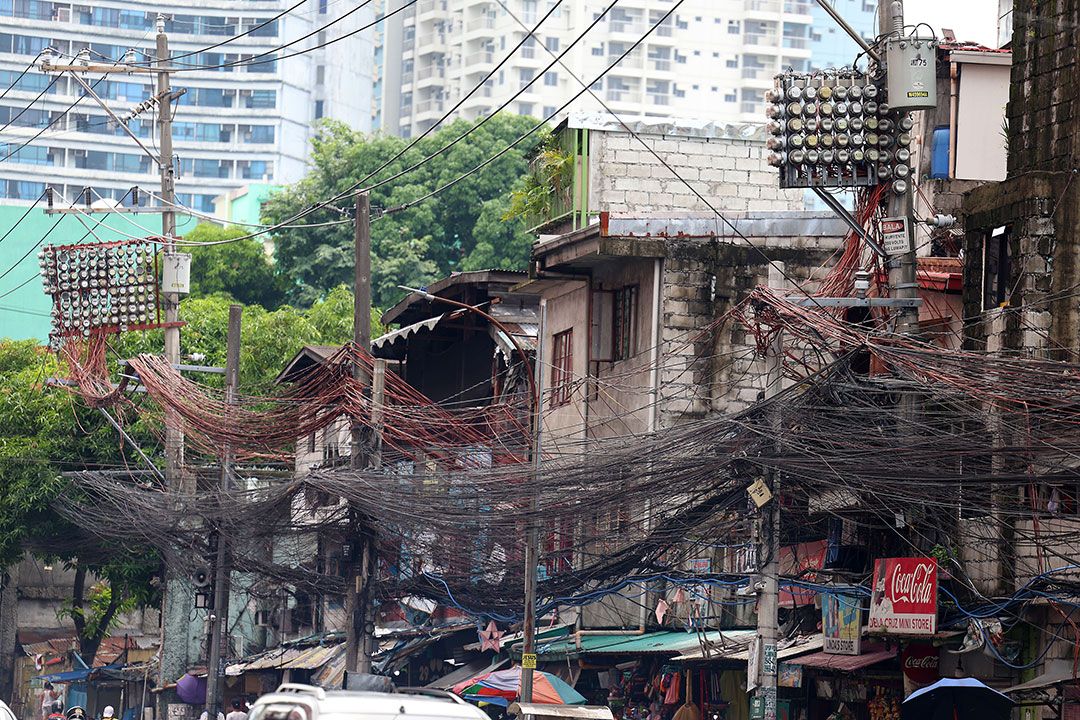
The Bureau of Internal Revenue (BIR) is preparing a Revenue Memorandum Circular (RMC) that will remove the value-added tax (VAT) on the allowable system loss charge in electricity bills.
In a statement on Wednesday, the BIR said it is set to issue the RMC 15 days after the publication of Energy Regulatory Commission (ERC) Resolution No. 26, Series of 2026.
“When there is a clear basis under the law to provide tax relief, we should act on it,” BIR Commissioner Charlito Martin R. Mendoza said.
“We are preparing the BIR issuance now so that after the required period has lapsed, we can immediately implement the VAT removal and pass the benefit on to electricity consumers,” he added.
The ERC has issued Resolution No. 26, which declared the allowable system loss charge a government-mandated pass-through cost that should not be included in the gross sales of generation companies, the National Grid Corporation of the Philippines (NGCP), or distribution utilities for VAT purposes. It was approved on Aug. 26 and released on Aug. 28.
“In simple terms, consumers should not be paying VAT on electricity that never actually reaches their homes or businesses,” Mr. Mendoza said.
“A pass-through charge is a cost collected from consumers and passed on to the proper recipient. Removing VAT from that charge means a lower amount will be passed on to electricity consumers,” he added.
The ERC earlier estimated that removing the 12% VAT on allowable system loss charges could result in about PHP 6 billion in annual savings for electricity consumers nationwide, while the Department of Finance estimates about PHP 10 billion in foregone revenues annually.
Ateneo Center for Economic Research and Development Senior Research Fellow Ser Percival K. Peña-Reyes said the removal of these charges could return some purchasing power to households and lower operating costs for businesses.
“One could describe the macroeconomic effect as positive but incremental rather than transformative,” he told BusinessWorld via Facebook Messenger.
A typical household consuming 200 kilowatt-hours (kWh) per month could save roughly PHP 21 monthly, or about PHP 250 annually.
While modest, the recurring reduction in a non-discretionary expense could ease the financial burden on households, particularly lower-income families, or free up money for food, transportation, education and other consumption, he said.
“The PHP 6-billion annual (savings) estimate is essentially a transfer of purchasing power back to electricity consumers,” Mr. Peña-Reyes said.
Businesses would also benefit from lower electricity costs, with electricity-intensive establishments likely to see larger peso savings, he said.
This could marginally improve operating margins or give firms some room to moderate prices, Mr. Peña-Reyes said.
“This matters particularly for sectors where electricity is a significant input —manufacturing, retail, food processing, cold storage, telecommunications/data facilities and other energy-intensive services,” he added.
The direct effect on headline inflation, however, should be very small because the reduction amounts to only around 0.6% of a typical electricity bill.
“It is better viewed as a small, broad-based disinflationary measure,” rather than a major anti-inflation intervention, Mr. Peña-Reyes said.
Over the longer term, the savings could marginally improve the competitiveness of Philippine businesses, which have long faced concerns over high electricity prices.
“Removing VAT from system-loss charges does not fundamentally change the cost of generating electricity. It simply removes a tax imposed on one component of the bill,” he said.
The BIR issuance will build on RMC No. 60-2026, released in June, which clarified that the Lifeline Subsidy, Green Energy Auction Allowance and other specified government-mandated charges are not subject to output VAT and related creditable withholding taxes.
“We will continue reviewing our tax rules for areas where their proper application can provide practical relief to taxpayers. Where the law allows it, we want that relief to be clear, immediate, and felt by our people,” Mr. Mendoza said.
Last July, President Ferdinand R. Marcos, Jr. urged Congress during his fifth State of the Nation Address to amend the Electric Power Industry Reform Act and prohibit system loss charges, including the corresponding VAT, from being passed on to consumers.
Electrification target
Meanwhile, the Philippines could be waiting until 2043 to achieve total electrification with the constrained funding for the initiative, according to an official from the Department of Energy (DoE).
Energy Undersecretary Rowena Cristina L. Guevara said that more than two million households remain without electricity, putting the country far behind its target of achieving full electrification by 2028.
“Based on our calculations, it will happen in 2038, or possibly 2043, as long as the allocation for electrification isn’t increased,” Ms. Guevara told congressman at the DoE budget hearing on Wednesday.
The government will need about PHP 100 billion to hit the goal or about PHP 10 billion annually, she said.
However, the National Electrification Administration (NEA), the agency tasked to support rural electrification, was only earmarked around PHP 2-3 billion per year.
“We have the Total Electrification Program under DoE. This is aside from the NEA’s budget, which is about PHP 500 million,” Energy Secretary Sharon S. Garin said.
For 2027, the DoE is proposing a budget of PHP 5.58 billion, up 25.7% from its current appropriations of PHP 4.43 billion.
The proposed budget includes PHP 1.36 billion for the Philippine Gradiometry and Seismic Survey Project, PHP 600 million for the Total Electrification Project, and PHP 949.71 million for the Information Systems Strategic Plan.
Under the electrification initiative, Energy Undersecretary Giovanni Carlo J. Bacordo said the department seeks to procure additional mobile energy systems (MES) to accelerate energization of households.
MES is a rapidly deployable, solar-powered energy solution that can provide reliable electricity for disaster response, unserved households, and underserved areas.
“For 2027, we are proposing a PHP 600-million budget for at least 60 additional MES units,” Mr. Bacordo said.
Data from the DoE showed that household electrification has reached 94.93%, energizing 28.75 million households out of 30.28 million potential households. Luzon has an electrification rate of 98.3%, covering 17.66 million households. In the Visayas, the electrification rate stands at 95.7%, while in Mindanao, about 85.3% of households have access to electricity.
Bagong Henerasyon Party-list Rep. Robert L. Neal agreed that the DoE and NEA’s budget should be increased to allow them to pursue electrification targets. — Justine Irish D. Tabile, Senior Reporter with Sheldeen Joy Talavera
This article originally appeared on bworldonline.com