


Balisacan sees gradual recovery in household consumption
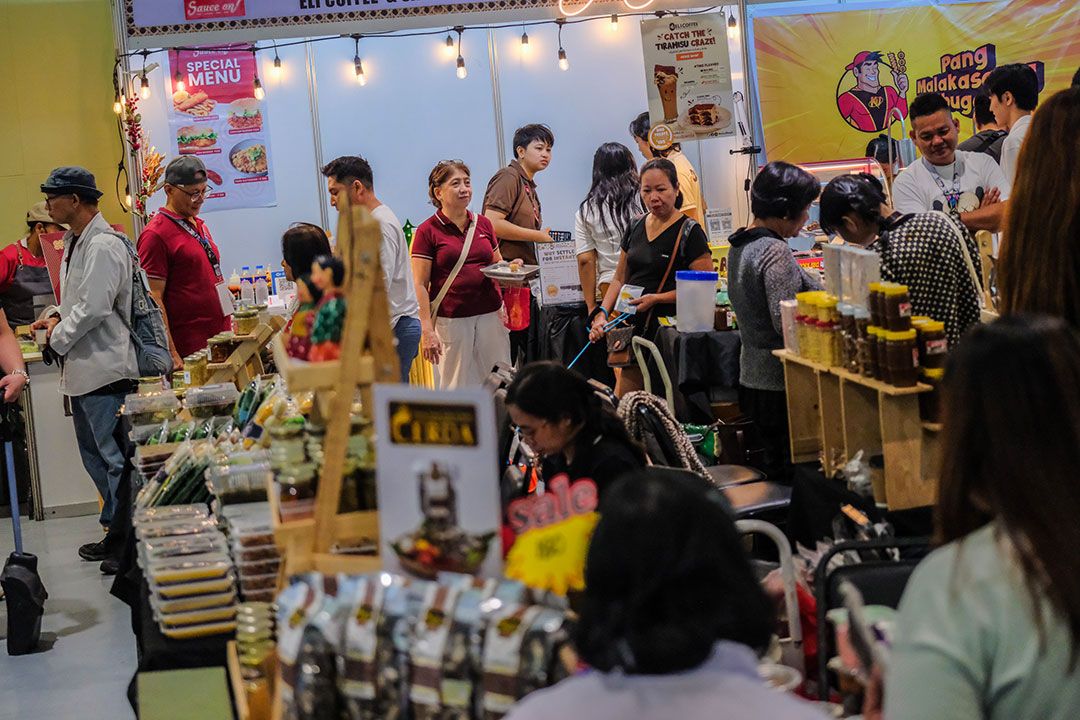
Household consumption could gradually improve in the second half as inflation eases and public infrastructure spending recovers, Economy Secretary Arsenio M. Balisacan said, although he ruled out a sharp rebound.
“I think that you don’t expect a major reversal. It will be slow, but as long as we see it is improving, I feel that’s good,” Mr. Balisacan told reporters in a mix of Filipino and English on Thursday.
However, he expressed hope that consumption will recover after the weak second quarter.
Philippine gross domestic product (GDP) expanded by 2.3% in the second quarter — a new post-pandemic low, amid tepid consumption growth and sluggish public spending.
Household final consumption expenditure, a primary driver of the economy, grew by 2.8% in the second quarter — the weakest pace since the 4.8% contraction in the first quarter of 2021. It also marked the fifth straight quarter of slowing growth.
Mr. Balisacan said elevated inflation remains a major constraint on household spending.
Headline inflation eased to 6.2% in July from 6.4% in June but remained above the Bangko Sentral ng Pilipinas’ (BSP) 3% target. Inflation averaged 5% in the first seven months, faster than the 1.7% in the same period last year.
A recovery in public infrastructure spending could also support consumption by stimulating private sector activity, particularly in construction, Mr. Balisacan said.
“When public infrastructure projects are underway, it influences private sector construction, so it generates multiplier effects across the country,” he said.
In the second quarter, public construction plunged by 32.4% as infrastructure agencies remained cautious following the flood control corruption scandal last year.
Mr. Balisacan also identified sentiment as an important factor in the consumption outlook. The corruption scandal involving flood control projects also continued to weigh on consumer and business sentiment.
“Hopefully, we can get inflation to decline and Congress will deliver the legislation that could help improve the perception about our governance,” he said.
Analysts said they expect household consumption to pick up in the second half, although it will remain muted.
Toby Allan C. Arce, head of sales trading at Globalinks Securities and Stocks, Inc., expects consumption to remain positive but subdued in the third quarter before strengthening more visibly in the fourth quarter.
“The ‘ber’ months should provide the usual seasonal lift from holiday spending, remittances, bonuses and greater discretionary activity, but consumers are likely to remain more selective than in previous cycles,” he said.
Mr. Arce said easing food inflation would improve household purchasing power, although consumers would likely remain value-conscious because prices are still substantially higher than in previous years.
“The fourth quarter should be stronger than the third, but I would describe the outlook as a normalization in consumption rather than a consumption boom,” Mr. Arce said.
China Bank Capital Corp. Managing Director Juan Paolo E. Colet was more cautious, saying household consumption could remain weaker than a year earlier even if it picks up from the second quarter.
“The consumer is under pressure from elevated prices, slow growth, high interest rates and natural calamities,” he said.
Mr. Colet said a breakthrough in Middle East peace efforts could improve consumer sentiment by easing inflationary pressures, although such a development does not appear likely for now.
Beyond the near-term consumption outlook, BSP Governor Eli M. Remolona, Jr. has raised concern over the country’s low savings rate, which he linked to the persistent current account deficit.
“The current account has been in the negative for a long time. As much as possible, we hope savings will increase because that is the long-term solution,” Mr. Remolona told a Senate budget briefing.
Mr. Remolona said domestic investment exceeds national savings, requiring the country to obtain financing from abroad.
In the first quarter, the current account deficit widened to USD 5.66 billion, equivalent to 4.8% of GDP from USD 4.2 billion or 3.7% of GDP a year earlier.
For 2026, the central bank expects the current account deficit to reach USD 18 billion or 3.6% of GDP.
However, Jose Enrique “Sonny” A. Africa, executive director of the think tank IBON Foundation, pushed back against Mr. Remolona’s characterization, saying low household savings largely reflect inadequate incomes rather than excessive consumption.
“Millions of Filipinos consume all their earnings and don’t save because their incomes are so low that they don’t have anything left to save,” he said in a Facebook post.
Mr. Africa said the BSP should instead focus on directing affordable financing toward farmers, fisherfolk and micro, small and medium enterprises, while supporting accessible public services, infrastructure and utilities. — Justine Irish D. Tabile
This article originally appeared on bworldonline.com