


Currencies6 MIN READ
July-August 2023 Global Currencies Recap: Tug of War
A potential US dollar rebound is on the horizon.
August 24, 2023 by Earl Andrew Aguirre
Share this article:

The month of July would turn out to be a repeat of June, starting with initial US dollar weakness followed by month-end recovery that helped the currency recoup some of its losses. The June non-farm payrolls (NFP) report underperformed for the first time since March 2022, posting 185,000 new jobs vs. 225,000 forecast.
The US Federal Reserve also released dovish statements that it was nearing the end of its tightening cycle and the US dollar sell-off intensified after June inflation came out at 3%. Relief would come for the US dollar after the United Kingdom (UK) and Eurozone posted their own lower inflation figures, and the US gross domestic product (GDP) for the 2nd quarter of 2023 grew by 2.4% vs. 1.8% forecast, adding to the possibility that the US economy can still stomach more rate hikes.
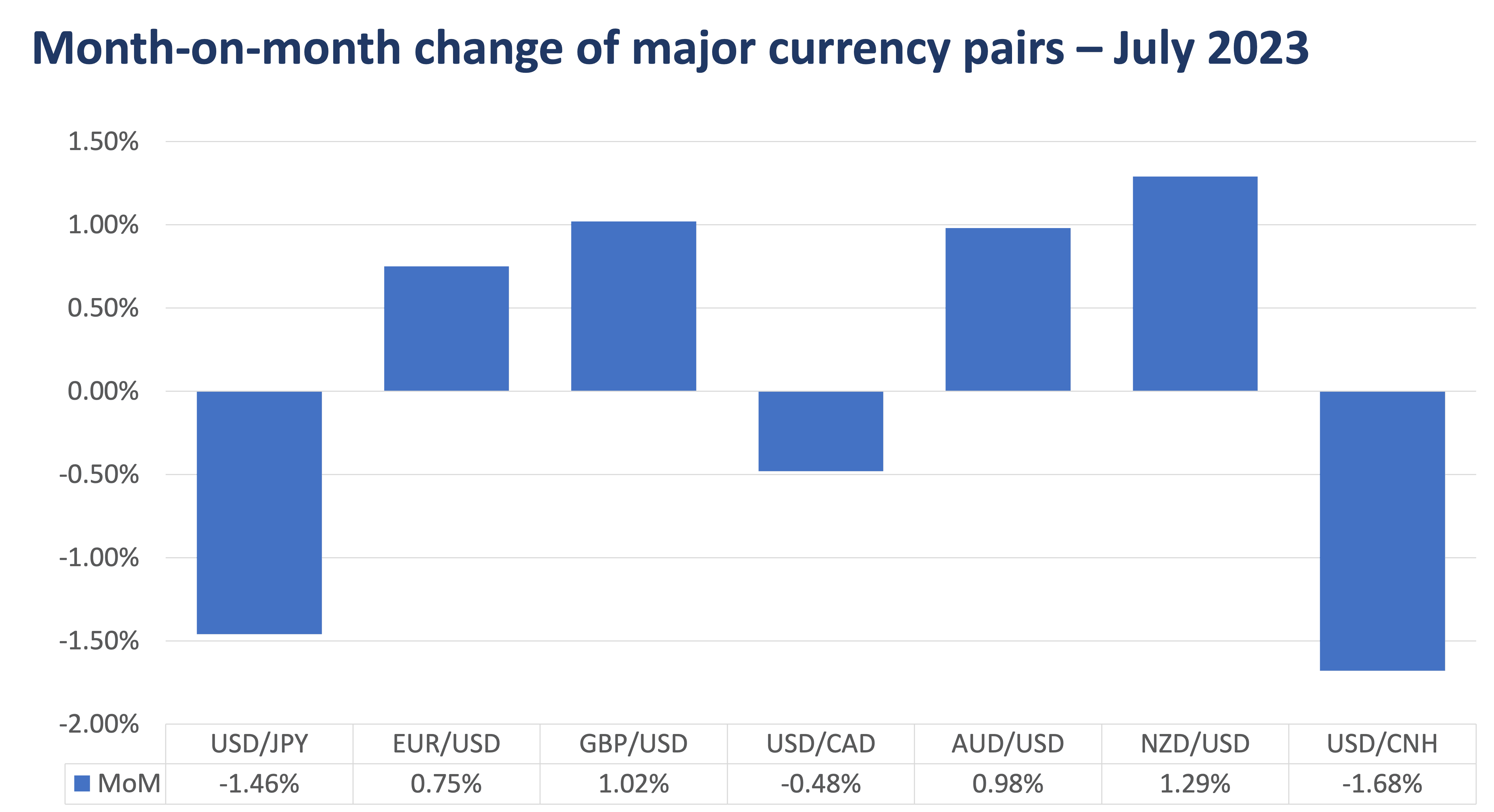

After spending the beginning of the month above 144-levels, the Japanese yen (JPY) strengthened to a low of 138.05 on July 13 and then retraced higher to close at 142.29 (-1.46%).
While the Bank of Japan (BOJ) did not formally amend its yield curve control (YCC) range of -0.5% to 0.5% on the 10-year Japanese Government Bond (JGB), it said that it is open to the bond trading beyond the range as long as it stays below 1.0%.
However, JPY still weakened after the central bank clarified that this was simply a way to conduct the YCC with greater flexibility and not a step towards monetary policy normalization. Japan’s consumer price index (CPI) inched higher to 3.3% year-on-year from 3.2% in May, and although the BOJ is also targeting a 2% inflation target, it still has no plans of pursuing tighter monetary policy.
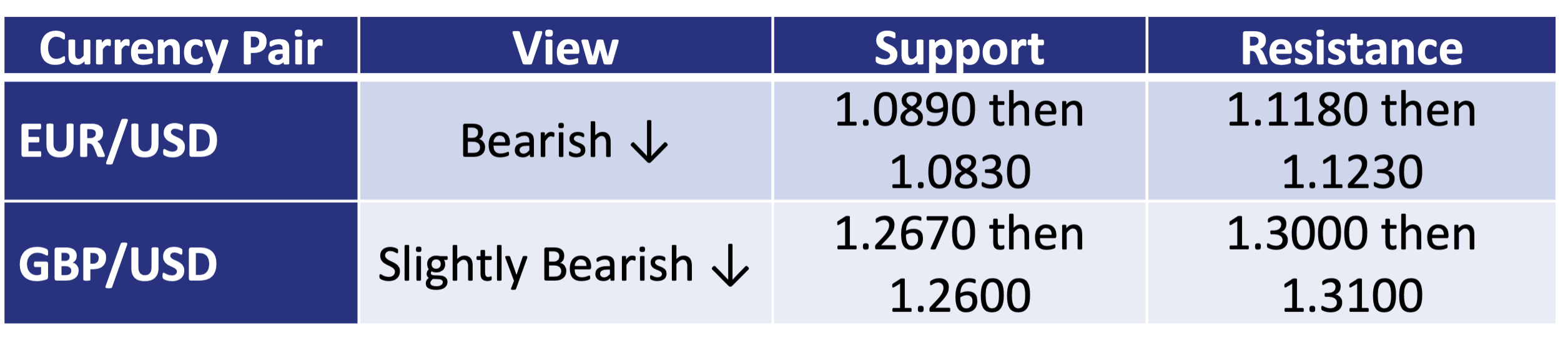
The euro (EUR) was relatively unchanged at +0.75%. It started the month at 1.0912, hit a high of 1.1236 on July 17, and then ended the month at 1.0997. There was generally disappointing activity data after the Eurozone Composite Purchasing Managers’ Index (PMI) came out at 49.9 – the first sub-50 print since December 2022, indicating a contracting economy.
June inflation also printed at 5.5% year-on-year from May’s 6.1%. The European Central Bank (ECB) hiked rates by 25 basis points (bps) to 4.25% as expected, but ECB President Christine Lagarde said there was less ground to cover for future rate hikes and that the ECB will continue to be data-dependent. With economic activity slowing down, however, and inflation falling, monetary tightening seems to be doing its job.
Similarly, the pound sterling (GBP) started July at 1.2693, peaked at 1.3136 on July 13, and then closed the month at 1.2835 (+1.02%). Although the UK unemployment rate increased to 4%, the market paid more attention to average weekly earnings, which accelerated to 6.9% year-on-year.
The rally in GBP/USD was short-lived after July inflation printed lower at 7.9% year-on-year from 8.7% over the last two consecutive months. Bank of England (BOE) Deputy Governor David Ramsden reiterated that there would be further tightening should inflationary pressures persist. But with Manufacturing PMI contracting at 45 vs. 46.1 forecast, higher borrowing costs may already be affecting industrial activities and the UK runs the risk of a potential recession.
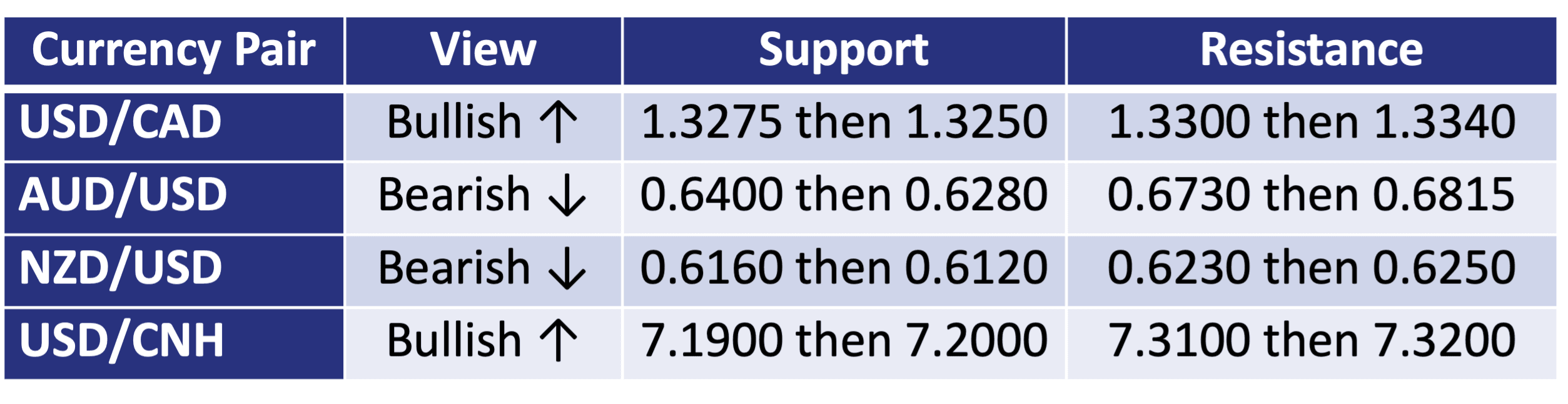
The Canadian dollar (CAD) had a slow grind, starting at 1.3250 and then ending not too far away at 1.3190 (-0.48%). Signals were mixed as Canada’s June inflation came out lower at 2.8% year-on-year from 3.4% the previous month but the Bank of Canada (BOC) proceeded to hike again by 25 bps to 5.00%.
Despite BOC Governor Tiff Macklem’s hawkish rhetoric hinting at more hikes if needed, USD/CAD was unable to decrease further due to still near zero 1st quarter 2023 GDP growth rate and other economic hurdles for the Canadian economy.
On the other hand, the Reserve Banks of Australia (RBA) and New Zealand (RBNZ) were relatively dovish and left policy interest rates unchanged at 4.10% and 5.50%, respectively.
The Australian dollar (AUD) was flattish at +0.98%, increasing from 0.6673 to 0.6717. The New Zealand dollar (NZD) performed better at +1.29%, moving from 0.6153 to a high of 0.6393 on July 13, and then closing at 0.6209.
Second quarter inflation figures of both countries printed lower at 6% year-on-year from 7% (Australia) and 6.7% (New Zealand) the previous quarter. GDP growth rates have also missed estimates, with Australia 2nd quarter 2023 growing by 2.3% vs. 2.4% forecast, and New Zealand growing by 2.2% vs. 2.6% forecast, likely on the back of higher borrowing costs. AUD/USD is also expected to be dragged down by China’s declining import demand.
The Offshore Chinese yuan (CNH) finally found some respite after several months of weakness. Zero inflation rate year-on-year in July and disappointing 2nd quarter 2023 GDP growth rate of 6.3% vs. 7.1% initially triggered a correction higher.
However, the People’s Bank of China (PBOC) was able to intervene in the onshore spot market. USD/CNH decreased from 7.2529 to 7.1461 (-1.68%) as government officials offered statements of financial support to China’s struggling property sector at the July politburo meeting.
Then again, the CNH’s gain in July does not look sustainable given persistently negative economic data and the risk of deflation, which may push the PBOC to pursue further monetary easing.
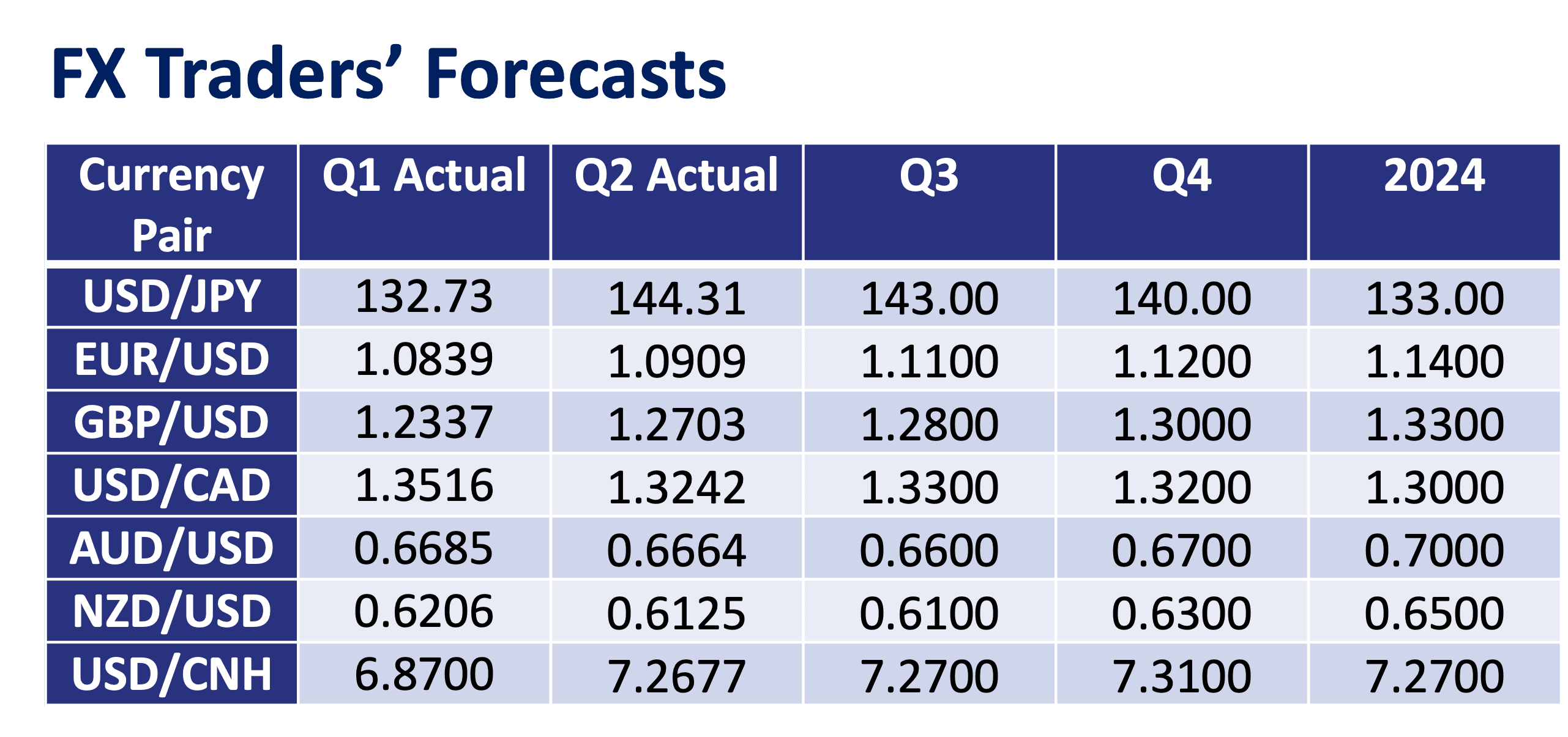
The above forecasts are the foreign exchange traders’ personal opinions and may not reflect the official views of the bank.
Month-on-month, it looks like global currencies just barely won the tug of war against the US dollar in July. Except for Japan, inflation among the developed markets still has some ways to go before they reach global central banks’ 2% targets.
Policy interest rates in the Eurozone, UK, Canada, Australia, and New Zealand will likely stay higher for longer. But employment and economic growth in these countries are slowing down while the US remains resilient amid its own restrictive financial conditions.
The stage has been set for a potential US dollar rebound in August and beyond.
EARL ANDREW “EA” AGUIRRE is a Market Strategist at Metrobank’s Financial Markets Sector and has 10 years of experience in foreign exchange, fixed income securities, and derivatives sales. He has a Master’s in Business Administration from the Ateneo Graduate School of Business. His interests include regularly traveling to Japan and learning its language and culture.