







 DOWNLOAD

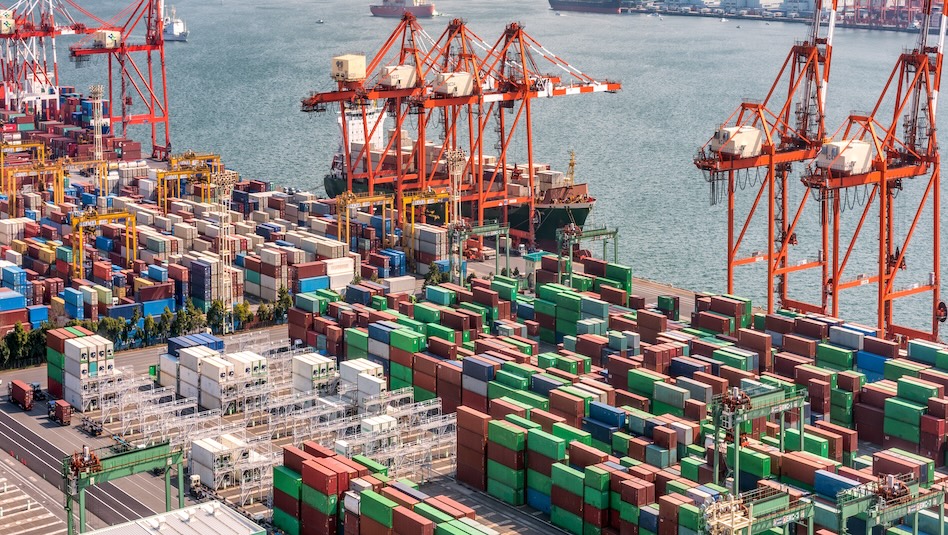


What the US strike on Venezuela means for global financial markets
Developments in Venezuela presents a geopolitical flashpoint and modest risks to financial markets
 By Anna Cudia and Gregory Isak Piencenaves


It is just the start of the year, and eyes are turned to a geopolitical flashpoint.
The US moved to strike Venezuela and capture Venezuelan President Nicolás Maduro, presenting modest asset-price risks shaped by possible sanctions and diplomatic fallout.
Venezuela’s large oil reserves hold long-term strategic importance, though its current production remains low to alter oil market dynamics. While global criticism adds uncertainty, unlocking Venezuelan oil could improve refining efficiency and bolster US influence in heavy crude supply.
Background
Over the weekend, US forces carried out a major operation in the Venezuelan capital, Caracas, detaining and transferring Maduro and his wife to the US for prosecution over alleged corruption and drug trafficking.
This is a turning point in US President Donald Trump’s years-long effort to pressure Maduro’s government—from filing of charges in 2020 to deploying troops in late 2025.
Following the strike, Trump announced a broader plan beyond drug enforcement, including US intentions to temporarily administer Venezuela, rebuild its oil infrastructure, and allow American companies access its reserves.
Proven oil reserves
*As of 2024
| Country | In billions of barrels |
|---|---|
| Venezuela | 303 |
| Saudi Arabia | 267 |
| Iran | 209 |
| Iraq | 145 |
| United Arab Emirates | 113 |
| Others | 530 |
Source: 2025 Organization of Petroleum Exporting Countries (OPEC) Annual Statistical Bulletin
Venezuela has the world’s largest proven oil reserves, and China is its biggest oil export destination. Nevertheless, Venezuela’s share to global oil exports is limited, cushioning the immediate impact on crude prices.
What is the market impact?
Financial markets were mixed. US and emerging market (EM) equity futures rose, helped by expectations of lower oil prices benefiting major importers.
However, volatility (VIX) climbed. Safe-haven assets such as the dollar (DXY), gold, and silver strengthened. Crude oil slipped on expectations of a global surplus in 2026.
Outlook and Strategy: Positive on US equities, metals
- Global equities: Geopolitical risk premiums may rise in the short term, reflected in VIX and EM currencies, with the US dollar supported by safe-haven flows. Nevertheless, a positive bias on US equities is maintained, led by energy and defense sectors on expectations of potential Venezuelan oil revenues. EM equities remain broadly neutral, as Latin America remains under pressure, though Asia is relatively insulated.
- Global fixed income: The US Treasury yield curve continues to steepen, supported by expectations of rate cuts. Preference is tilted toward the short end and the belly. On credit, the outlook is constructive for EMs, specifically Venezuelan and select Latin American bonds, while Asia credit stays neutral.
- Philippine equities and fixed income: Local equities and bonds will likely be unaffected by the ongoing conflict, though softer oil prices could result in slower inflation, supporting consumption and lowering bond yields.
Sectors and themes
Gold and silver are positive on safe-haven demand. Meanwhile, oil faces a near-term downside, as higher supply expectations weigh down on prices.
In the medium to long term, the outlook on the energy sector is positive amid increased investments on oil infrastructure. Defense-related industrials may outperform on higher spending expectations.
Tail risks
While a generally positive view is maintained, risks include potential retaliation from nations such as China through sanctions, diplomatic expulsions, or military posturing due to the country’s reliance on Venezuelan oil.
Where do Venezuelan oil exports go?
*As of 2023
Source: US Energy Information Administration (EIA)
Meanwhile, Trump’s unilateral strike has sparked debate over the bypassing of US Congressional approval and potential violations of constitutional and United Nations (UN) norms.
What are the key watchpoints?
- US Federal Reserve commentary on inflation expectations and oil-price trajectory
- UN Security Council decisions and responses from key allies (i.e., China)
- US Congressional approval for temporary administration in Venezuela
- Invocation of Monroe Doctrine, i.e., that the US is the pre-eminent power in the Western Hemisphere
(Disclaimer: This is general investment information only and does not constitute an offer or guarantee, with all investment decisions made at your own risk. The bank takes no responsibility for any potential losses.)
ANNA DOMINIQUE CUDIA, MBA, CSS, is the Head of Markets Research at Metrobank’s Trust Banking Group, spearheading the generation and presentation of financial markets insights to clients. She used to be with Metrobank’s Investor Relations, where she brought in international awards and took part in various multi-billion peso and dollar capital raising activities. She holds a Master of Business Administration (Finance) degree, with distinction, from the University of London, and industry certifications in finance. She is a naturally curious person and likes to travel here and abroad.
GREGORY ISAK PIENCENAVES, is a Markets Research Analyst at Metrobank’s Trust Banking Group, covering local and global macroeconomic research. He graduated from the Ateneo de Manila University with a Bachelor of Arts in Management Economics, specializing in Financial Economics. Outside of work, he enjoys music and attends live gigs around Metro Manila when possible.