Why the US Treasury’s long-dated buybacks have limits
The US Treasury’s decision to increase long-dated bond buybacks can shape market sentiment. Still, economic fundamentals matter, and investors should heed the signals.
August 25, 2026 by Anna Cudia
Share this article:
Share this article:
The US Treasury recently signaled a stronger commitment to repurchasing longer-dated government bonds in the market. While the move attracted limited attention outside fixed-income circles, it offers useful insights into how policymakers are adapting to a rapidly evolving bond market.
At first glance, Treasury buybacks appear straightforward. The government repurchases previously issued bonds while continuing to issue new securities. However, their significance lies less in the transactions themselves and more in what they reveal about market conditions.
Why now?
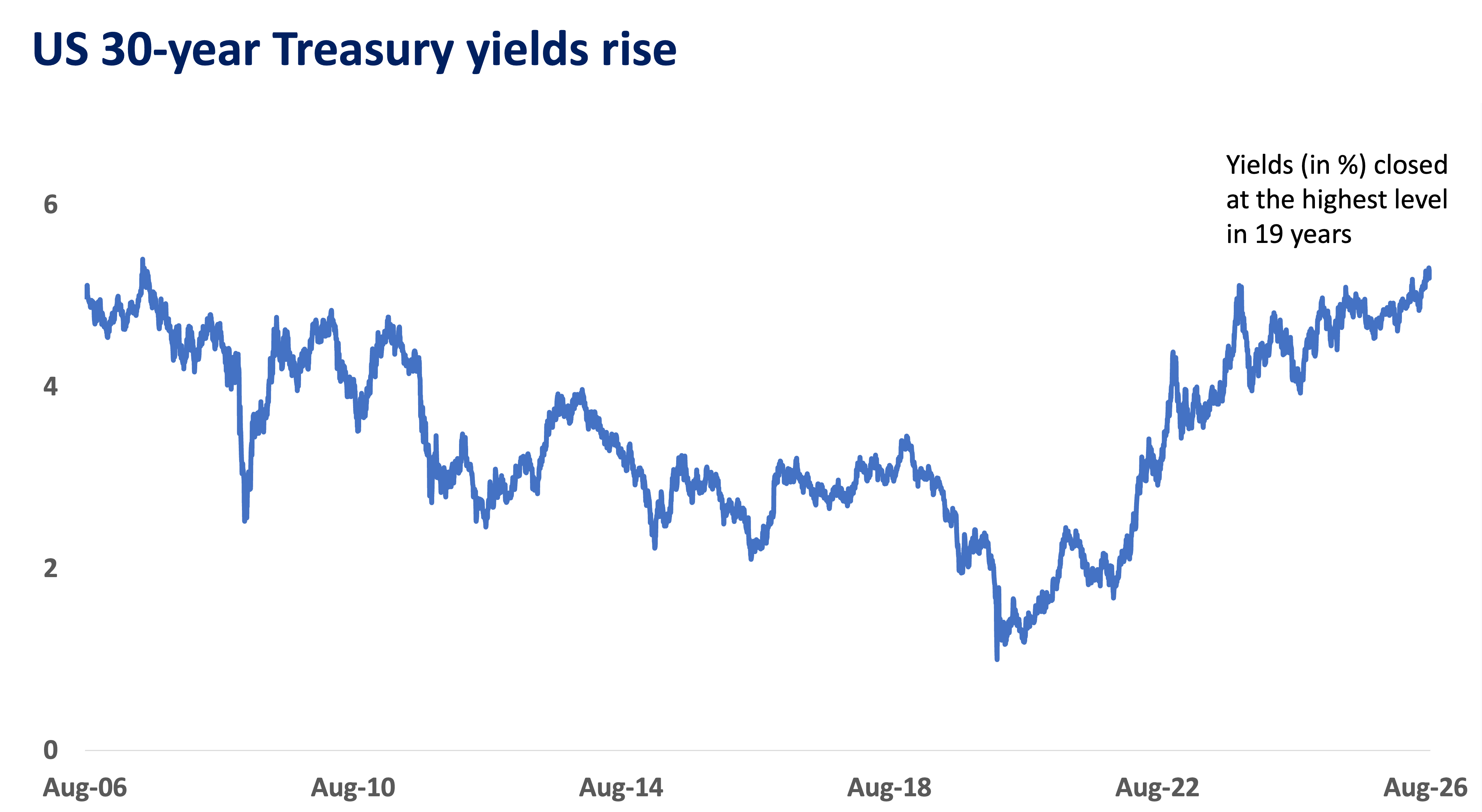
The timing of the announcement was particularly notable. Long-dated Treasury yields had recently climbed to levels not seen in years, reflecting concerns about persistent fiscal deficits, rising debt issuance, and lingering inflation risks. Against this backdrop, many investors viewed the move as a signal that authorities were paying closer attention to conditions at the longer end of the yield curve.
Source: Bloomberg
In many ways, the initiative reflects a recognition that the Treasury market plays a critical role not only in government financing but also in broader financial stability. Treasury securities remain the benchmark against which many other financial assets are priced globally.
What are buybacks designed to achieve?
The primary objective is to improve market efficiency rather than to reduce the government's debt burden.
By repurchasing select older securities, the Treasury can help concentrate trading activity in newer benchmark issues. This can improve liquidity, enhance price discovery, and reduce market frictions, especially during periods of heightened volatility.
For investors, a more liquid Treasury market generally improves market functioning and leads to more reliable pricing across fixed-income assets.
Importantly, the market's reaction suggested that investors viewed the announcement as more than a technical adjustment. The increase in buyback sizes is modest compared with the overall Treasury market, but it was interpreted as a sign that policymakers are prepared to respond if conditions become increasingly strained.
What buybacks cannot solve
While the program may improve liquidity and help moderate volatility, it does not eliminate the structural challenges facing the US bond market.
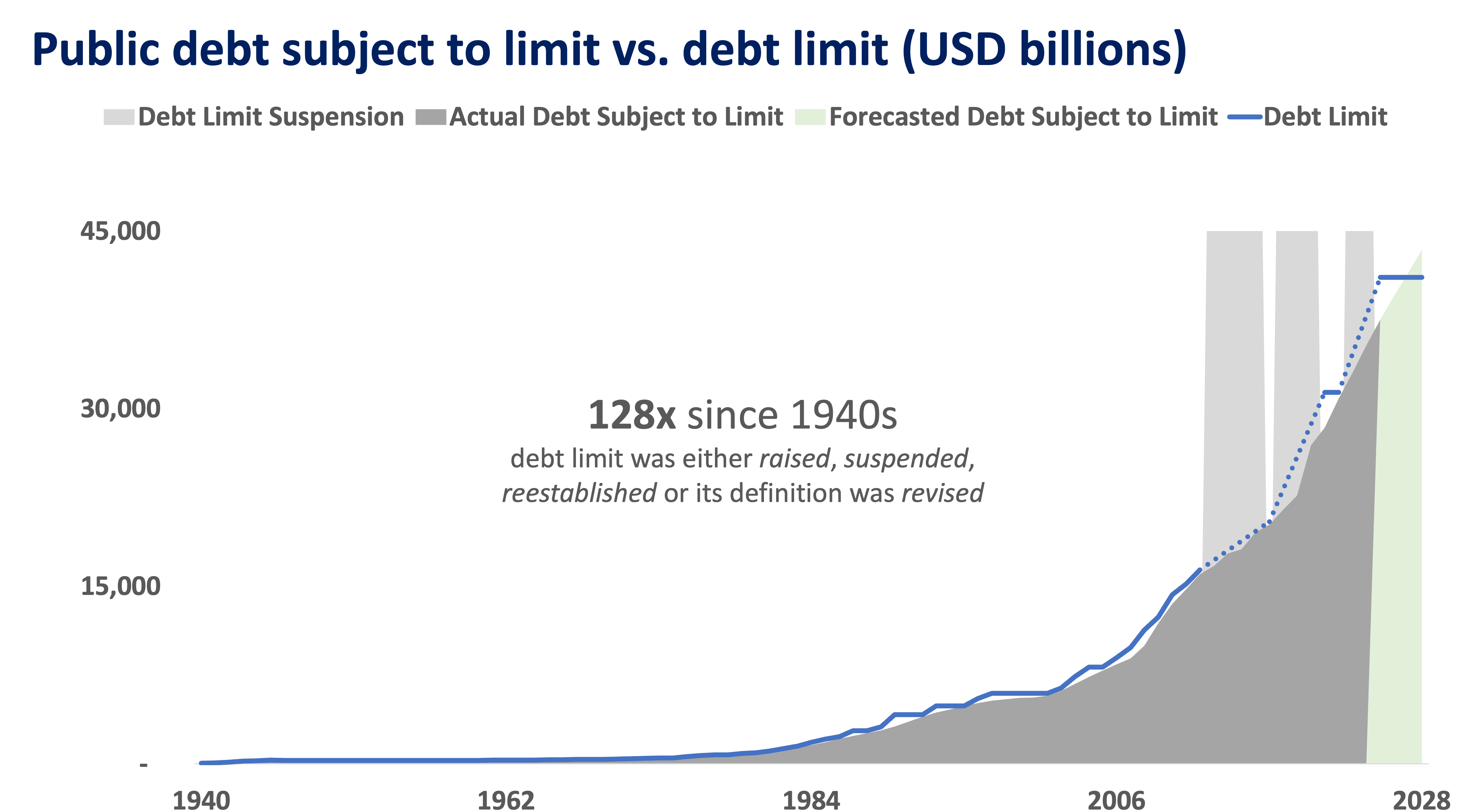
The United States continues to run sizeable fiscal deficits and faces substantial borrowing requirements in the years ahead. Inflation has eased from recent peaks, but uncertainty remains about the future path of prices and interest rates.
Sources: Congressional Budget Office, US Treasury
Put differently, buybacks are a market-management tool, not a fiscal policy solution.
The Treasury may be able to improve how the market functions, but it cannot fundamentally change the amount of debt investors ultimately absorb. As a result, many investors continue to believe that long-term yields will be driven primarily by economic fundamentals rather than by liquidity measures alone.
What it means for investors
For bond investors, the development underscores the importance of looking beyond headlines.
Long-term Treasury yields will continue to be influenced by inflation expectations, economic growth, US Federal Reserve policy, and fiscal conditions. Buybacks may improve liquidity and reduce market volatility, but they are unlikely to alter the broader direction of yields on their own.
Nonetheless, the Treasury's more active approach suggests policymakers are paying closer attention to liquidity conditions and investor demand, particularly at the longer end of the curve.
For diversified investors, this is a reminder that market structure matters. Policy measures to improve market functioning can affect bond market volatility, pricing efficiency, and investor sentiment, even when they do not fundamentally alter the economic outlook.
The bottomline
The Treasury's decision to expand long-dated buybacks reflects a growing focus on maintaining orderly market conditions in an increasingly large and complex bond market. The announcement carried weight not only for its size but also because it signaled that policymakers are closely monitoring stress in long-dated Treasuries.
While buybacks may improve liquidity and ease some pressure on yields, investors should view them as a tool to support market functioning rather than as a solution to rising government debt, persistent borrowing needs, or inflation concerns. Ultimately, bond markets will still depend on the interplay among growth, inflation, monetary policy, and fiscal sustainability.
(Disclaimer: This is general investment information only and does not constitute an offer or guarantee, with all investment decisions made at your own risk. The bank takes no responsibility for any potential losses.)
ANNA DOMINIQUE CUDIA, MBA, CSS, oversees Metrobank’s Macro Research Department, steering macroeconomic and financial market analyses for clients. She previously led the Markets Research Department of Metrobank’s Trust Banking Group and was part of Investor Relations, supporting multi-billion peso and US dollar capital-raising initiatives. She holds an MBA in Finance, with distinction, from the University of London, and industry certifications in finance. Outside of work, she enjoys travel and exploring new perspectives.