Multipolarity is accelerating.
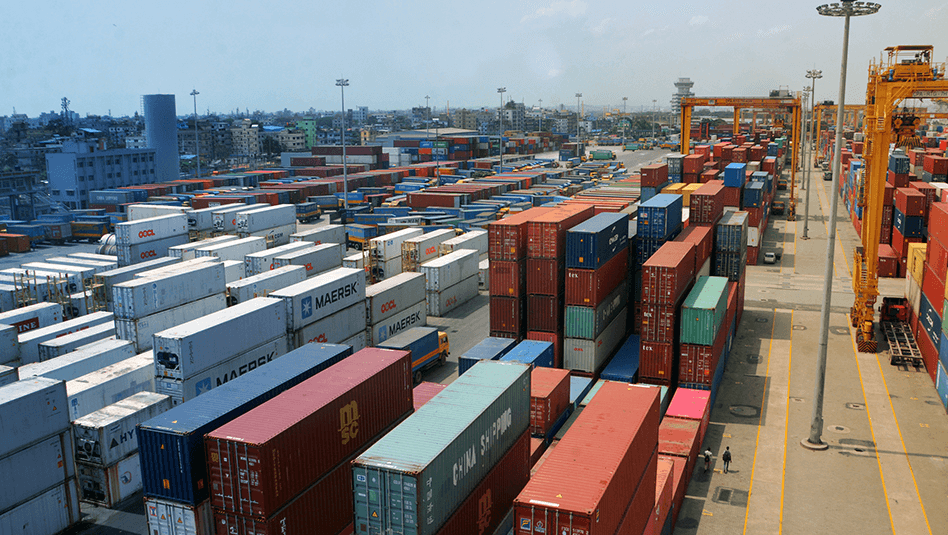
The US-China trade war that began in 2018 worsened with increasing geopolitical tensions. The COVID-19 pandemic and the Russia-Ukraine war set the stage for deglobalization. Supply chains have been altered to accommodate allies and punish enemies, and many production functions have been “onshored” in the name of national and economic security.
With the constant shifts in the balance of power and ever-changing global markets, the informed businessman who understands the intricacies of multipolarity will likely come out on top once the dust has settled.
What is multipolarity?
The meaning of multipolarity is having no single nation dominating, and power and influence are instead distributed among several entities.
Let us take a look at some signs of this emerging world order:
- For instance, ongoing shortages of silicon have revealed which countries are reliant on international trade to produce electronics, while oil and other commodities still face supply shortages due to pandemic-related issues.
- The Russia-Ukraine war has led to permanent shifts in global trade, especially in Europe. Russia’s aggression drew Western retaliation in the form of tariffs and trade blockages as well as sanctions on Russian oil. This has permanently changed international alliances and increased the pace of multipolarity.
- New trade agreements have emerged between nations who were previously ambivalent about or against the US. Perhaps the most prominent is BRICS, a group composed of Brazil, Russia, India, China, and South Africa. BRICS is a clear example of growing multipolarity, where nations decrease their dependence on American trade and turn to their allies instead.
- De-dollarization also fall under the umbrella of multipolarity. This effort to move away from the US dollar as the global reserve currency is spearheaded by Russia and China. Nations such as the United Arab Emirates (UAE), India, Brazil, and Argentina are also considering using different currencies as central bank reserves. While we think the dollar is likely to remain the reserve currency of choice in the foreseeable future, we believe this de-dollarization faces a long-term challenge.
Potential effects of multipolarity
With all these signs of multipolarity, it is imperative to know how one can adapt to these changes before it is too late.
Multipolarity tends to favor companies and sectors whose supply chains are not globally complex. These are companies whose products are sensitive to the economic or national security of their home countries, but not reliant on the foreign markets of geopolitical rivals.
Conversely, industries that have globally integrated supply chains could be increasingly vulnerable to multipolar trade and national or economic security policy trends.
For policymakers, this calls for a reassessment of trade, diplomatic, and economic policies. For investors, the era of easy money is over. It may be time to shift away from chasing asset appreciation and instead turn to allocating capital to companies with stable supply chains, or those who can move quickly to diversify supply chains.
In a multipolar world, those who achieve this have a greater chance of thriving and surviving.
GERALDINE WAMBANGCO is a Financial Markets Analyst at the Institutional Investors Coverage Division, Financial Markets Sector, at Metrobank. She provides research and investment insights to high-net-worth clients. She is also a recent graduate of the bank’s Financial Markets Sector Training Program (FMSTP). She holds a Master’s in Industrial Economics (cum laude) from the University of Asia and the Pacific (UA&P). She takes a liking to history, and Korean pop music.
RENZO TAN AND MARCO SIY are interns under the Institutional Investors Coverage Division (IICD) of Metrobank. Renzo is currently studying at the University of Massachusetts Amherst, while Marco is studying at Georgetown University’s McDonough School of Business. Both are avid foodies and somewhat entomophobes.