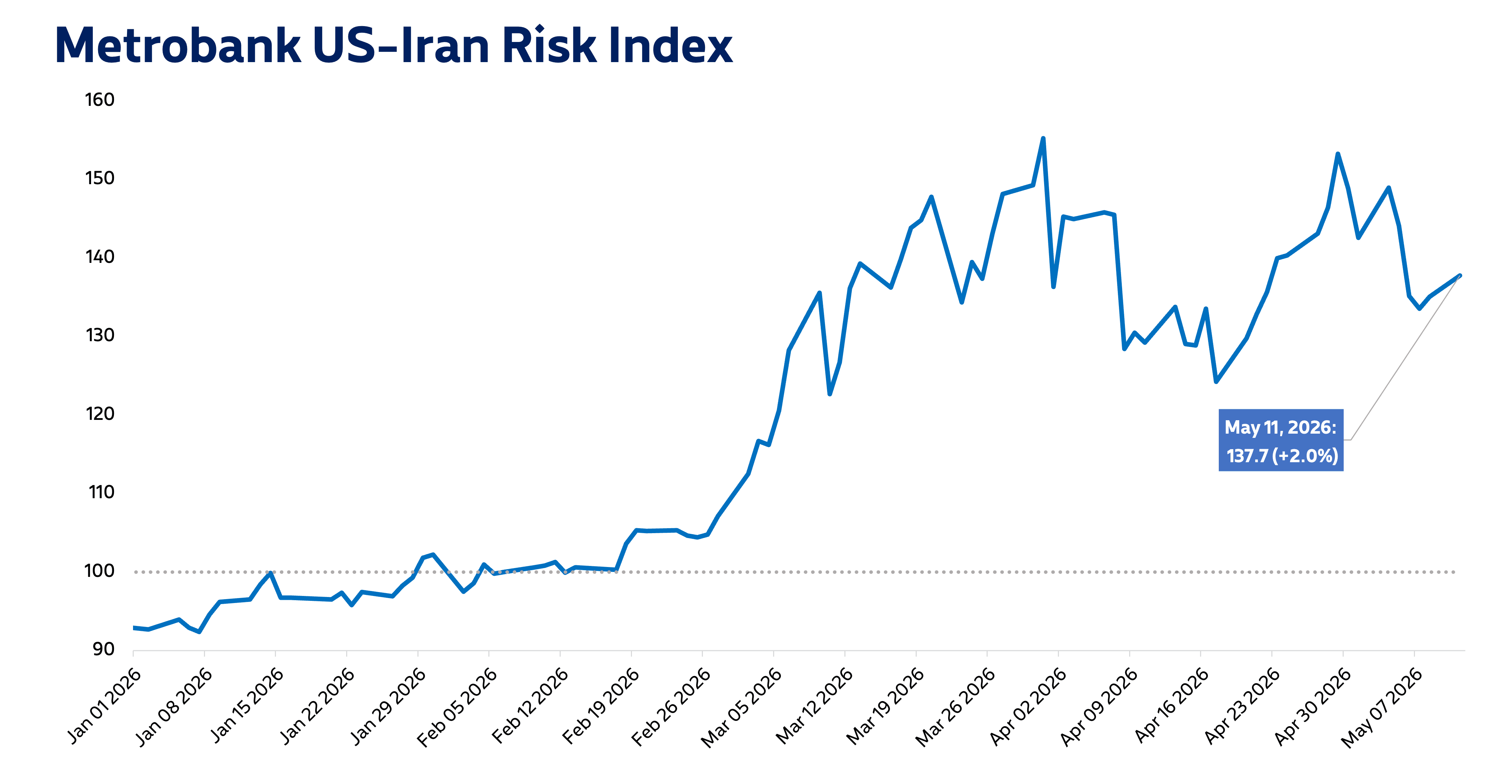
Metrobank’s US-Iran Risk Index settled at 137.7 on May 11th, 2.0% higher than the prior trading day.
Iran's rejection of the US's peace proposal and reports of US President Donald Trump’s comments showing the delicateness of the situation, pushed risk levels higher on Monday. Trump said the ceasefire was on “life support,” news agencies, including Reuters reported.
Brent Crude closed higher at USD 104 per barrel during UK trading on Monday, according to data compiled by Bloomberg, as market players priced in the Strait of Hormuz’s extended closure.
The US dollar index, meanwhile, posted gains, as safe-haven flows fortified the currency amid geopolitical uncertainty. This also led to the dollar-peso exchange rate closing above the 61-level again during Philippine trading on Monday, at 61.15. The benchmark 10-year US Treasury yield also edged upward by nearly 6 basis points on rising oil prices, according to data compiled by Bloomberg.
The fragile state of US-Iran negotiations will likely keep market players increasingly more risk-off in the days ahead, especially given Trump’s comments. Upside risk for oil, the dollar-peso exchange rate, and US and Philippine bond yields will likely persist as a result.
Metrobank still sees elevated risk and volatility in the near-term while a peace deal has not been struck. Oil prices are poised to stay high, as global supply remains constricted due to the war’s impact on Middle East oil facilities. Consequently, domestic inflation is expected to quicken even further in the coming months.
Moreover, Metrobank forecasts at least one more rate hike by the Bangko Sentral ng Pilipinas (BSP) this year to stem accelerating inflation. Finally, Metrobank expects the dollar-peso exchange rate to stay elevated, as dollar demand weighs on a weak peso.