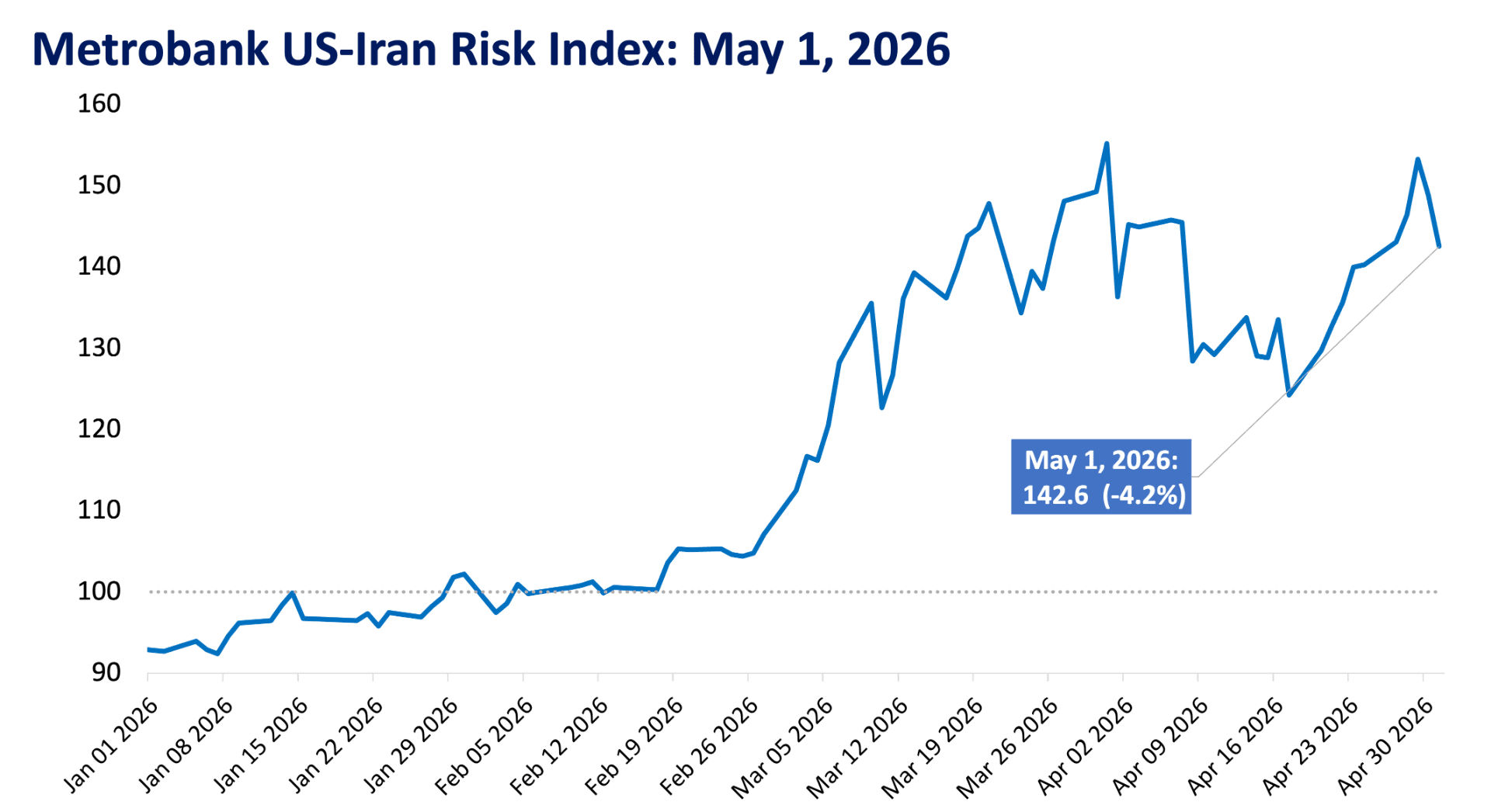
Metrobank’s US-Iran Risk Index settled at 142.6 on May 1, 4.2% lower than its value of 148.8 on April 30.
Iran sent a proposal for a possible resolution to the conflict to the US on Thursday, according to Reuters, which led to global oil prices moving downwards as investors’ hopes for the war's end improved. Brent Crude settled lower at USD 108 per barrel on Friday as a result, according to data compiled by Bloomberg.
Consequently, the benchmark 10-year US Treasury yield nudged lower as inflation expectations moderated. The US dollar index also pared some of its gains as investor hopes for a resolution led to reduced safe-haven flows to the currency.
Over the weekend, the BBC reported that US President Donald Trump was dissatisfied with Iran’s proposal. Moreover, Trump announced “Project Freedom”, which is a plan to escort ships through the Strait of Hormuz starting this week, despite warnings from Iran that such interventions would violate the ceasefire according to Al Jazeera.
While this may provide some relief to oil prices, the lack of an agreed-upon resolution between the US and Iran will likely weigh on sentiment and keep market players risk-off for the days ahead.
Metrobank still sees elevated risk and volatility in the near-term, as the path toward a resolution to the conflict remains uncertain. Oil prices are poised to stay high, as global supply remains constricted. Consequently, domestic inflation is expected to quicken on rising local energy prices.
Moreover, Metrobank forecasts at least one more rate hike by the Bangko Sentral ng Pilipinas this year to stem accelerating inflation. Finally, Metrobank expects the dollar-peso exchange rate to stay elevated, as dollar demand weighs on a weak peso.