


Economy2 MIN READ
Philippine consumers would rather save than spend
In the central bank's latest survey, Philippine households remain mindful of persistent economic pressures and uncertainty.
October 5, 2026 by Sophia Bonifacio
Share this article:
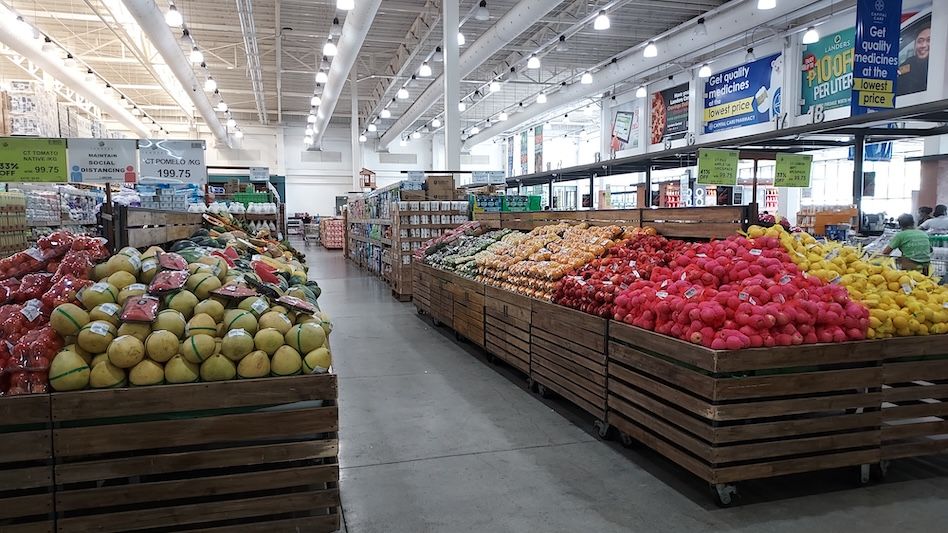
The Philippine consumer outlook has shown signs of stabilization in the third quarter of 2026, yet households remain cautious as they enter the final months of the year.
While overall consumer sentiment has improved relative to previous quarters, underlying data suggest an environment shaped by macroeconomic headwinds and seasonal expectations.
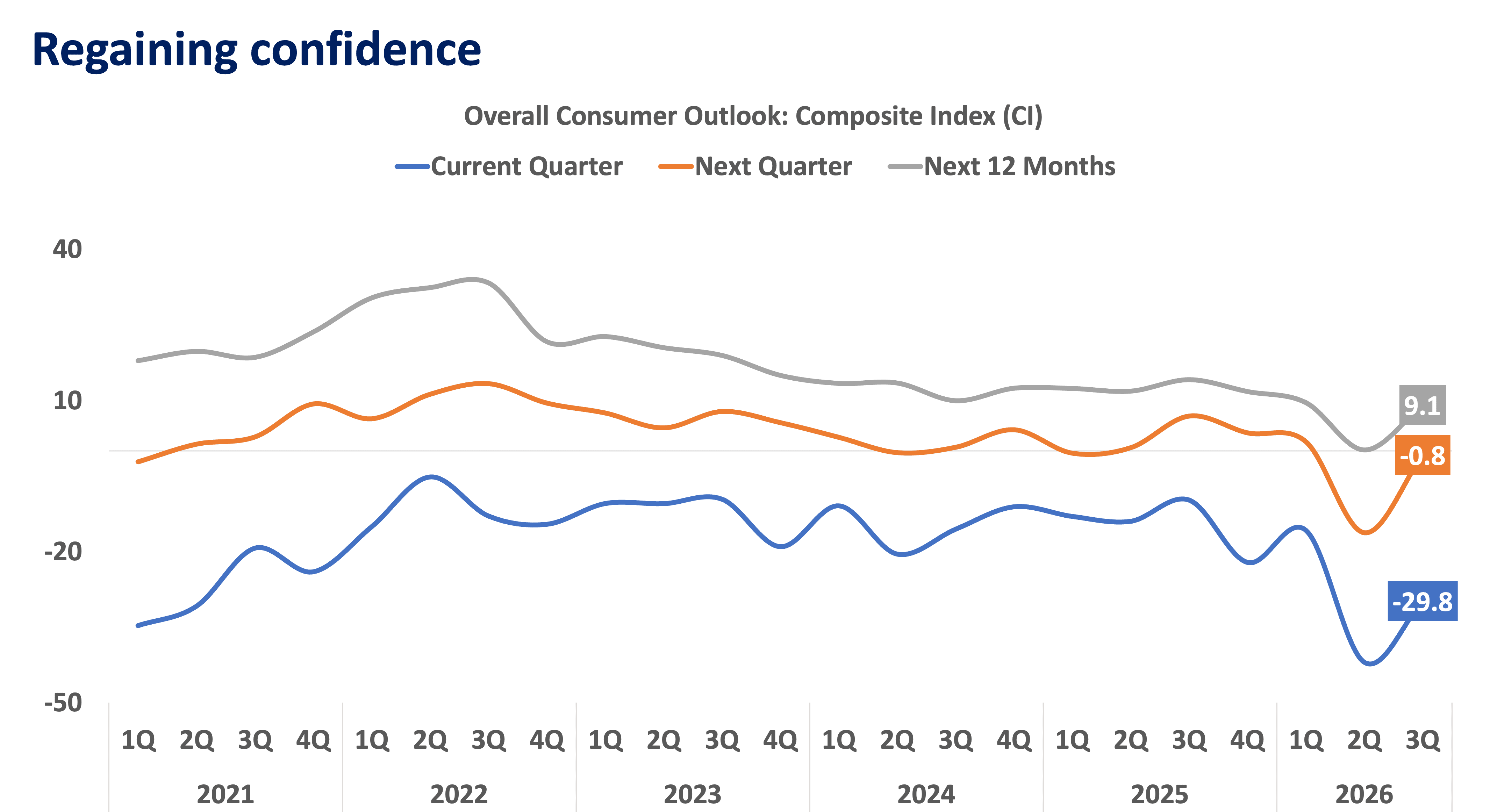
The Bangko Sentral ng Pilipinas (BSP)’s Consumer Expectations Survey showed a less negative disposition among Filipino households. This improvement is driven by higher reported earnings, better income sources, and greater job stability among employed individuals.
This cautious optimism surfaced as the national unemployment rate climbed to 6.00%, its highest level since 2022, mainly due to an influx of fresh graduates.
Source: Bangko Sentral ng Pilipinas
Looking ahead to the fourth quarter, the consumer outlook improved significantly, rising by 15.5 percentage points. More respondents anticipate an increase in job opportunities in the near term.
However, fourth-quarter sentiment is skewed by seasonal factors, specifically the anticipated holiday spending and yearend bonuses, rather than a permanent structural shift in confidence.
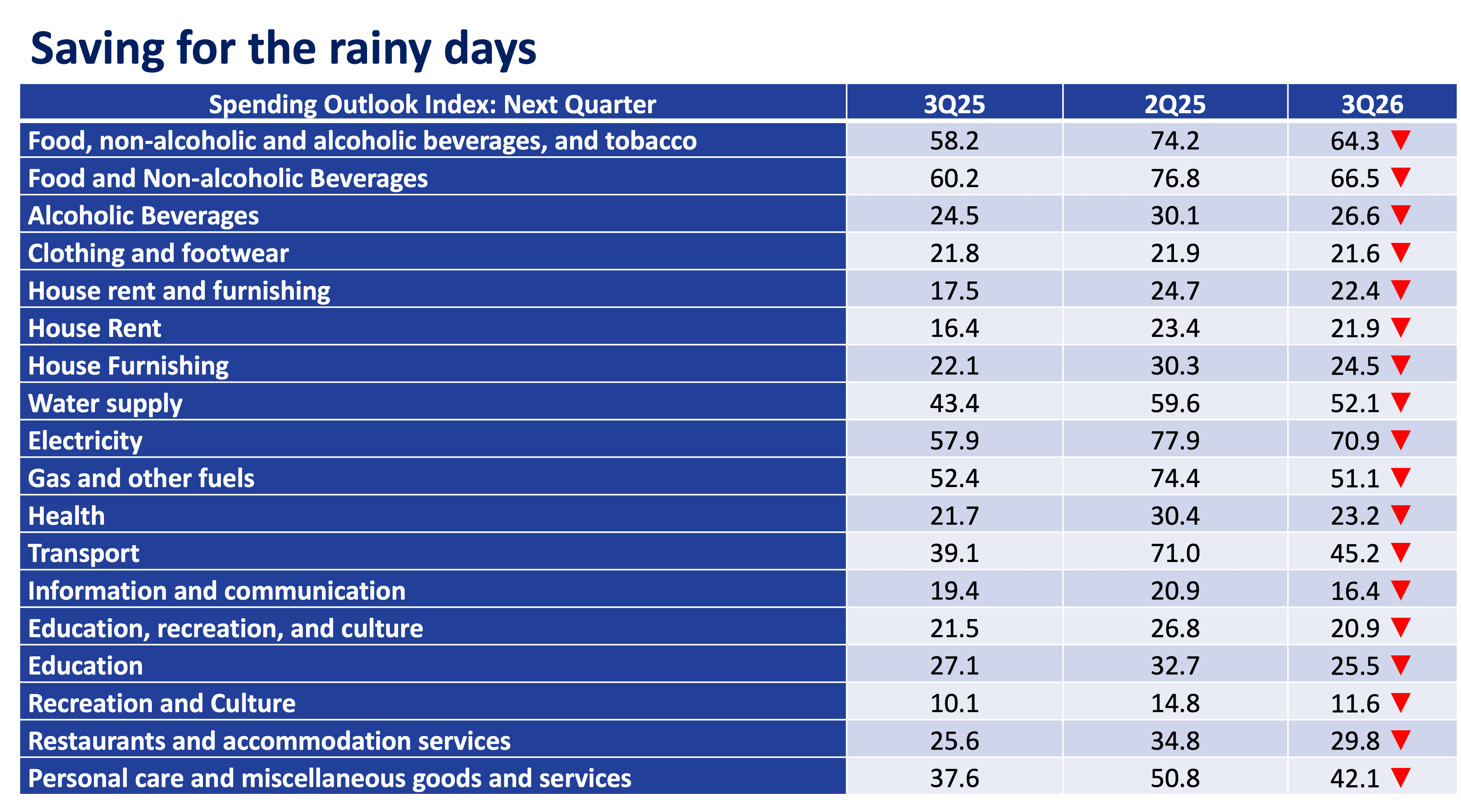
Despite expectations of better overall economic conditions and stabilizing family finances, the actual spending outlook for the last quarter of the year remains subdued.
More households are opting to save rather than spend, creating a challenging environment both for discretionary and non-discretionary spending.
▼ – Lower than previous quarter
Source: Bangko Sentral ng Pilipinas
This reflects a gloomier economic forecast for the second half of the year. Inflation is expected to reverse its downward trend and climb again in the fourth quarter as upside risks have broadened.
Externally, the Middle East conflict continues to threaten pump prices. Locally, the looming super El Niño is poised to disrupt agricultural output and raise food prices, while recent minimum wage hikes are expected to put upward pressure on service costs.
Monetary policy tightening is compounding these inflationary pressures. Further rate hikes by the BSP for the rest of the year will discourage borrowing even more. Consequently, rate-sensitive expenditure items, particularly automotive and housing, are expected to take a direct hit as financing becomes more expensive.
Overall, current sentiment suggests any substantial recovery in household consumption will be gradual, likely not taking hold until 2027.
For consumer spending to meaningfully recover, several catalysts must materialize. Persistent easing of inflation and a pivot toward rate cuts will be the primary drivers needed to encourage consumption.
Furthermore, a potential de-escalation of the Middle East conflict will be crucial not only to stabilizing global oil prices but also to securing remittance inflows from Overseas Filipino Workers, which remain a pillar of household income. Until these economic shifts occur, overall consumer spending growth will remain subdued.
SOPHIA THERESE “PIA” BONIFACIO is a Research Officer at Metrobank, covering local and offshore macroeconomic research. She obtained her Bachelor’s degree in Economics with a Specialization in Financial Economics, cum laude, from the Ateneo de Manila University and is a Certified UITF Sales Person (CUSP). Pia enjoys long road trips and loves a good cup of hojicha latte.