


Economy2 MIN READ
Decoding the impact of new US tariffs on the Philippines
A closer look at fresh US tariffs reveals a less disruptive impact on the Philippines.
July 31, 2026 by Sophia Therese Bonifacio
Share this article:
Tariffs are in the headlines again.
The Trump administration introduced a new round of duties between 10% and 12.5% for 60 trading partners, covering 99.4% of US imports, according to the Office of the US Trade Representative (USTR).
For the Philippines, the US applied a levy at the upper end of the range, as reported by the USTR. However, the impact may be limited.
The fresh tariffs largely replace temporary ones that have expired, nudging the average effective US tariff rate by around 0.2 percentage points, accounting for exemptions and other agreements, according to Bloomberg.
April 2025: The administration introduced country-specific tariffs using the International Emergency Economic Powers Act (IEEPA), typically reserved for “unusual” threats to US national security or foreign policy.
February 2026: The Supreme Court struck down the IEEPA tariffs, emphasizing that the administration overstepped its constitutional authority. The administration pivoted to Section 122 of the Trade Act, implementing temporary global tariffs aimed at addressing trade deficits. It came with a 150-day expiration date.
July 2026: With Section 122 tariffs expiring, the administration imposed permanent Section 301 tariffs.
The new tariffs, like those in the past year or so, may also face legal challenges. Some essential goods like food, fuel, and fertilizers are exempted, making the overall effective tariff rate lower today than it was during the initial IEEPA rollout.
However, the US Federal Reserve (Fed) estimates that these trade barriers will shave 0.5% off US GDP while pushing inflation up by 0.3% relative to a scenario without tariffs. Moreover, a recent New York Fed analysis revealed that close to 90% of the economic burden from tariffs is passed onto US consumers and businesses.
For the Philippines, the headline tariff rate sits at 12.5%, which is below the global average. Amid exemptions on essential goods, the country's effective tariff rate is at 10.5%, a drop from the 15.2% effective rate before the Supreme Court ruling in February.
However, the US remains the Philippines' largest export market. According to the Department of Trade and Industry (DTI), around USD 6.25 billion in trade will be affected.
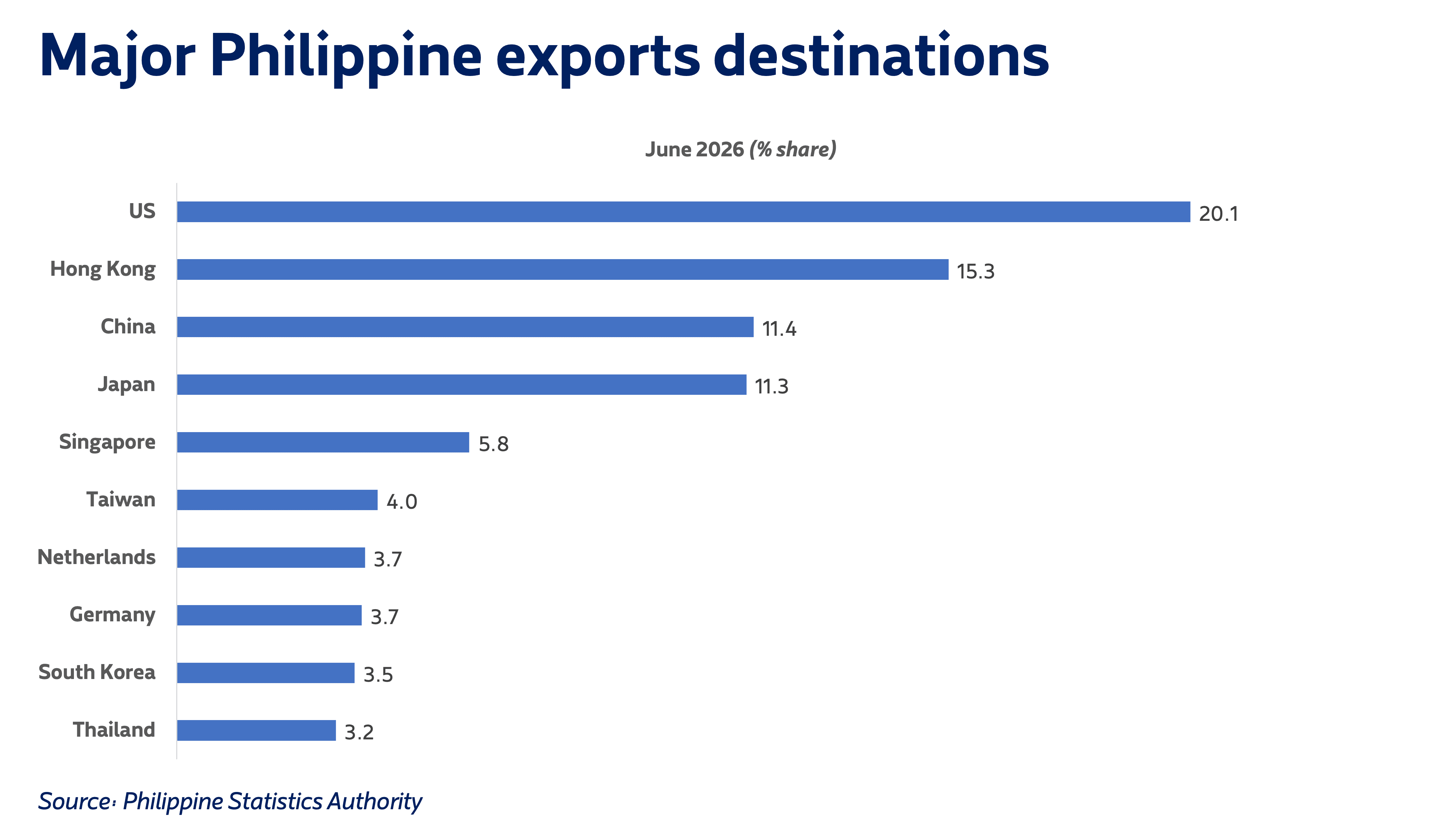
Per the DTI, more than 30% of Philippine exports to the US, including apparel, footwear, leather, travel goods, and toys, now face the 12.5% duty. A silver lining is that electronic products, which make up majority of Philippine exports to the US, are fully exempt from the new duties.
Overall, the net impact on Philippine economic growth leans slightly negative. Tariffs add friction for local exporters, who is also facing the impact of global supply chain disruptions. To hedge against this persistent trade policy uncertainty, local industries may consider diversifying their markets toward other top trading partners, such as Hong Kong, China, and Japan.
SOPHIA THERESE “PIA” BONIFACIO is a Research Officer at Metrobank, covering local and offshore macroeconomic research. She obtained her Bachelor’s degree in Economics with a Specialization in Financial Economics, cum laude, from the Ateneo de Manila University and is a Certified UITF Sales Person (CUSP). Pia enjoys long road trips and loves a good cup of hojicha latte.