


Economy3 MIN READ
Metrobank US-Iran Risk Index: No swift end seen
Financial market players are bracing for the war to drag on longer than expected.
March 27, 2026 by Metrobank Research, Investment Counselor Department
Share this article:

Metrobank’s US-Iran Risk Index settled at 143.1 on March 26, 2026, 4.2% higher than the previous day.
Oil prices rose once again, as hopes for a relatively quick resolution to the war were dashed by conflicting statements from the US and Iran. While US President Donald Trump continues to claim talks are occurring to settle the conflict, Iran has denied that any negotiations have taken place between the two countries. Iran also rejected the US’s 15-point proposal to end the war, with an Iranian official saying the plan “serves only US and Israeli interests”, according to Reuters.
As a result, Brent crude closed Thursday’s trading day higher at USD 108 per barrel, as the Strait of Hormuz, a critical transit point for global oil prices, remained shut. Financial market players continued to price in mounting inflation risks, with the benchmark 10-year US Treasury yield moving upward. The US dollar also maintained its strength as a safe-haven asset, with the dollar-peso exchange rate closing above the 60-level once again during Philippine trading hours on Thursday.
Some slight relief for oil markets may be underway after Trump's recent announcement that he is extending the pause on Iran strikes until April 6. Still, unless any substantial and verified progress has been made on ending the war from both sides, continued attacks and a blocked strait will keep markets on the edge and oil prices elevated.
As oil prices rise, Metrobank sees inflation breaching the Bangko Sentral ng Pilipinas (BSP)’s target band this year, which will likely compel the central bank to raise their policy interest rates.
Moreover, we still see the dollar-peso exchange rate staying elevated in the near-term as steady dollar demand weighs on a historically weak peso.
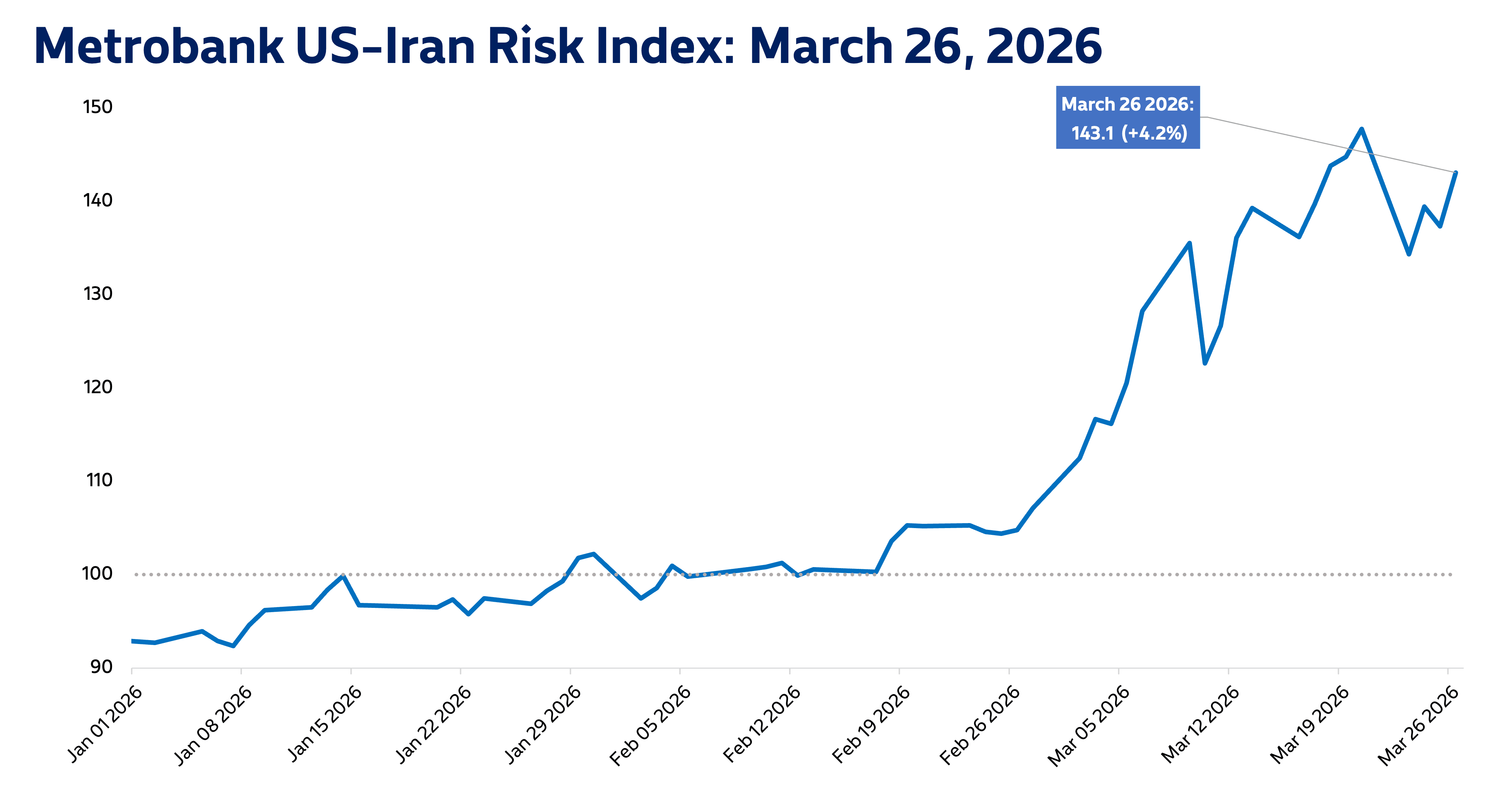
Metrobank’s US-Iran Risk Index measures the amount of risk that the ongoing conflict presents to financial markets. It considers the general risk sentiment of investors and inflationary pressure brought by the conflict. A value of 100 denotes a normal level of risk based on market levels prior to the conflict’s escalation, while values greater than 100 imply increasing levels of risk.