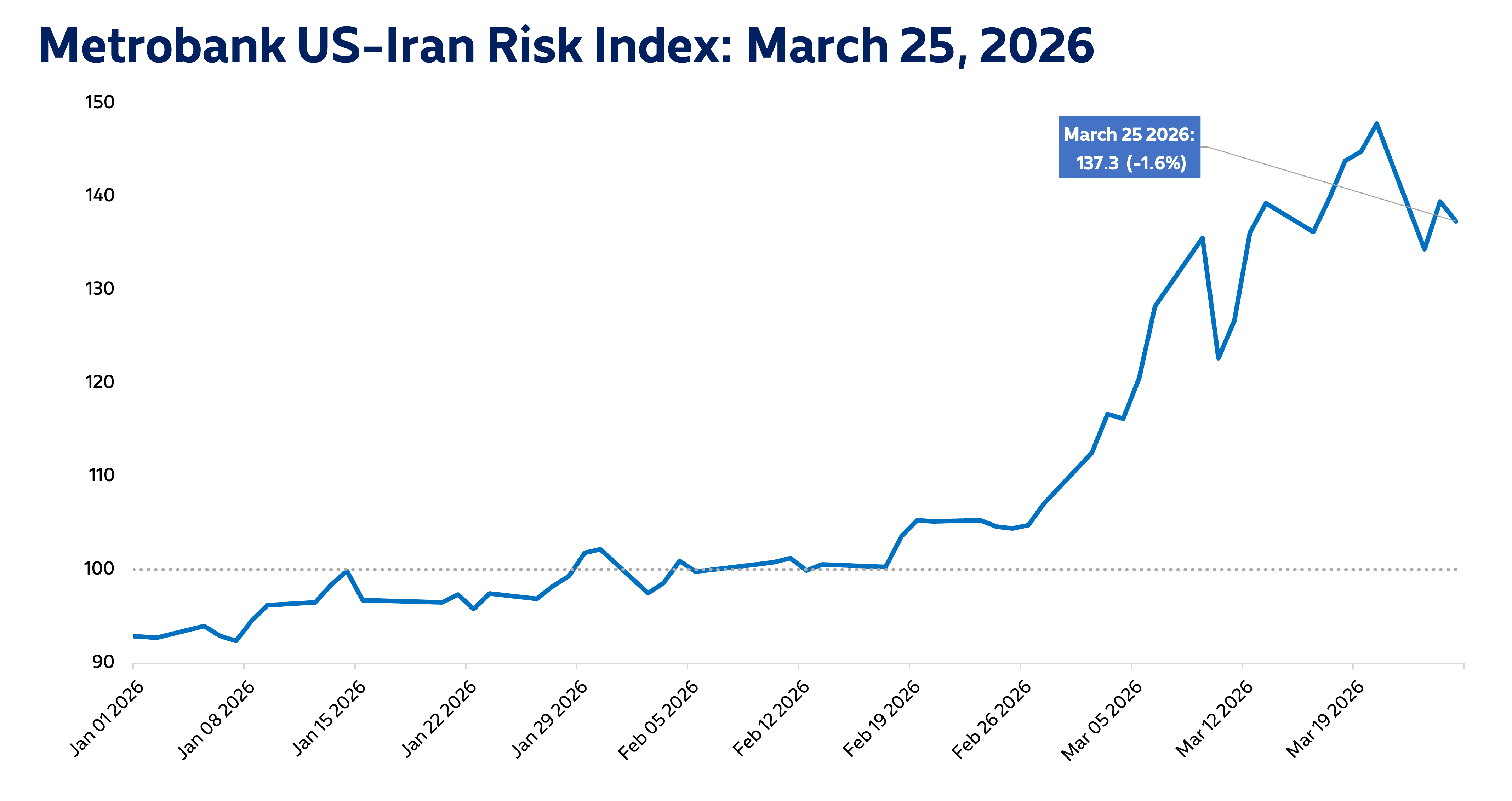
Metrobank’s US-Iran Risk Index settled at 137.3 on March 25, 2026, 1.6% lower than the previous day.
Oil prices moved downward on news that Iran was reviewing the 15-point plan sent over by the US to end the war. According to the Associated Press, the US’s 15-point proposal included plans for Iran to reopen the Strait of Hormuz, a critical transit point for global oil shipments.
As a result, Brent crude closed slightly lower on Wednesday at USD 102 per barrel, as financial market players priced in less risk from the strait’s closure. The benchmark 10-year US Treasury yield followed suit, as inflation expectations tempered, closing the US trading day nearly 3 basis points lower. The US dollar still maintained its strength from safe-haven demand, with the dollar-peso exchange rate closing above the 60-level again during Philippine trading hours.
Iran eventually announced their rejection of the US’s proposal and issued their own plan to settle the conflict, which included an end to violence against Iranian officials and affirmation of the country’s sovereignty over the Strait of Hormuz, according to the Associated Press. Market players will likely continue to price in heightened risks and uncertainties going forward, especially as US President Donald Trump’s five-day pause on Iran strikes nears its end.
Metrobank maintains the view that oil prices will stay elevated as long as the Strait of Hormuz remains blocked. Meanwhile, high inflation due to rising oil prices will likely compel central banks globally to raise their policy rates this year, including the Bangko Sentral ng Pilipinas (BSP). Moreover, we still see the dollar-peso exchange rate staying elevated in the near-term, as steady dollar demand weighs on a historically weak peso.