


Economy3 MIN READ
Metrobank US-Iran Risk Index: A weak peso
Faster inflation and global uncertainties led to a historical low for the Philippine peso
March 23, 2026 by Metrobank Research, Investment Counselor Department
Share this article:
Metrobank’s US-Iran Risk Index settled at 147.8 on March 20, 2026, 2.1% higher than the 144.8 on March 19. This marks another all-time high for the index.
Brent crude prices rose on March 20 to what was then their highest level in nearly four years at USD 112 per barrel as military attacks in the Middle East pressed on. The conflict showed no sign of abating during the trading day, with Reuters reporting that the US plans to deploy thousands of additional troops to the area.
Meanwhile, global bond yields rose, as financial market players priced in higher inflation expectations, with the benchmark 10-year US Treasury yield closing the day 13 bps higher. As central banks across the globe start to pivot toward increasing their policy interest rates, the US dollar’s safe-haven appeal may slightly wane, especially as the US Federal Reserve’s (Fed) monetary policy path remains uncertain. Still, high demand for the dollar led to the dollar-peso exchange rate breaching 60 for the first time last week.
Metrobank maintains the view that oil prices will continue to rise for as long as the Strait of Hormuz, a critical transit point for global oil shipments, remains blocked. Over the weekend, US President Donald Trump threatened to strike Iran’s energy infrastructure if the strait remained closed. Iran responded by reiterating their commitment to keeping the passage closed should the US attack, further cementing upside oil risk.
Meanwhile, high inflation due to rising oil prices will likely compel central banks globally to raise their policy rates this year, including the Bangko Sentral ng Pilipinas (BSP). While dollar strength may be challenged as a result, Metrobank still sees the dollar-peso exchange rate staying elevated in the near-term as steady dollar demand weighs on a historically weak peso.
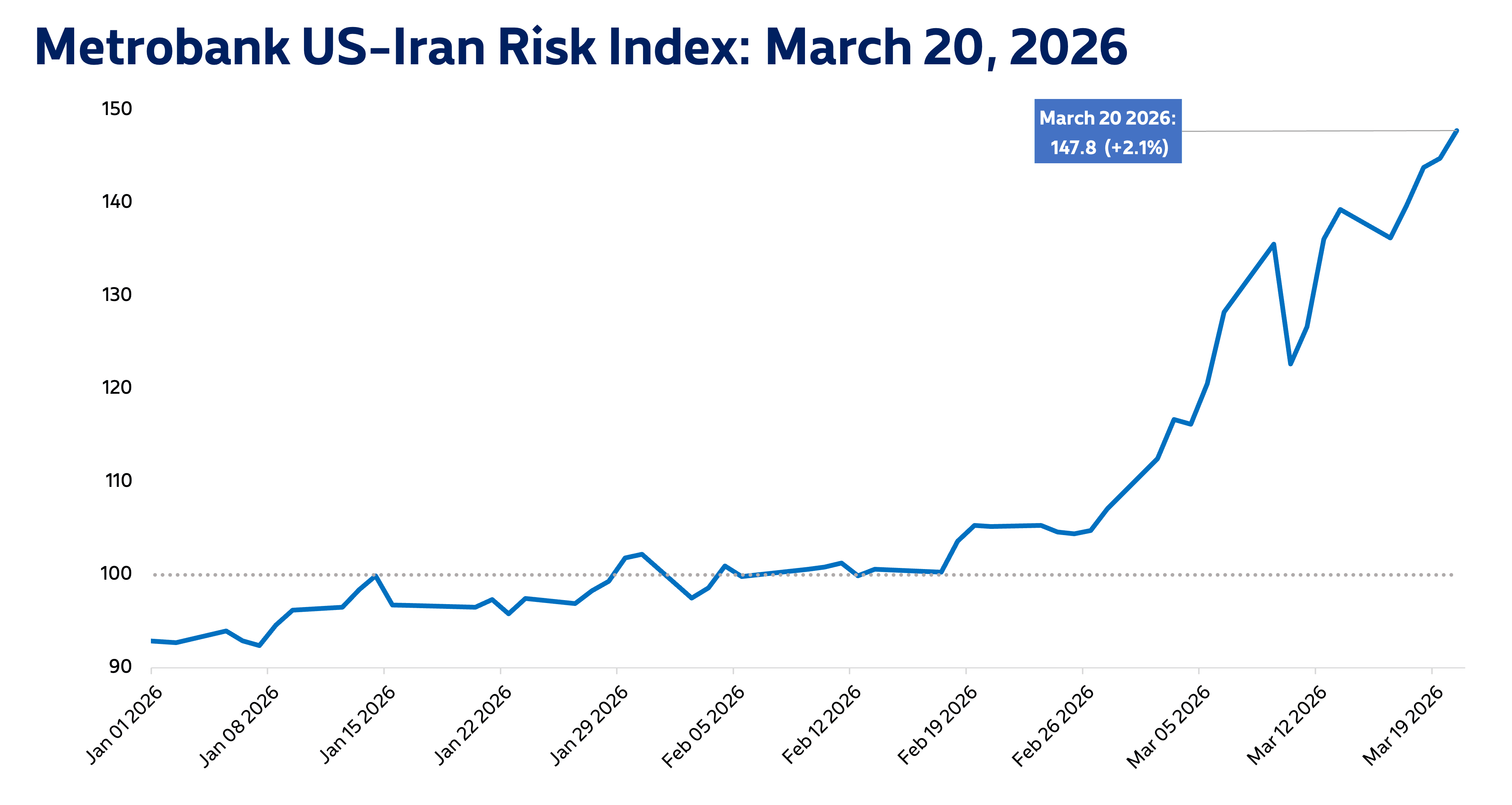
Metrobank’s US-Iran Risk Index measures the amount of risk that the ongoing conflict presents to financial markets. It considers the general risk sentiment of investors and inflationary pressures brought on by the conflict. A value of 100 denotes a normal level of risk based on market levels prior to the conflict’s escalation, while values greater than 100 imply increasing levels of risk.