Economy2 MIN READ

Very Strong El Niño: Heating up the struggle for recovery

With a strong El Niño now present in the Pacific, the Philippines could face extreme heat and growth challenges.
October 21, 2026 by Marian Monette Florendo Obias
Share this article:
Featured Article Image

It is already over the Pacific Ocean. As of October 7, the Philippine Atmospheric, Geophysical and Astronomical Services Administration (PAGASA) confirmed that a strong to very strong El Niño is present in the Tropical Pacific and is expected to persist through mid-2027.

We can expect prolonged dry conditions and below-normal rainfall. Low water supplies, disrupted agricultural production, and costlier food will likely weigh on the country’s economic recovery.


Fear of water shortages


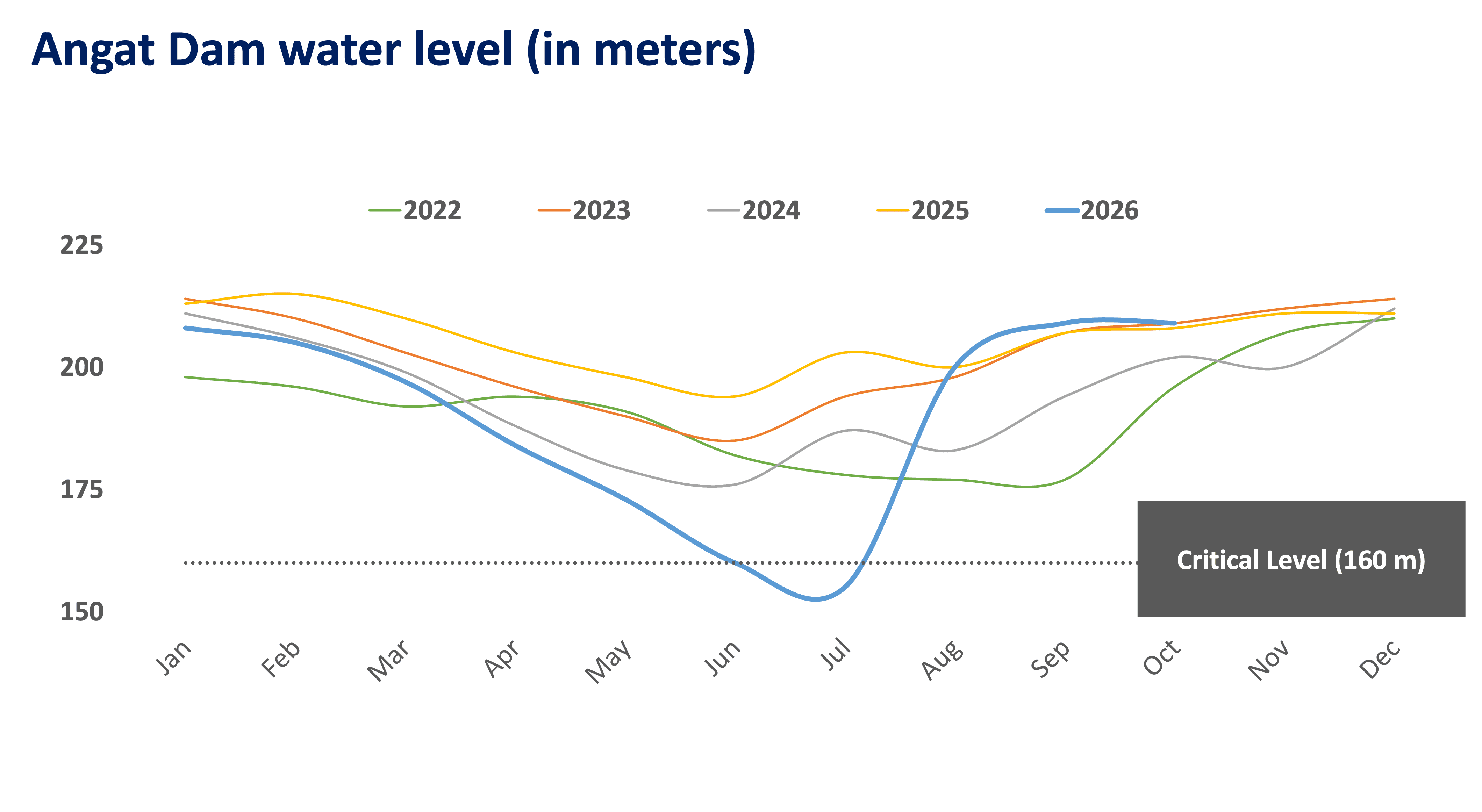
If we look back at the strong 2023-2024 El Niño episode, despite below-normal rainfall, water levels remained sufficient, indicating adequate supply in Angat Dam.

water levels remained sufficient, indicating adequate supply in Angat Dam.

Source: DOST-PAGASA

In June and July 2026, the Angat Dam reservoir fell below the critical level because of insufficient rainfall amid a developing El Niño. This has recovered since the Habagat in recent months, which caused massive rains.  

As of October, current reservoir levels remain significantly above the lows recorded in mid-2026, providing a buffer against projected drought conditions as the strong El Niño unfolds. As such, while water supply remains a key risk, existing water reserves suggest that current supply should be able to withstand a moderate period of below-normal rainfall before more severe supply constraints emerge.  


High food prices as supply tightens


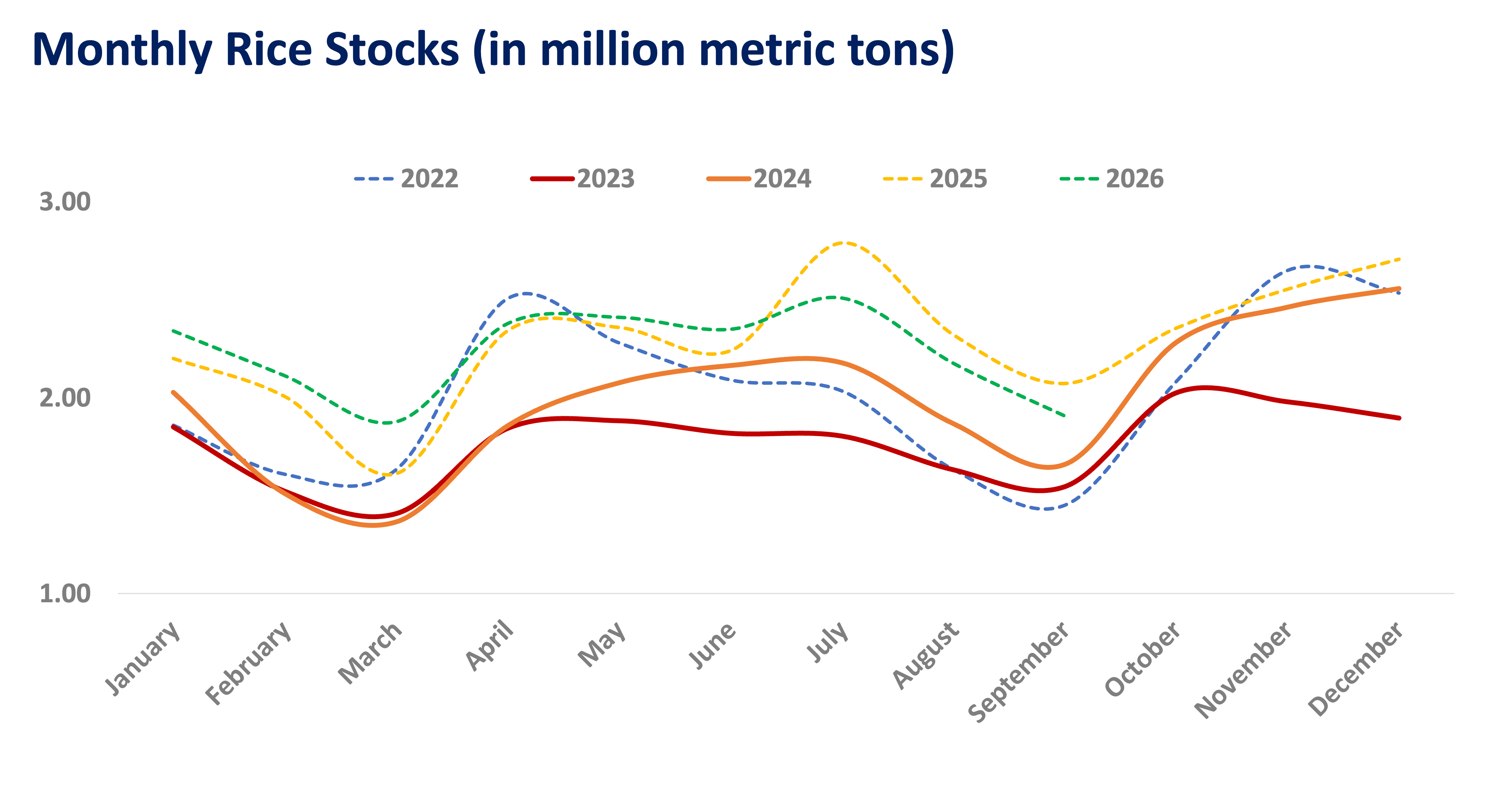
The strong 2023-2024 El Niño episode significantly affected the Philippine agricultural sector, as prolonged dry conditions and below-normal rainfall reduced crop yields and hurt fisheries.  

Strong 2023-2024 El Niño episode significantly affected the Philippine agricultural sector, as prolonged dry conditions and below-normal rainfall reduced crop yields and hurt fisheries.

Source: Philippine Statistics Authority 

According to the Department of Agriculture, the 2023-2024 El Niño caused an estimated 784,344 metric tons of agricultural production losses, equivalent to PHP 15.3 billion in damages, with more than a third attributed to palay production. The government cushioned the supply shock through rice imports, which increased by about 30% relative to the previous year.  

With an even stronger episode projected in 2026-2027, the impact could exceed the estimated losses reported in 2024. Current DA projections indicate that a strong El Niño in 2026-2027 could reduce rice production by up to 700,000 metric tons, affecting around 3.5% of the annual production target. The drought could likely impact the harvest season through year-end, with a larger impact on the mid-2027 harvest season.  

Rice inflation is expected to continue accelerating through the remainder of the year, driven by constrained local supply and potential global price increases due to El Niño.


Another drag on economic recovery


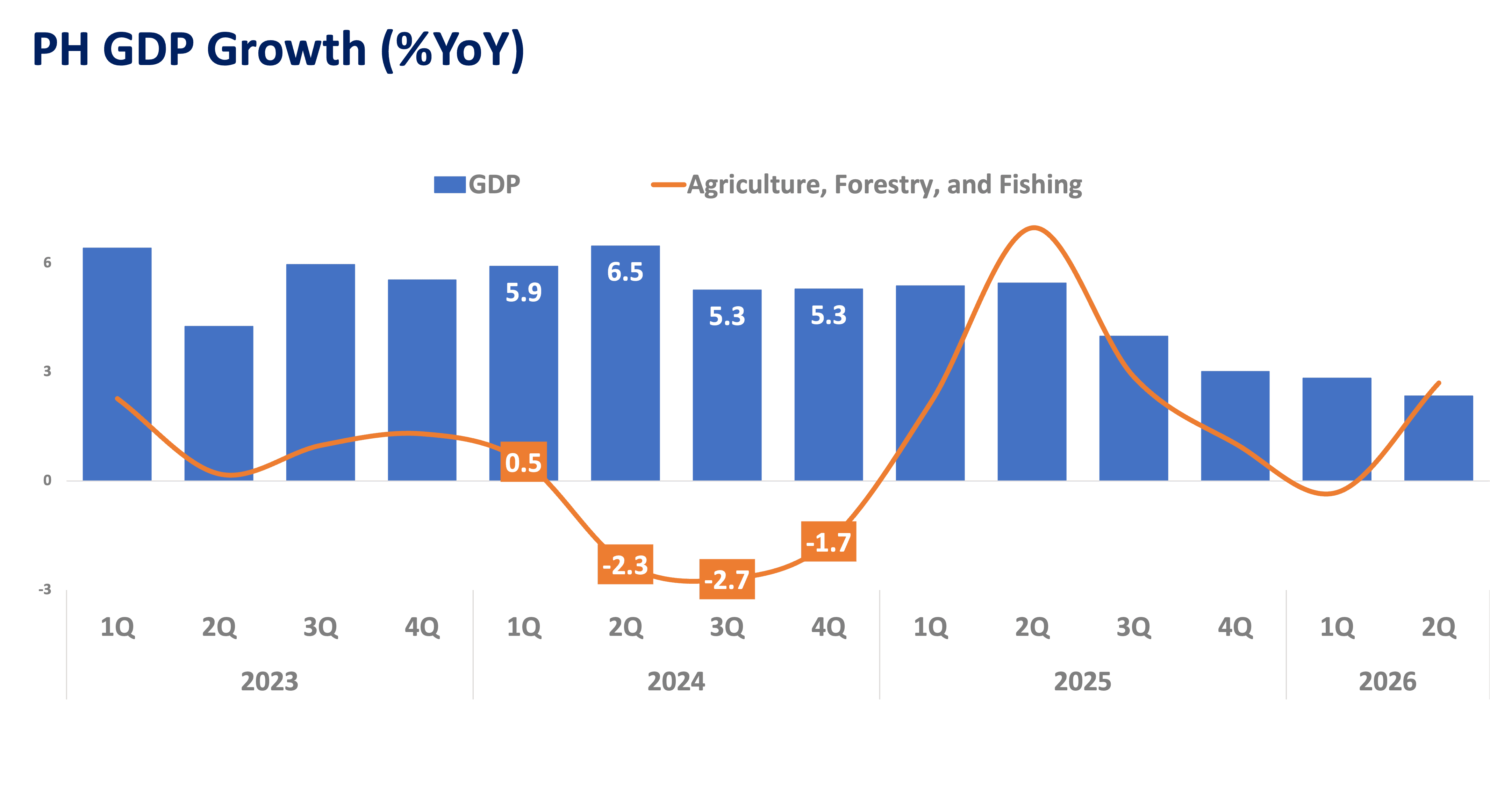
In 2024, the El Niño episode contributed to three consecutive quarters of contraction in the agriculture sector, resulting in a 1.5% full-year decline in the sector.

El Niño episode contributed to three consecutive quarters of contraction in the agriculture sector, resulting in a 1.5% full-year decline in the sector.

Source: Philippine Statistics Authority 

How much contraction could we expect this time? This year’s strong episode would begin to affect agricultural production from the last quarter of the year through the first semester of 2027. There are, however, some areas for growth. For example, the industrial and services sectors will likely continue to grow, albeit at a moderate pace.

Overall, growth in the second semester of 2026 is still expected to be subdued, with a stalled recovery anticipated until mid-2027.  

(Disclaimer: This is general investment information only and does not constitute an offer or guarantee, with all investment decisions made at your own risk. The bank takes no responsibility for any potential losses.)    

MARIAN MONETTE FLORENDO-OBIAS is a Research Officer of the Macro Research Department, Markets Advisory Division, Financial Markets Sector, at Metrobank. She is a Certified Treasury Professional and holds an undergraduate degree in Mathematics from Ateneo de Naga University and an MA Economics degree from UP Diliman. She loves traveling and watching mystery movies in her spare time.