


Economy2 MIN READ
Does today’s AI boom mirror the 2000s dot-com bubble?
AI spending and high interest rates evoke dot-com comparisons, yet key differences remain.
November 19, 2026 by Sophia Bonifacio
Share this article:

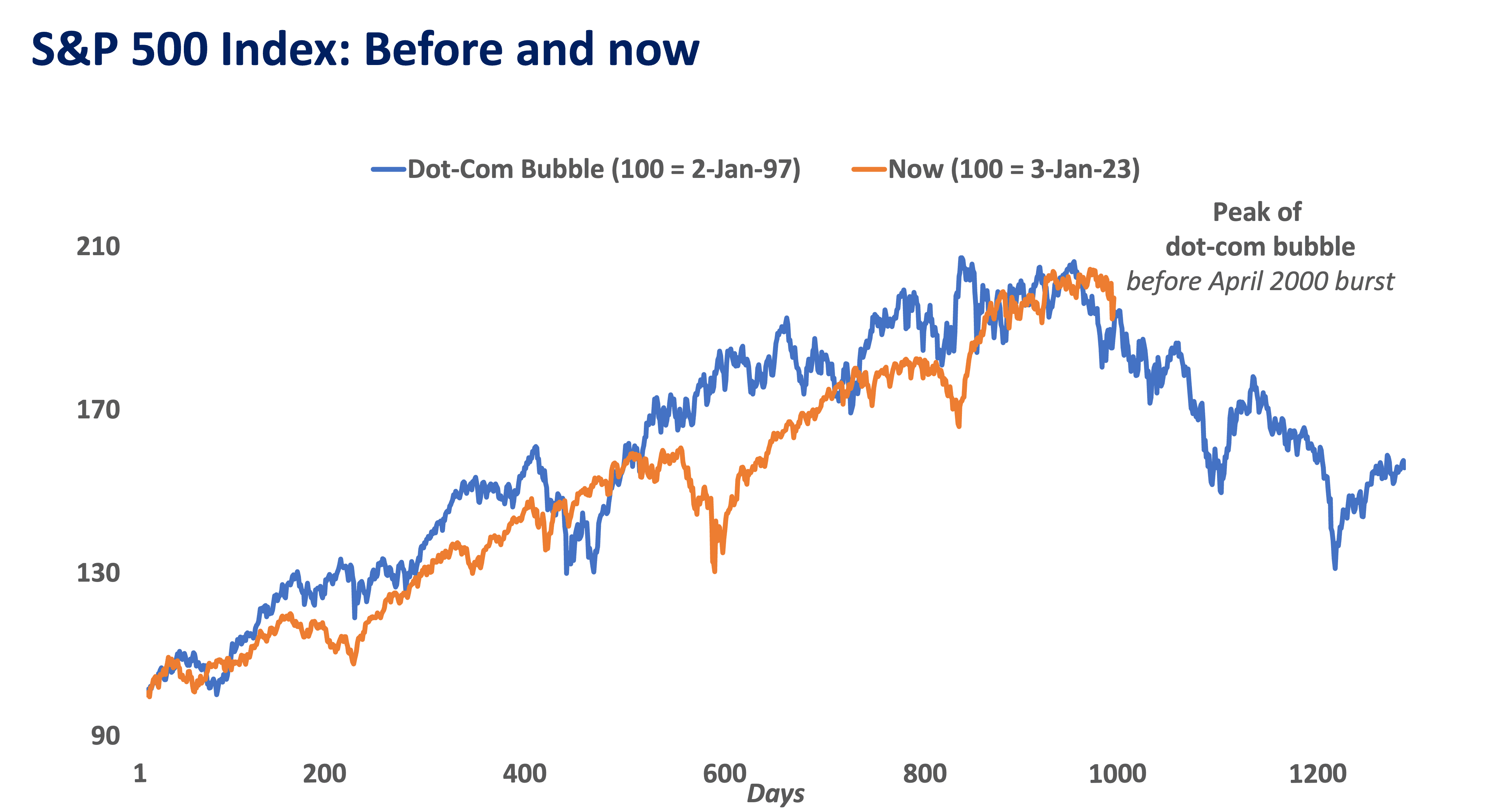
Concerns over an artificial intelligence (AI)-driven market bubble have intensified as investors draw parallels between today’s surge in AI-related stocks and the dot-com boom of the late 1990s.
While the rapid pace of capital expenditure mirrors past instances, key structural differences suggest that today’s market is on firmer footing than it was nearly three decades ago.
Source: Bloomberg
During the late 1990s, internet stocks soared as venture capital poured into startups with little to no revenue. The rally ended when these firms began burning through cash without a clear path to profitability. Deteriorating investor confidence triggered a sharp market crash, widespread layoffs, and stricter regulatory oversight, culminating in the 2001 recession.
Fast forward 25 years, familiar warning signs have resurfaced. In recent years, the AI supercycle has spurred trillions of dollars in spending on semiconductors and data centers. However, heightened scrutiny of elevated borrowing costs and uneven earnings has raised market concerns.
The 10-year US Treasury yield continues to hover above 5% amid expectations of further monetary policy tightening by the Federal Reserve, driven by the Middle East conflict that has increased price pressures.
As a result, debt-servicing costs for capital-intensive AI builders have climbed. Coupled with 3Q 2026 earnings that fell short of investor expectations, these pressures have fueled fears of another dot-com-style burst.
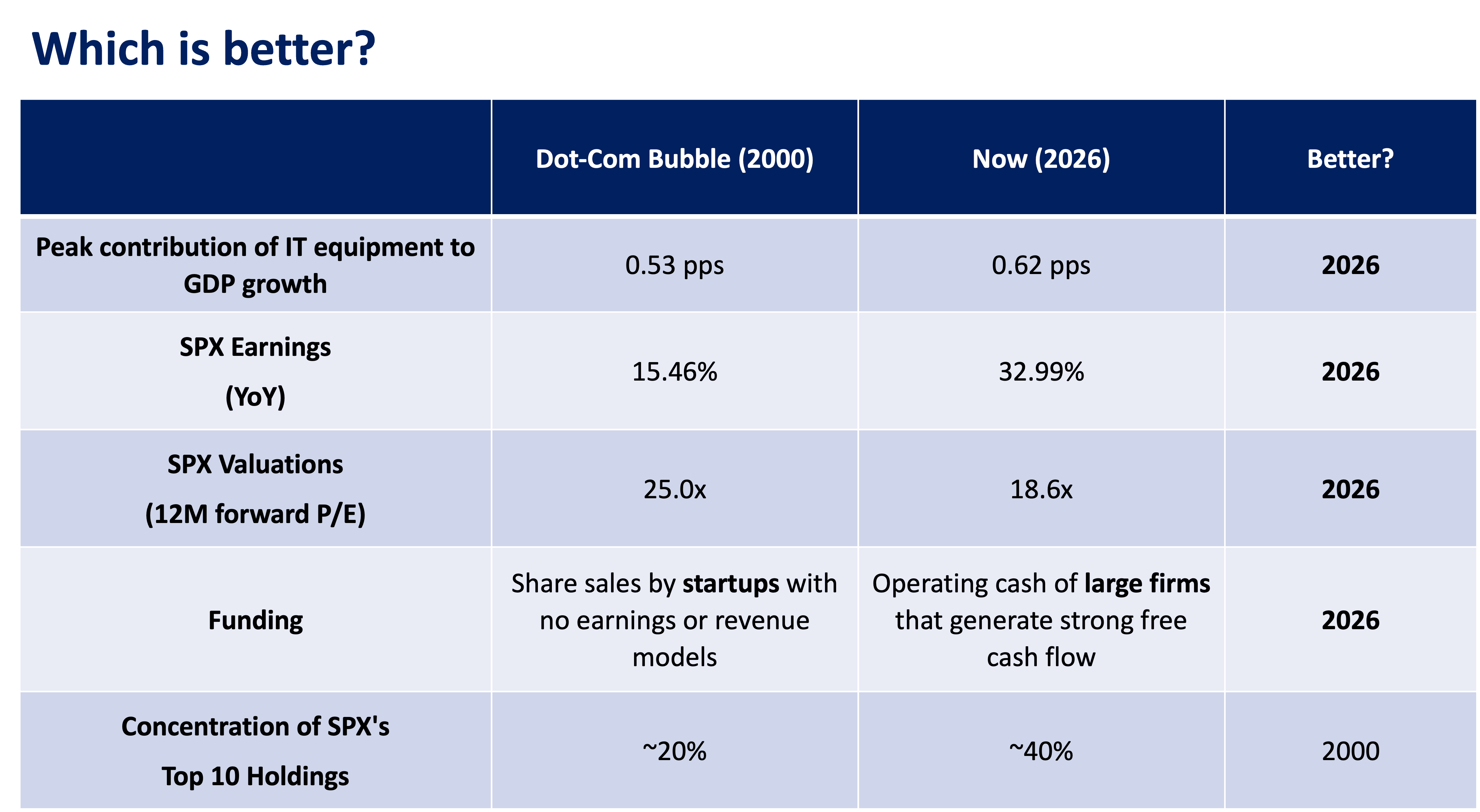
Despite these parallels, there are key differences:
Note: SPX – S&P 500 index; pps – percentage points
Sources: Bloomberg, Federal Reserve Bank of St. Louis, Metrobank Research estimates
Given the current market environment, investors are still advised to maintain an allocation to US equities, supported by their relative momentum versus other developed markets. In particular, the information technology sector is expected to deliver the highest earnings growth in 2027, as demand for AI continues to outpace supply with no meaningful signs of moderation.
Ultimately, investor caution surrounding AI exceptionalism is warranted, particularly in a higher-for-longer interest rate environment. Nevertheless, because today’s market leaders have resilient balance sheets and real earnings growth, a repeat of the 2000 collapse may be unlikely.
Moving forward, the US equity market’s trajectory is hinged on how effectively and how soon these companies convert massive AI infrastructure outlays into durable returns.
SOPHIA THERESE “PIA” BONIFACIO is a Research Officer at Metrobank, covering local and offshore macroeconomic research. She obtained her Bachelor’s degree in Economics with a Specialization in Financial Economics, cum laude, from the Ateneo de Manila University and is a Certified UITF Sales Person (CUSP). Pia enjoys long road trips and loves a good cup of hojicha latte.