What the US-Japan intervention means for investors


This was not an ordinary currency move.
The coordinated intervention by the United States and Japan marked the first such effort in decades and immediately pushed the Japanese yen higher. More importantly, it signaled that both governments were prepared to act against what they viewed as excessive or disorderly currency moves, and that further action remains possible if needed.
Japan and the US jointly bought yen, marking the first coordinated currency intervention between the two countries in decades. Some market observers noted that using existing liquidity facilities and coordinated action may have helped support the yen without creating undue pressure on the US Treasury market.
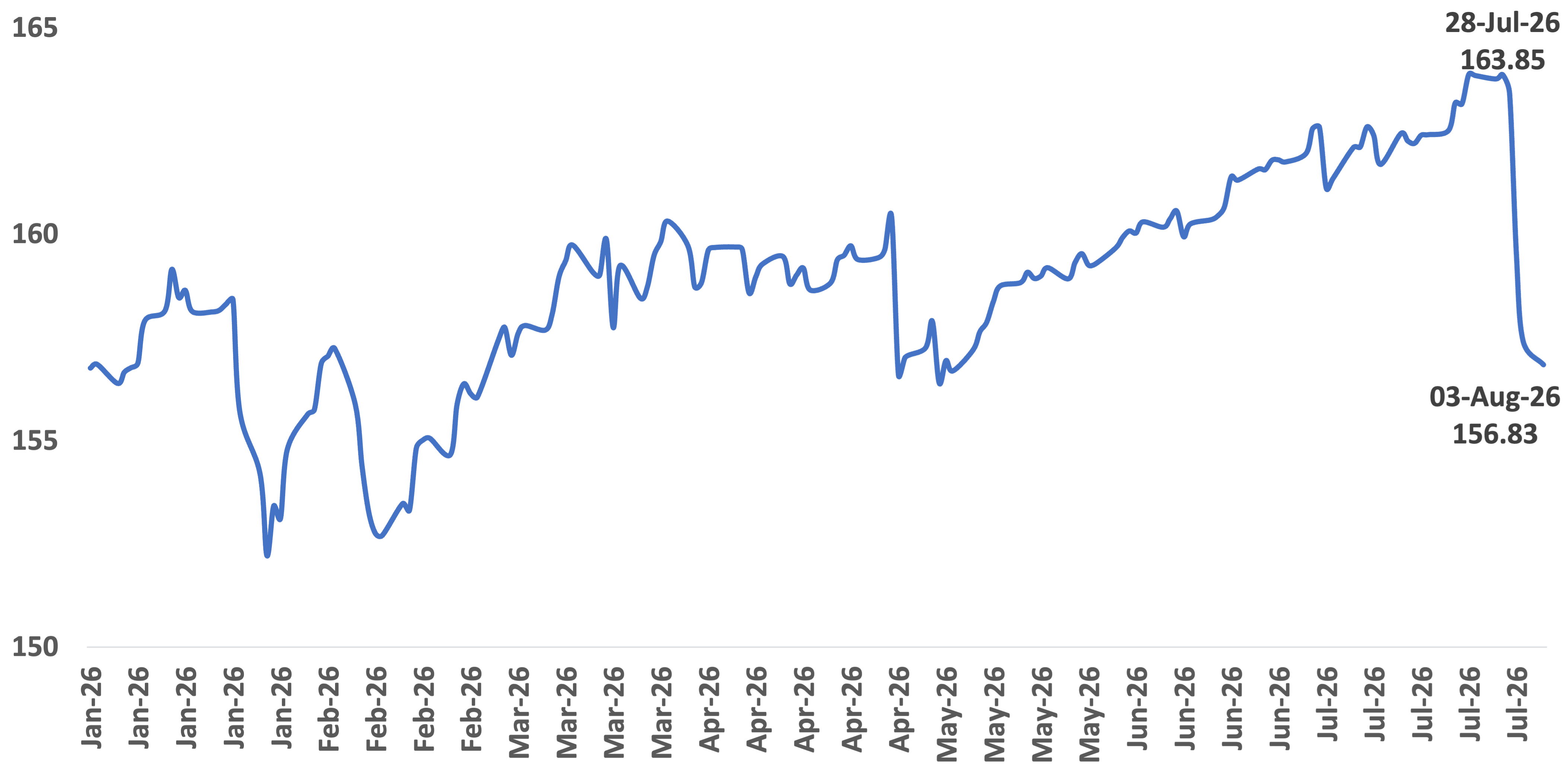
The USD/JPY fell sharply from recent highs. Coming from 163 levels in the past few weeks, the currency pair plunged to around 156 as the yen strengthened from deeply oversold levels.

Source: Bloomberg
Positioning amplified the move.
First, there is excessive yen weakness. The yen had become one of the most widely sold currencies globally. Second, there were crowded short positions. Many investors were positioned for further yen weakness. When intervention was announced, these trades quickly unwound. Third, softer US inflation data and a less-hawkish US Federal Reserve reduced support for the dollar, reinforcing the yen’s rebound.
The intervention was significant not only for its size but also for involving both Tokyo and Washington. The coordinated action signaled that authorities were aligned in their efforts to contain excessive yen weakness, prompting investors to reassess long-standing assumptions that policymakers would tolerate continued depreciation.
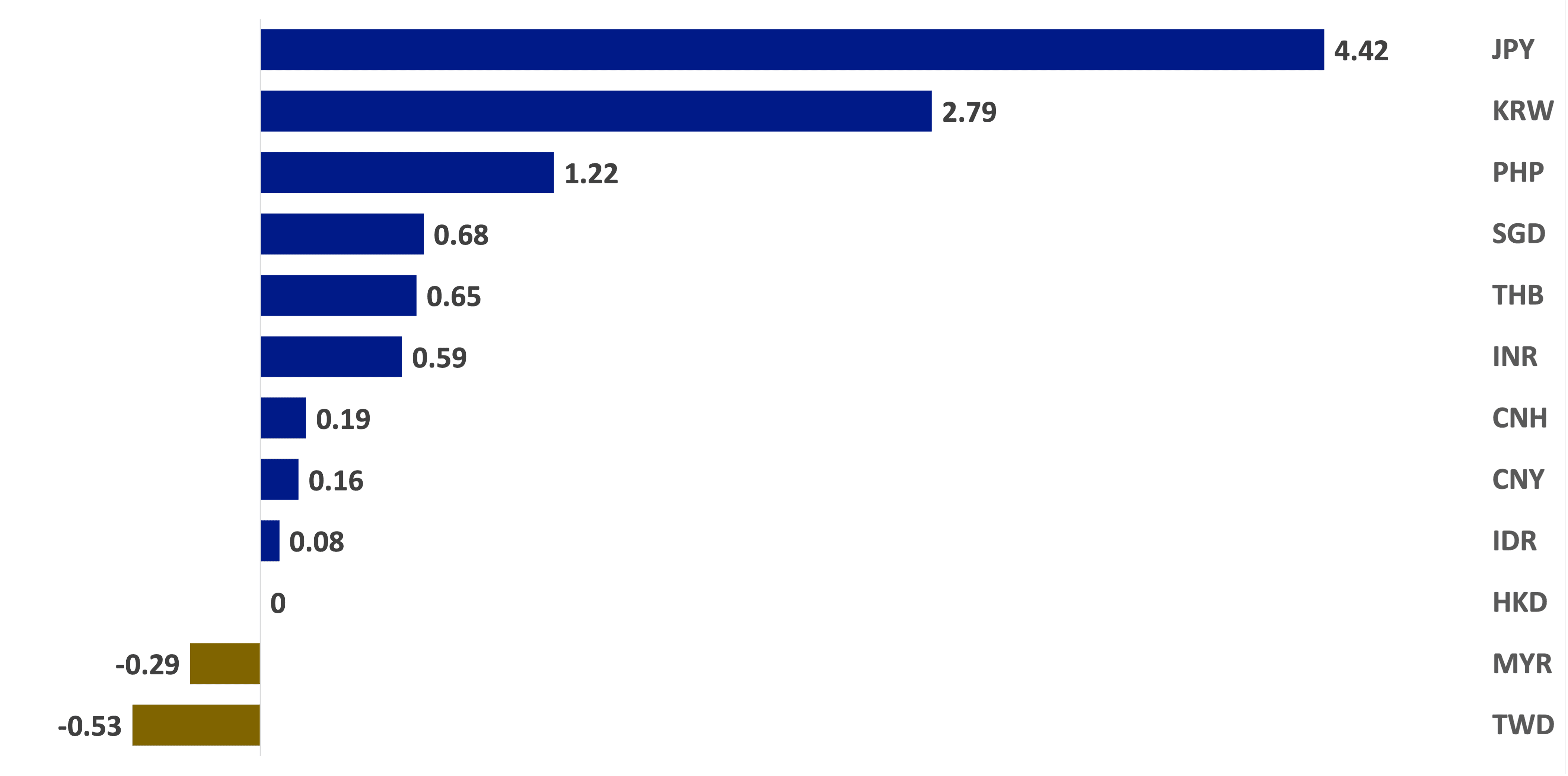
The impact extended beyond USD/JPY. Regional Asian currencies generally benefited from a weaker US dollar. The euro also drew attention after reports suggested that US authorities may have used euros rather than dollars to help finance yen purchases. While the direct impact on the euro may be limited, the move highlighted the intervention's unusual nature.

Note: This covers the period from July 27, 2026, to August 3, 2026.
Source: Bloomberg
Broad foreign exchange markets were forced to reassess long-held dollar positions. While the intervention provided an immediate boost to the yen, markets quickly shifted their attention to a more difficult question: can policymakers alter a trend driven by years of higher US interest rates that make holding US dollars much more profitable?
History suggests that intervention alone rarely changes long-term currency trends. While coordinated action can slow, reverse, or contain extreme moves, durable shifts in exchange rates typically require support from economic fundamentals, interest-rate differentials, growth prospects, and monetary policy.
In Japan's case, a stronger yen may ultimately depend on whether the Bank of Japan follows through on further policy normalization and whether interest-rate gaps between Japan and the United States begin to narrow.
Without those fundamental shifts, intervention may be more effective at limiting excessive volatility than at establishing a sustained trend reversal.
The challenge is that institutional investors continue to borrow in low-yielding yen and invest in higher-yielding assets elsewhere, a strategy called carry trades. For years, they have put downward pressure on the yen, and will continue to be attractive as long as the interest rate gap remains wide.
For those with US dollar exposure, the currency remains supported by relatively high US interest rates and resilient economic conditions. However, recent events demonstrate that positioning and policy actions can create periods of heightened volatility even when broader fundamentals remain supportive.
For those with Japanese yen exposure, the intervention raises the likelihood of further episodes of yen strength, particularly if speculative short positions continue to be reduced. Whether that strength becomes more durable will depend largely on future Bank of Japan policy decisions and the narrowing of US-Japan rate differentials.
For those with euro exposure, the currency may continue to respond primarily to US monetary policy and growth expectations rather than intervention headlines.
For those with diversified foreign currency exposure, the recent episode reinforces the importance of viewing currency allocation through a longer-term lens rather than reacting to short-term moves. It also highlights how shifts in major currency pairs, particularly USD/JPY, can influence broader movements across Asian currencies.
The recent intervention was historic not only because it strengthened the yen but also because it demonstrated an unusual level of policy coordination between Washington and Tokyo. Yet history suggests that intervention works best when supported by underlying fundamentals.
For investors, the key question is no longer whether authorities can influence currency markets, but whether economic and monetary conditions will eventually align with the policy signal.
If you want to take advantage of the recent foreign exchange volatility, consult your Relationship Manager, Wealth Specialist, or Markets Sales Personnel to explore strategies aligned with your goals and risk appetite.
Related Article: FX Online | Metrobank
ANNA DOMINIQUE CUDIA, MBA, CSS, oversees Metrobank’s Macro Research Department, steering macroeconomic and financial market analyses for clients. She previously led the Markets Research Department of Metrobank’s Trust Banking Group and was part of Investor Relations, supporting multi-billion peso and US dollar capital-raising initiatives. She holds an MBA in Finance, with distinction, from the University of London, and industry certifications in finance. Outside of work, she enjoys travel and exploring new perspectives.