





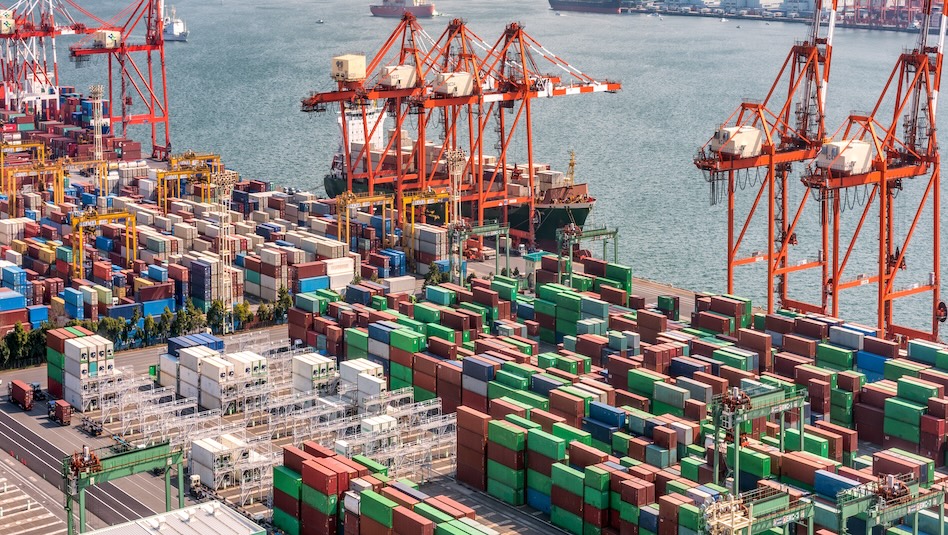
Philippines Trade Update: Imports weaken on tepid demand
 DOWNLOAD
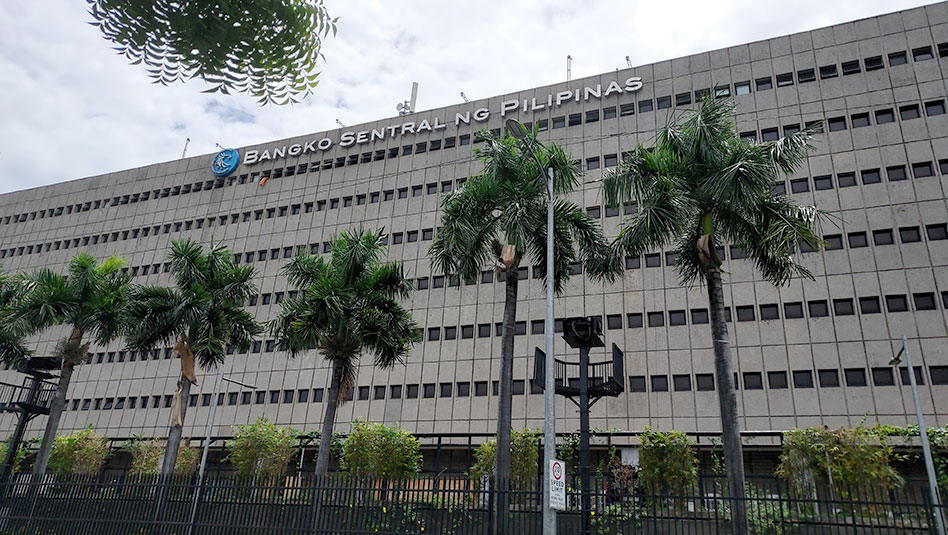
Policy Rate Updates: BSP outlook — cloudy with a chance of rate cut
DOWNLOAD
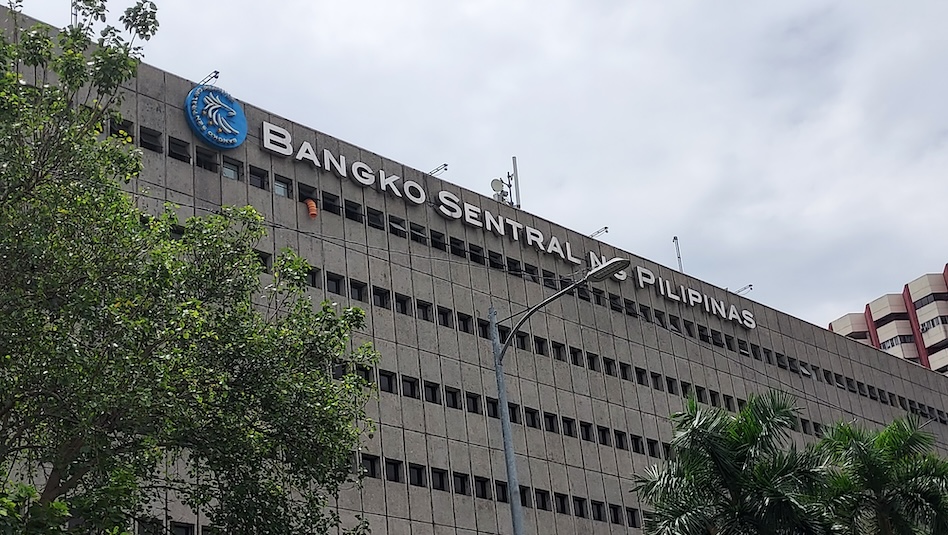
January Economic Update: Growth slows, prices rise
DOWNLOAD


Philippine banks’ loan growth steadies in Nov.
 By BusinessWorld



Philippine banks’ loan growth held steady in November, preliminary data from the Bangko Sentral ng Pilipinas (BSP) showed.
Outstanding loans of universal and commercial banks, net of reverse repurchase agreements, grew by 10.3% year on year to PHP 13.988 trillion in November from PHP 12.676 trillion in the same month in 2024.
November’s growth rate matched the pace of October. October saw the slowest growth in bank lending since the 10.1% recorded in June 2024.
On a seasonally adjusted basis, bank lending expanded by 0.9% month on month.
“Outstanding loans from universal and commercial banks (U/KBs) to businesses and individual consumers expanded in November,” the central bank said in a statement released late on Tuesday.
“Preliminary data show that loans from U/KBs grew at a steady rate of 10.3% year on year in November,” it added.
BSP data showed that big banks’ outstanding loans to residents grew by an annual 10.7% to PHP 13.681 trillion in November, slightly easing from the 10.9% growth seen in the previous month.
On the other hand, loans to nonresidents fell by 4.5% year on year to PHP 307.253 billion from the 11.1% drop logged in October.
Banks’ loans to residents for production activities grew by 9% to PHP 11.789 trillion in November, slowing from 9.1% in the previous month.
This as lending for electricity, gas, steam, and air-conditioning supply sector jumped by 26.6%. Other segments that showed growth in lending include transportation and storage (12.7%); wholesale and retail trade, repair of motor vehicles and motorcycles (11.6%); real estate activities (9%); information and communication (7%); and financial and insurance activities (3.5%).
Meanwhile, big banks’ consumer loans to residents — which account for credit card, motor vehicle, and general-purpose salary loans but exclude residential real estate loans — rose by 22.9% in November to PHP 1.892 trillion, slightly slower than the 23.1% growth in October.
Broken down, credit card loans jumped by 29.5% to PHP 1.158 trillion, picking up from the 29.2% growth in October, while lending growth for motor vehicles eased to 16.3% at P524.037 billion from 17.6% in the previous month.
On the other hand, loans for general-purpose salaries reached PHP 164.932 billion in November, climbing by 6.4%. This is a tad faster than 5.8% a month ago.
Rizal Commercial Banking Corp. Chief Economist Michael L. Ricafort said the consistent double-digit expansion in bank lending can help spur the local economy, especially after the sharp slowdown in the third quarter of 2025.
“Banks’ loan growth still at double-digit levels could still bode well as a leading indicator to the broader economic growth,” he said in a Viber message.
Mr. Ricafort noted that the 10.3% loan growth in November was mainly because of the fast growth in consumer loans, particularly credit card and motor vehicle loans, “amid the country’s favorable demographics.”
In the coming months, banks may see more demand for loans if the BSP lowers key borrowing costs and the reserve requirement ratio (RRR) further to match the Federal Reserve’s moves.
“Loan growth could continue to sustain at double-digit growth levels if the Fed cuts rates further in the coming months that could be matched by the BSP, alongside possible cut/s in local banks’ RRR, all of which could further reduce borrowing costs that could spur greater demand for loans or credit and help boost investments and overall economic growth,” Mr. Ricafort said.
The Monetary Board has so far slashed the benchmark policy rate by a total of 200 bps since August 2024, bringing it to its lowest in over three years at 4.5%.
BSP Governor Eli M. Remolona, Jr. left the door open for another 25-bp cut at its first meeting this year on Feb. 19, though noted that the current easing cycle is nearing its end as the current policy rate is approaching their neutral rate.
On the other hand, the Fed has so far delivered 175 bps in cuts since September 2024, bringing its key policy rate to the 3.5%-3.75% range. It is scheduled to have its first meeting this year on Jan. 27-28.
Money supply
Meanwhile, separate BSP data showed that domestic liquidity (M3) rose by 7.6% year on year to PHP 19.439 trillion in November from PHP 18.071 trillion. This was slower than the 8.3% climb in October.
M3 is considered as the broadest measure of liquidity in an economy.
The country’s money supply expanded by 1.2% month on month on a seasonally adjusted basis.
Domestic claims, which include claims from private and government entities, jumped by an annual 10.6% year on year to PHP 21.984 trillion, picking up from the 10.5% growth in October.
This as higher borrowings boosted net claims on the central government by 11% to PHP 5.888 trillion. This was up from 10% growth a month earlier.
Meanwhile, claims on the private sector rose by 11.1% to PHP 14.162 trillion, faster than the 11% the previous month, amid “continued expansion in bank lending to non-financial private corporations and households.”
Claims on a sector refer to that sector’s liabilities to depository corporations such as banks and the central bank.
Central bank data also showed net foreign assets (NFA) in peso terms climbed by 4.4% in November versus the 2.1% expansion in October.
“NFAs of the BSP increased by 1.9%,” the BSP said. “Similarly, NFAs of banks grew primarily on account of lower foreign currency-denominated bills payable.”
Broken down, the central bank’s NFAs grew by 1.9% year on year, a turnaround from the 0.4% decline in October, while banks’ NFA climbed by 26.9%, slightly faster than the 26.3% the previous month.
NFAs reflect the difference between depository corporations’ claims and liabilities to nonresidents.
“The BSP monitors bank loans because they are a key transmission channel of monetary policy,” the central bank said. “Looking ahead, the BSP will ensure that domestic liquidity and bank lending conditions remain aligned with its price and financial stability objectives.” — Katherine K. Chan
This article originally appeared on bworldonline.com