







 DOWNLOAD
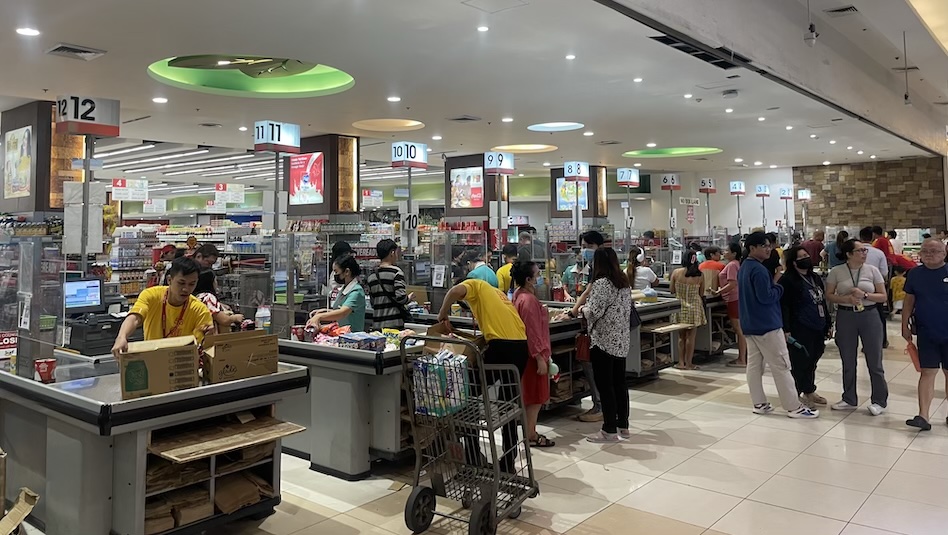



Your five-year horizon: Identifying the winners
If you have money to invest, you have better chances of getting a good return with certain sectors
 By Janssen Janssen Roman



Imagine this.
You invest today—and then you’re not allowed to touch your portfolio for the next five years. No reacting to headlines. No panic‑selling. No chasing the “next big thing.” You simply come back in 2031 and see the results.
As an investment counselor, I’ve seen portfolios underperform not because of poor intelligence, but because of overreaction. The five‑year lens filters that out. If something doesn’t make sense over that timeframe, it probably doesn’t belong in a long‑term allocation.
So instead of asking, “What’s going to move this quarter?” the better question is: “What will people still be paying for five years from now?”
Here’s a look at some sectors that may help you build durable wealth.
Sector #1: Philippine Banks
If you don’t know what to invest in, look at where money passes through.
Every salary credit. Every loan. Every swipe, transfer, and remittance eventually ends up in a bank. That’s why banks aren’t just another sector. They’re a mirror of the economy.
You don’t need to predict trends for banks to work. You just need daily life to continue.
Over the next five years, that matters. Bank are not exciting. What they offer is consistency—strong balance sheets, regular dividends, and the ability to earn through good times and bad.
If the Philippine economy is bigger five years from now, banks will almost certainly be earning more. It’s about owning the system everyone already uses.
Sector #2: Power, Utilities & Energy
There are things you can delay buying. Electricity isn’t one of them. That’s what makes this sector different.
Utilities don’t need excitement to make money. You may complain about your power bill, but you still pay it. From an investor’s view, that means steady demand and predictable cash flow. Many operate under long‑term contracts or regulated setups, so earnings don’t swing wildly with sentiment.
Over the next five years, demand isn’t shrinking. Population grows. Cities expand. Data usage rises. EVs, data centers, and renewables all need power.
There are risks—regulation, costs, execution—but strong energy companies are built for long horizons. Owning utilities isn’t about timing the market. It’s about owning the bill everyone pays, month after month.
Sector #3: REITs (Real Estate Investment Trusts)
Every time you enter a mall, office, or logistics hub, rent is being paid. Not by you directly, but by the businesses inside. And that rent flows somewhere.
Offices may change, malls may evolve, but people still work, shop, eat out, and move goods. Space is still rented. Over five years, that consistency matters more than short‑term price moves.
REITs won’t make headlines. They won’t double overnight. But they show up every year with income—something many investors underestimate.
There are risks—rates, occupancy, asset quality—but backed by real properties and strong sponsors, REITs are designed for patience.
If banks let you own the flow of money, and utilities let you own daily consumption, REITs let you own the places where life happens.
3 sectors working together
Each sector works on its own. Together, they create balance.
They cover different parts of daily life:
- Banks capture how money moves
- Utilities capture what people consume
- REITs capture where life happens
This isn’t about owning everything. It’s about owning what shows up every day: salaries, bills, rent, transactions.
Simple doesn’t mean weak. Often, it means durable.
If you wish to act on this idea, please reach out to your relationship manager or investment specialist. If you are not yet a client of Metrobank, please go to any Metrobank branch to inquire.
(Disclaimer: This is general investment information only and does not constitute an offer or guarantee, with all investment decisions made at your own risk. The bank takes no responsibility for any potential losses.)
JANSSEN ROMAN is an Investment Counselor at Metrobank’s Financial Markets Sector, specializing in portfolio strategy, financial modeling, and data‑driven investment analysis. His experience spans roles as an Investment Specialist and Financial Markets Management Trainee at Metrobank, as well as a Research Analyst covering global Mutual Funds and ETFs at FactSet Philippines. He is currently pursuing his Master of Arts in Economics at the Ateneo de Manila University, with a focus on Fiscal Policy and Governance. He also holds a broad range of industry certifications spanning treasury, financial markets securities, financial modeling, data analytics, and process improvement—reinforcing his commitment to technical excellence and professional rigor. Outside of work, he enjoys riding his motorcycle, traveling, and photography.