





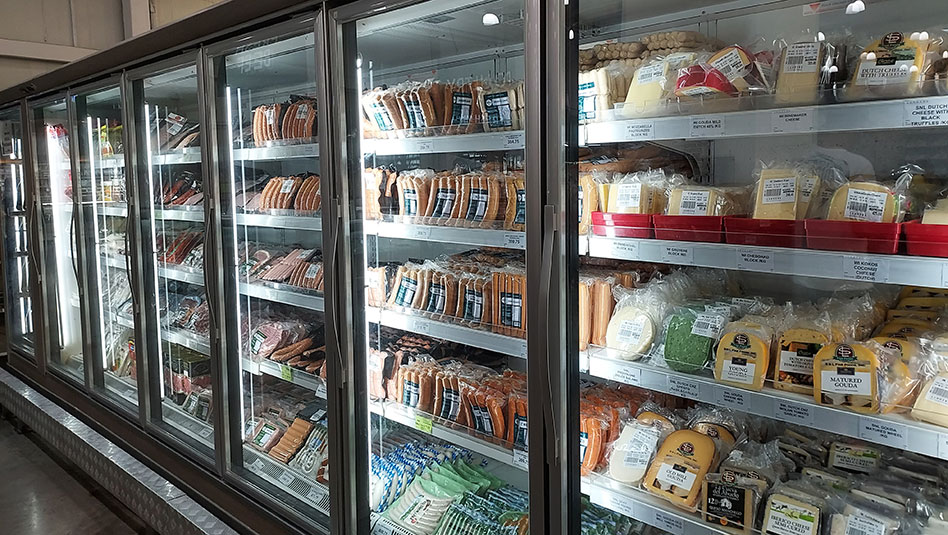
Inflation Update: Target breached
 DOWNLOAD
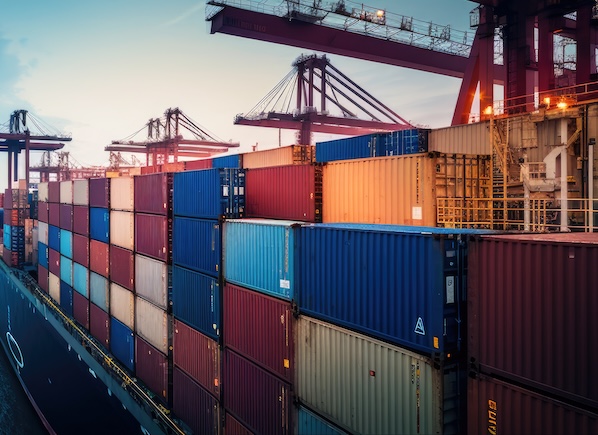
Philippines Trade Update: Wider deficit on strong imports
DOWNLOAD
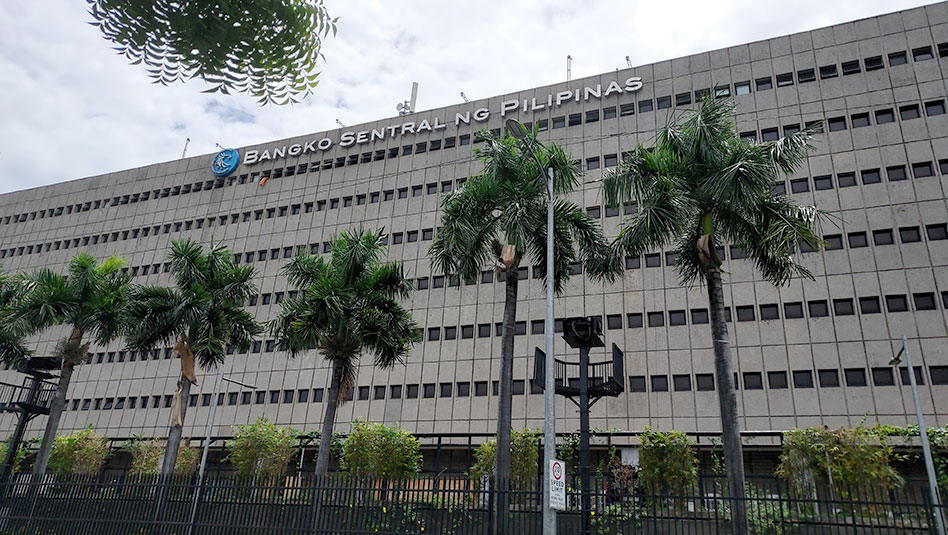
Policy Rate Updates: Policy rate updates to reassure
DOWNLOAD


Inflation quickens to 13-month high
 By BusinessWorld
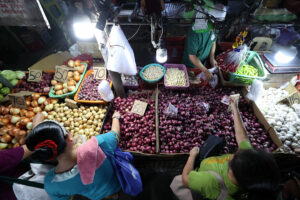


Philippine inflation accelerated to a 13-month high in February as rising costs for rice, fuel, electricity and other utilities added pressure on household budgets, the Philippine Statistics Authority said on Thursday.
The consumer price index (CPI) picked up to 2.4% from 2% in January and 2.1% in February 2025. It was the fastest since January 2025, when inflation hit 2.9%.
February inflation fell within the Bangko Sentral ng Pilipinas’ (BSP) 2.3%-3.1% forecast and matched the 2.4% median estimate in a BusinessWorld poll of 17 analysts.
February also marked the second straight month that inflation stayed within the central bank’s 2%-4% target, bringing the two-month average inflation rate to 2.2%.
“Overall price conditions remain stable,” Economy Secretary Arsenio M. Balisacan said in a statement. “However, we are mindful of recent geopolitical developments, which we are closely monitoring, along with domestic supply conditions of key commodities.”
The peso’s purchasing power remained at PHP 0.76 for every PHP 100 worth of goods and services in 2018, the same level recorded in January and the lowest since the base year was adopted.
National Statistician Claire Dennis S. Mapa said faster price increases in food and nonalcoholic beverages, housing and utilities and restaurants and accommodation services pushed inflation higher last month.
Inflation for food and nonalcoholic beverages accelerated to 1.8% from 1.1% in January, driven by faster price increases for vegetables, fish and seafood, as well as a slower decline in cereals and cereal products.
Inflation for restaurants and accommodation services also quickened to 4.4% from 4% a month earlier. Prices for restaurants, cafés and similar establishments rose 4.5% from 4.1% pace in January.
Core inflation, which strips out volatile food and fuel prices, edged up to 2.9% in February from 2.8% in January and 2.4% a year earlier. This was the fastest since June 2024.
Energy costs
Inflation for housing, water, electricity, gas and other fuels, which accounted for almost 30% of the headline CPI, rose to 3.5% in February from 3.3% a month earlier.
Fuel prices have been rising steadily in recent weeks, with diesel and kerosene marking 10 consecutive weekly increases and gasoline climbing for eight straight weeks.
In February alone, pump price adjustments led to a net increase of PHP 3.20 a liter for gasoline, PHP 4.40 for diesel and P3.50 for kerosene.
Liquefied petroleum gas (LPG) prices also increased after oil companies implemented a PHP 1.50- to PHP 1.55-per-kilo hike, bringing the price of a standard 11-kilo household tank to PHP 836.50 to PHP 1,137.05.
Rising tensions in the Middle East have raised concerns about possible disruptions in global oil supply, which could further push up energy costs for net oil importers such as the Philippines.
The Department of Economy, Planning and Development said authorities are monitoring domestic fuel price movements and could intervene if global oil prices rise sharply.
“Further, the government will implement measures to reduce fuel consumption, first by government offices, and we encourage the private sector to do the same,” Mr. Balisacan said.
These measures include the use of shuttle buses, encouraging carpooling and adopting flexible work arrangements such as work-from-home or compressed workweeks.
Electricity costs also rose after Manila Electric Co. increased its rate by 22.26 centavos per kilowatt-hour (kWh) in February to PHP 13.1734 per kWh from January. Electricity inflation climbed to 6.7% from 6.5%.
Rental inflation also edged higher to 3% from 2.9%, while inflation for water supply rose to 4% from 3.5%.
Rice prices, a key driver of Philippine inflation, showed signs of firming in February.
Rice inflation remained negative at -3.4%, but this was a slower decline than -8.5% in January, indicating a gradual rebound in prices.
Regular milled rice prices fell 2.5% year on year to an average of PHP 46.01 per kilo but rose 5.14% compared with January levels.
Mr. Mapa said rice inflation could move closer to zero — or even turn positive — if month-on-month price increases persist in March.
Meanwhile, inflation for the bottom 30% of income households accelerated to 2.5% in February from 1.6% in January and 1.5% a year earlier, the fastest in more than a year.
Inflation outlook
The BSP said inflation expectations remain well anchored despite the February uptick, although authorities are assessing the potential impact of Middle East tensions on the domestic economy.
“The BSP will ensure that policy settings remain in line with its pursuit of price stability conducive to sustainable growth and employment,” it said in a statement.
Jonathan L. Ravelas, a senior adviser at Reyes Tacandong & Co., said the latest data point to rising risks, particularly from global oil markets.
“While inflation remains manageable, the third straight monthly uptick tells us upside risks are building — especially if global oil supply disruptions persist,” he said via Viber.
Chinabank Research said inflation might average around 3.6% this year, near the upper end of the BSP’s target, though the outlook could worsen if geopolitical tensions persist.
Morningstar DBRS also warned that net oil-importing economies such as the Philippines remain vulnerable to rising energy costs and potential supply disruptions stemming from the war in the Middle East.
The Bangko Sentral ng Pilipinas (BSP) should hold interest rates steady, rather than cut or raise, amid rising global oil price pressures from the Middle East war, according to the Institute for Risk and Strategic Studies, Inc. (Salceda Research).
In a report released on Wednesday, the think tank said further rate adjustments might be unwise amid uncertainties over crude prices stemming from disruptions linked to the war between Israel and Iran.
“The appropriate response is a pause, not a hike — the inflation is supply-driven and rate hikes would not reduce oil prices,” Salceda Research said. “The BSP should communicate clearly that the easing cycle is on hold, not reversed, to avoid market overreaction.”
The Strait of Hormuz, a critical oil transit point, has become a flashpoint after Israeli and US military strikes on Iran. Roughly one-fifth of the world’s oil supply passes through the strait, and any disruption could push global oil prices higher, squeezing import-dependent economies such as the Philippines.
Salceda Research estimated that sustained crude prices above $80 per barrel for more than a month could push Philippine inflation toward 4%, near the upper limit of the central bank’s target band. “Second-round consumer price index effects will push inflation toward the 4% upper target boundary within two quarters,” it added.
At its first policy review of 2026, the BSP cut the key interest rate by 25 basis points (bps) to 4.25%, the sixth consecutive reduction and a total easing of 225 bps since August 2024.
BSP Governor Eli M. Remolona, Jr. has noted that easing alone might not stimulate an economy constrained by weak sentiment and lingering governance issues.
Salceda Research also cautioned that the Philippine peso could come under renewed pressure, potentially testing PHP 59.50 to PHP 65 a dollar.
The peso briefly recovered to around PHP 57 a dollar last month after record lows in January but has remained above PHP 58 amid geopolitical uncertainty.
“The BSP should allow the peso to depreciate within the PHP 59.50-PHP 61 band… intervening [only] to prevent disorderly overshooting beyond P62,” the think tank said.
Rapid moves past PHP 62 could front-load inflation and trigger capital outflows, it said. “Graduated, transparent intervention is preferable to defending a fixed level. — Katherine K. Chan, Reporter
This article originally appeared on bworldonline.com